
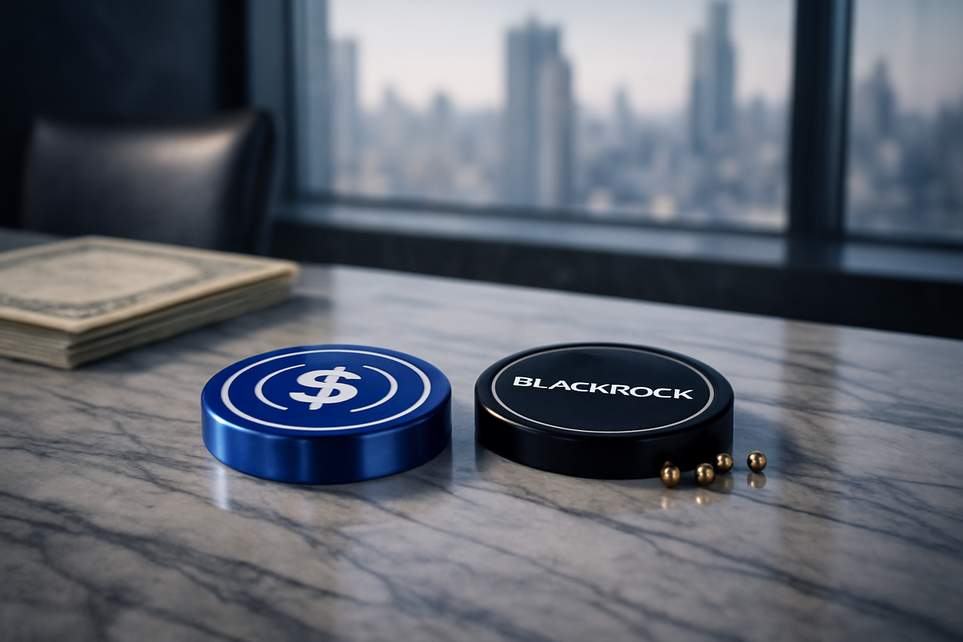
How Circle quietly nudged past BlackRock in the $10B tokenized Treasury fray
What actually flipped (hint: it wasn’t a marketing war)
Tokenized U.S. Treasuries just cleared the $10 billion mark — a big milestone that says these digital T-bills are more than an experiment now. But the real headline isn’t the round number. It’s that Circle’s USYC quietly pulled ahead of BlackRock’s BUIDL as the largest tokenized Treasury vehicle. No fireworks, just smarter plumbing.
At the time of the flip, USYC and BUIDL were neck-and-neck in assets under management, with USYC holding roughly $1.69 billion and BUIDL around $1.684 billion. Over the prior month, USYC saw about an 11% uptick while BUIDL slipped by roughly 3% — the sort of movement that screams net inflows into one product and net outflows from the other.
Why did this happen? Two big, boring things: distribution rails and product mechanics. USYC got placed into institutional collateral workflows earlier and in a more plug-and-play way, so flows showed up where institutions already manage margin and automate collateral. Meanwhile, BUIDL arrived with heavyweight branding but tougher operational fit for many market participants.
Another mechanical difference: USYC is built to accumulate interest inside the token, while BUIDL distributes returns separately. For margin engines and automated collateral systems, accumulating tokens are easier — set it and forget it — because they don’t require extra steps to handle payouts. That small design choice makes life measurably simpler for the teams actually moving capital.
Access rules also matter. BUIDL’s on-ramps were narrower, requiring Qualified Purchaser status and a multi-million-dollar minimum for certain buyers. USYC’s lower entry threshold and broader offshore accessibility opened it up to more trading firms, family offices, and non-U.S. institutions — the very players who frequently serve as on-chain collateral providers.
So what does this mean for tokenized Treasuries going forward?
Short answer: infrastructure beats logos. Tokenized Treasuries are starting to act less like a curiosity and more like everyday on-chain cash equivalents that also earn yield. They plug into margin systems, sit next to stablecoins in workflows, and let institutions earn a Treasury-like return without leaving crypto rails.
Right now tokenized Treasuries are a small slice of the overall stablecoin ecosystem, but they’re growing fast. If current integration trends and distribution rails keep improving, the market could easily double from current levels over the next year — and that’s a conservative take. If more venues replicate “off-exchange” collateral rails and onboarding keeps getting simpler, the upside is much larger.
In practice, this means winners will be the products that reduce friction: simpler income mechanics, earlier and deeper integration into prime-brokerage and derivatives stacks, and access terms that match the real universe of on-chain collateral users. Not slick ad campaigns — the plumbing wins.
So when you hear people talk about who “won” the tokenized Treasury race, remember: the trophy isn’t brand glitter. It’s the one that got folded into the margin book, accepted as collateral, and left alone to compound. Boring, maybe — but also very lucrative if you’re on the right side of it.
Final note: this sector is still young and volatile. Expect more jockeying over integrations, eligibility rules, and the tiny architectural choices that end up moving billions. And yes, it’s the least romantic financial arms race you’ll ever enjoy watching — plumbing puns encouraged.
