
Do You Really Need Altcoins to Diversify? Tokenized Stocks Say Maybe Not
Why tokenized securities could make altcoins less essential
Remember when crypto was supposed to be a magical buffet of uncorrelated assets? The idea was simple and seductive: buy a handful of different tokens and your risk spreads out like butter on toast. Reality, however, has a stubborn way of refusing to be buttery. When Bitcoin sneezes, a lot of altcoins catch a cold — often worse. That meant many portfolios were basically different-looking bets on the same market mood.
Now big, old-school market players — the custodians and clearinghouses that move trillions around every day — are quietly building a different route to diversification. Instead of inventing new tokens to hedge crypto risk, what if you could hold the same stocks, bonds, and funds you already trust, but as tokens that live on blockchains? That’s the pitch: familiar assets, on-chain settlement, and the same legal mechanics investors expect, just faster and more composable.
Stablecoins are playing the role of on-chain cash. With hundreds of billions of dollars of stablecoin balances circulating, they can serve as the payment leg in tokenized deals. Combine tokenized equities or Treasuries on one ledger and stablecoin settlement on another (or the same), and you get smoother delivery-versus-payment flows that work around the clock — the kind of plumbing institutions like.
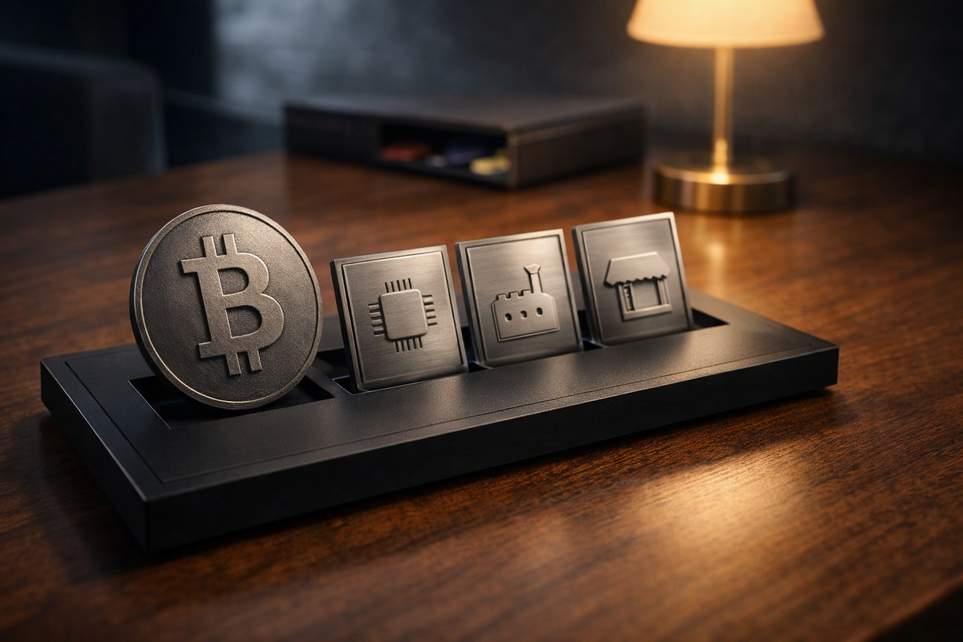
The practical upshot for a retail or institutional investor: if tokenized funds and fixed-income products live in the same wallet and custody setup as crypto, you don’t need to buy a bunch of Ethereum-like tokens to chase “diversification.” You can own Bitcoin for pure crypto exposure and then grab tokenized equity index funds, sector ETFs, or bond funds for non-correlated returns — all within one set of rails.
What stands in the way — and what still makes altcoins interesting
Before you toss your altcoin spreadsheet into a bonfire, a few caveats. The on-chain version of Wall Street is still a patchwork: tokenized securities sit across many public and private ledgers, each with different rules, languages, and custody models. That fragmentation makes cross-chain settlement tricky and introduces legal and operational questions. Who guarantees finality? Which jurisdiction enforces ownership? How do you protect client assets across omnibus wallets and segregated custody schemes? These aren’t tiny headaches — they’re the plumbing fights that decide whether tokenized markets scale or stay niche.
Analysts of various stripes have been optimistic about tokenization’s potential, with base-case forecasts suggesting trillions of dollars could be tokenized by the end of the decade. Even conservative scenarios envision a meaningful slice of money market funds, Treasuries, and other liquid instruments moving on-chain. Why start with funds and Treasuries? Because they’re operationally simpler, familiar to regulators, and attractive to cash managers who want faster settlement and 24/7 liquidity.
So where does this leave altcoins? Their role as portfolio hedges has weakened because many altcoins simply track Bitcoin with added drama: same direction, higher peaks, deeper troughs. If your goal is exposure to economic growth, dividends, or interest-rate-driven returns, tokenized traditional assets are a closer match than another chain’s native token. That said, not all altcoins are dead in the water. Tokens that pay real cash flows — fees, staking rewards, protocol revenue shares — still have standalone investment stories. Likewise, assets that act as on-chain collateral, or provide key interoperability and custody services, will be valuable if tokenized securities take off.
In short: the diversification playbook is shifting. The cleanest strategy for many investors might be: own Bitcoin for crypto exposure, use tokenized equities and fixed income for diversification, and treat altcoins as concentrated, high-risk bets rather than a portfolio hedge. The real winners will likely be projects and institutions that build regulated rails, custody solutions, and interoperability standards — not necessarily the loudest token names.
Tokenized markets won’t replace traditional markets overnight. Legal clarity, harmonized technical standards, custody practices that protect client assets, and cross-chain finality are all needed. But the trend is clear: the boundary between “crypto” and “traditional” portfolios is blurring, and that changes how savvy investors think about diversification.
Final thought: don’t toss strategy out with theatrics. If you want crypto exposure, decide how much you want tied to Bitcoin’s narrative. If you want diversification, watch tokenized funds and fixed-income products — they might give you the non-correlated ballast you actually need, without having to wade through thousands of token tickers.
