
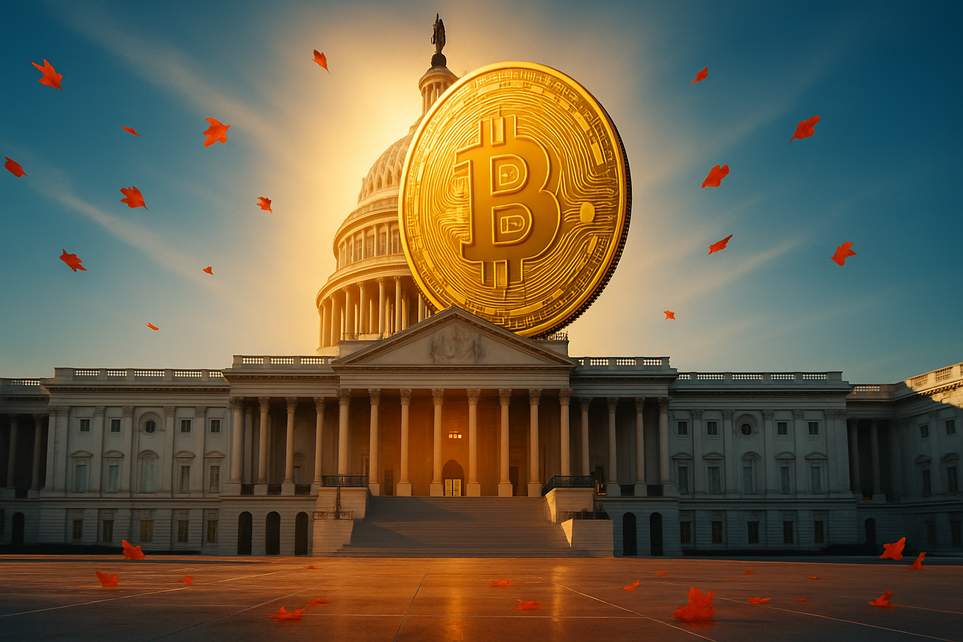
The $413k Bitcoin Question: What Actually Happens When Washington Reopens?
Congress is finally flicking the lights back on after the longest shutdown in US history, and Bitcoin traders are doing what they always do: connecting dots, drawing charts, and whispering about mythical price targets. You’ve probably seen the headline that a repeat of 2019’s post-shutdown surge would put Bitcoin in the $400k+ neighborhood. Cute. But let’s break down why that story is a little too neat, and what a real reopening might actually do to BTC prices.
Why 2019’s Bitcoin Bounce Isn’t a Plug-and-Play Template
Back in 2019 Bitcoin jumped hard after the government reopened, and plenty of folks treat that as proof the lights going on caused the rally. Truth is messier. That bounce began from a brutal 80% crash from the 2017 peak, when price and sentiment were both rock-bottom. Miners capitulated, margin and leverage blew out, and the market was under-owned and thirsty for fresh capital.
Then the Federal Reserve quietly shifted from hiking rates to being “patient,” which loosened the macro leash on risk assets. Institutions were only just starting to build custody and trading plumbing, derivatives were simpler, and retail sellers had already fled. All of those things combined to make a violent reflation possible — Washington reopening simply made a tidy headline, not the engine.
So What Could a Reopening Do This Time (and What It Probably Won’t)?
Fast-forward to today: Bitcoin already hit fresh highs this year, spot ETFs are a real thing, corporate treasuries hold serious dollar amounts, and the lending and derivatives markets are massive. This market isn’t the wild frontier of 2019 — it’s deeper, more professional, and full of actors who hedge, rebalance, and take profits.
That matters because the same shove that produced a 290% move in 2019 would now run into a lot more overhead supply: ETFs, funds, company treasuries, miners who pre-sold, and retail holders sitting on gains. Those players aren’t waiting for narrative symmetry to buy more — they’re managing risk. So the blow-off, reflexive melt-up is much less likely.
Macro also looks different. In 2019 the Fed had room to pivot; today inflation is stickier, geopolitical and tariff noise exists, and the Fed can’t ease as freely without consequences. A government reopening mainly removes a negative — it restores data flow and agency work — rather than magically recreating a dovish macro regime.
So what are realistic scenarios? If you insist on repeating 2019 exactly, Bitcoin would need to jump to roughly $413,400 in six months. That outcome requires heroic assumptions: institutional holders buying more instead of rebalancing, retail pouring back in at scale, no meaningful profit-taking, and zero external shocks. Not impossible, just improbable.
More plausible scaled ideas: if reopening drives half the 2019 effect, BTC might drift toward the low-mid $200k range (around $260k). If it only nudges the market by about a third of that old move, you’re looking at something closer to $200k. Those outcomes assume reopening removes local uncertainty and that ETFs and institutional flows come back into play — but without the old leverage-driven euphoria.
Bottom line: reopening is a bullish “cleaning” event — it clears the fog, restarts data and approvals, and could help flows normalize — but it’s not a shortcut to reflexive parabolic gains. Bitcoin’s future moves will still be decided by supply vs. demand at today’s price, institutional behavior, macro policy, and any surprise shocks that show up. In short: drama ending helps, but it doesn’t replace fundamentals.
Not financial advice — just one more voice in the crypto choir. Do your own homework, don’t bet the house, and maybe keep a sense of humor if your portfolio goes on a roller coaster.
