
Cardano Foundation’s Wallet Makeover: ADA Shrinks, Bitcoin and Cash Crash the Party
Treasury remix: ADA loses center stage
Think of the Foundation’s wallet like a pizza where ADA used to be almost the whole pie. That’s changed. The Foundation reported total assets of 287.5 million Swiss francs (roughly $361 million), down about 45% from the roughly 659.1 million francs at the end of 2024. The headline drop mostly reflects ADA’s rough year, but the more interesting story is how the slices were reshuffled.
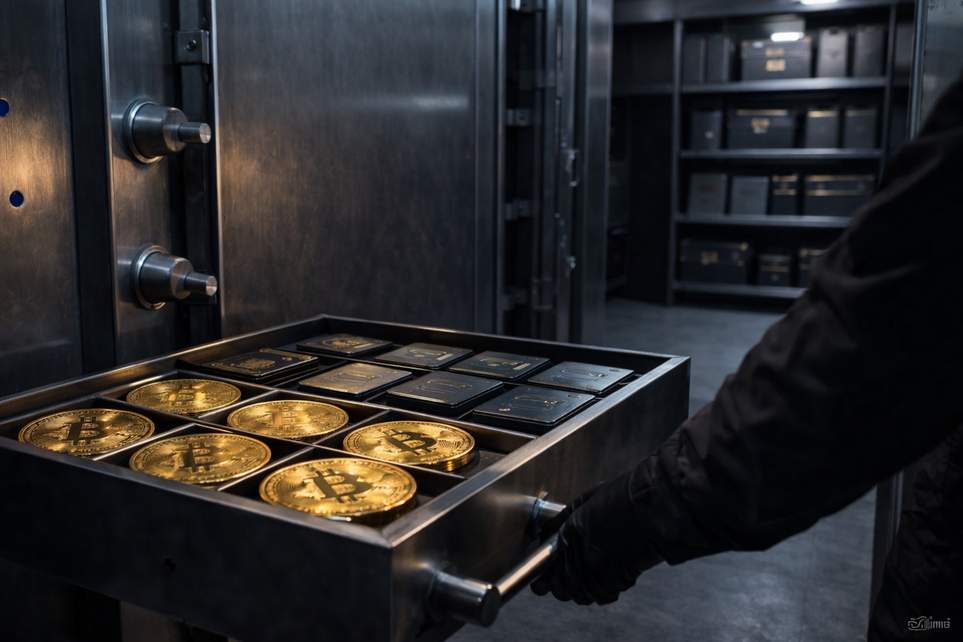
Last year ADA made up about three-quarters of the balance sheet; now it’s roughly half (about 51.6%). Bitcoin’s share climbed to roughly 25.5% and cash plus financial assets sit near 22.9%. In dollar terms that’s roughly $186 million in ADA, $92 million in Bitcoin, and $83 million in cash and other financial holdings. Fun twist: the Foundation actually reduced its Bitcoin holdings (down to 656 BTC from 1,054 BTC, a fall of about 37%), but BTC’s share still rose because ADA dropped a lot faster.
Market moves explain the math. ADA fell sharply—on the order of 60%+ over the past year—while Bitcoin was relatively less battered, dropping around a quarter. So Bitcoin didn’t need to rally to look bigger; it just held up better. The Foundation also boosted non-ADA assets: financial assets grew to 43.9 million francs (about $54.9 million) from 14.3 million francs the prior year, and cash on hand sat around 20.1 million francs (about $25.1 million). Staking activities also produced over 20 million ADA in rewards during the period.
Spending, projects, and what comes next
Beyond the numbers, the Foundation reset its spending playbook in 2025. It allocated 23.6 million francs (about $29.5 million) across three strategic pillars: technology (roughly 40% or 9.5M francs), adoption (about 39.6% or 9.3M francs), and governance (around 20% or 4.8M francs). That’s a pretty clear signal: build infrastructure, push for real-world use, and tidy up how decisions get made.
On the tech front the focus was on protocol tooling, developer support, node diversity, interoperability, oracles, and operational resilience. For adoption the Foundation pushed traceability tools, enterprise proofs-of-concept, and a privacy-minded digital ID platform called Veridian, alongside wider deployments including a Veridian Wallet and a white-label roll-out for a UN program. The Foundation also opened up traceability code and advanced an internal platform called Reeve toward enterprise use.
Governance kept a smaller share of the budget but stayed central: the Foundation backed large on-chain budgets, supported dozens of treasury withdrawals, and helped push tools and processes to make voting and proposals easier (think voting tooling, proposal examiners, governance docs, and community sessions). Delegation programs distributed large ADA allocations to builder DReps and adoption/operational DReps, and internal frameworks for delegation and elections were expanded as part of the decentralization transition.
Leadership says the 2026 plan stays focused on technology, governance, and enterprise/institutional adoption—trying to strengthen real-world asset rails, boost stablecoin and DeFi liquidity, and build open-source tools to attract bigger users. The network is also exploring integrations with things like on-chain price feeds, cross-chain messaging, and stablecoin rails to help that work.
Bottom line: the Foundation’s balance sheet looks more diversified and actively managed than a year ago. Whether a leaner ADA exposure plus heavier investment in infrastructure and adoption will steady ADA’s own fortunes remains the big, slightly dramatic question for 2026. Stay tuned—this wallet glow-up might help, or it might just make for a twisty sequel.
