
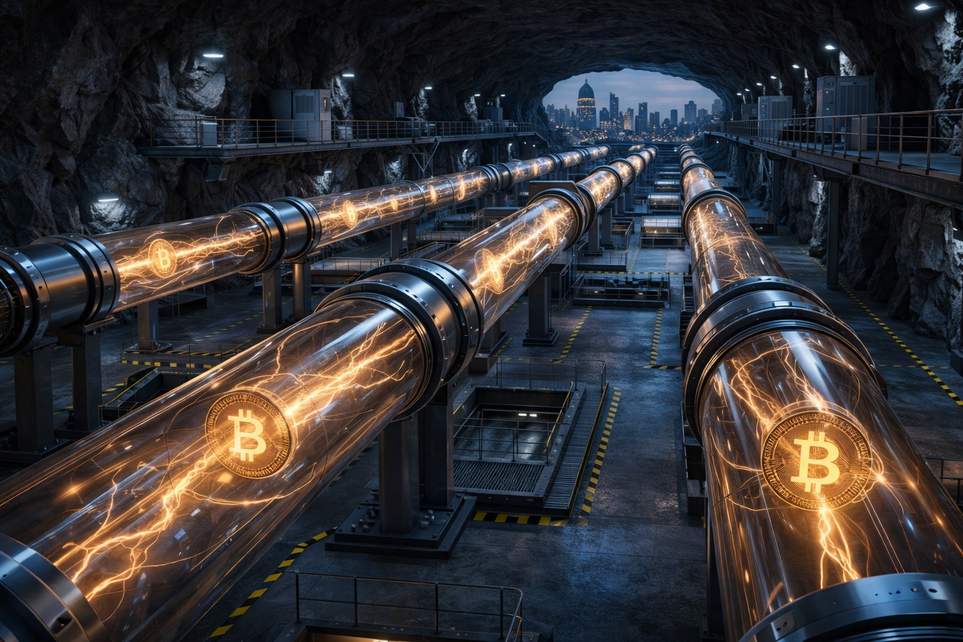
Bitcoin’s Price Party, But the Blockchain RSVP’d ‘Maybe’
Why the chain feels like a ghost town
Bitcoin has bounced back toward the $71,000 neighborhood, and screens are lighting up like it’s a victory lap. Trouble is, the blockchain itself is acting like it was never invited. Fees are hovering at floor levels (think roughly 1 sat/vB in recent snapshots), blocks have been pulling in tiny fee totals — on the order of 0.0175 BTC per block during one weekly sample — and transaction fees made up barely a sliver of miner revenue (around 0.56% in that same period).
That’s odd if you still expect rising prices to come with crowded mempools and a battle for block space. Back in previous cycles, inscription crazes and other speculative traffic pumped transaction counts and pushed fees up hard. Those days look quieter now: the inscription-driven frenzy faded, and the base layer is enjoying a surprisingly relaxed commute.
So what’s moving price if not a sprint on-chain? A lot of the demand is being expressed off-chain: ETFs, broker tools, treasury buys, and other financial wrappers let big capital dial up Bitcoin exposure without generating a truckload of on-chain transactions. In plain English — the money is flowing through Wall Street plumbing, not clogging the blockchain’s roads.
What this divergence means (and the possible next acts)
There are a few ways this storyline could play out, and each has different vibes for price, miners, and people who still read mempool charts like horoscopes.
1) The ETF-driven relay keeps doing the heavy lifting. Price stays firm near recent highs while fees chill at the bottom. Result: the rally is distribution-friendly but the chain’s own fee market doesn’t join the party.
2) The recovery spills over on-chain. If investors start using native settlement more, mempools will feel it: fee estimates climb, backlogs deepen, miners get a bigger piece of revenue from transactions. That would make the rebound look more organic and built on actual usage.
3) The optimism fades. If ETF flows reverse and price dips back, but fees stay low, then the whole bounce looks more like positioning than a broad return of real-world activity. The quiet mempool would be a warning sign, not an anomaly.
4) Miner economics move to center stage. With block subsidy reduced after the halving, sustained low fees keep pressure on miners’ margins. Price gains help, but a persistent gap between price strength and fee income would make the miner revenue story an ongoing risk to watch.
The core takeaway? A calm mempool doesn’t equal a dead market — it just shows that the market has shifted layers. Bitcoin is now living in two worlds: the asset side (funds, brokers, ETFs) and the network side (on-chain transfers and settlement). Right now the asset side is louder. Whether the network catches up, or whether miners and fee dynamics force a different reckoning, is what the next few weeks will reveal.
