
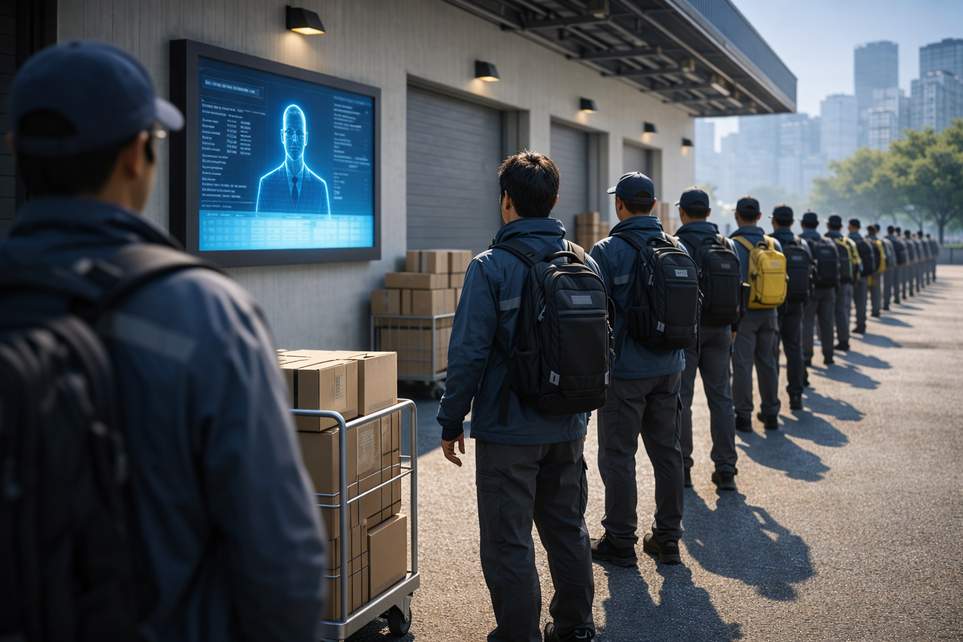
Rent a Human: The Day Bots Started Hiring Us
When bots stopped typing and started calling people
Welcome to the weird new gig economy, where invisible AIs don’t just run code — they book humans. Imagine a software brain with pretend claws: it can’t physically pick up a package or sign a form, but it sure can tap a human who will. These AI agents aren’t just automating tasks anymore. They’re choreographing humans like musical chairs, turning people into on-demand, detachable helpers inside a larger machine.
Call them “clawbots” if you like — not because they’re literal robots, but because they extend reach by delegating. Instead of being replaced, humans get modularized: little units of capability that machines can call when needed. It’s less about losing jobs and more about changing what a job is. Your skill becomes an API endpoint.
Why this is both exciting and slightly terrifying
There’s a bright side. For folks in places with few traditional opportunities, this could unlock quick, flexible income: do a verification, run a local errand, verify a document, or report from a site — all piecemeal, all global. A dispatcher in the cloud can route a task to whoever’s closest and available, paying instantly and transparently. That sounds kind of dreamy if you like freedom and no HR paperwork.
But of course the flip side exists. When people are treated as callable functions, questions of dignity, identity, and fairness pop up fast. How much should a task be worth? Who’s responsible if a machine-coordinated action goes sideways? Do workers even know who is hiring them — a person, a company, or an autonomous script? Without rules, the same tech that opens doors can also accelerate exploitation.
So what do we need? First, transparency: people should know what they’re signing up for and who’s behind the request. Next, fair pay and clear accountability: global accessibility cannot become a race to the bottom. Consent matters — obvious boundaries on what can be outsourced to a human. And from a tech side, build identity checks, reputation systems, audit trails, and policy controls into the agents themselves so the whole setup can be inspected and governed.
There’s also a financial twist. Decentralized payment rails — instant, cross-border transfers and programmable contracts — can make it easier for these agents to hire, pay, and verify work without slow banks. That means on-chain bounties, verifiable proofs of completion, and portable reputations could become normal. It’s a neat bridge between virtual coordination and real-world tasks, but it comes with the same warning: permissionless systems scale fast, ethics often lag behind.
Bottom line: humans won’t disappear; they’ll be reshaped into a network of physical interfaces for digital intelligence. The big question isn’t whether this model will grow — it will — but who designs the rules and what values those rules bake into the system. If we build guardrails now, these hybrid human–AI systems could boost inclusion and opportunity. If we don’t, they’ll optimize for speed and cost, and people will pay the price.
