
Wall Street vs. Hyperliquid: Who Gets to Run the 24/7 Market?
The new trading turf: always-open markets and who’s building them
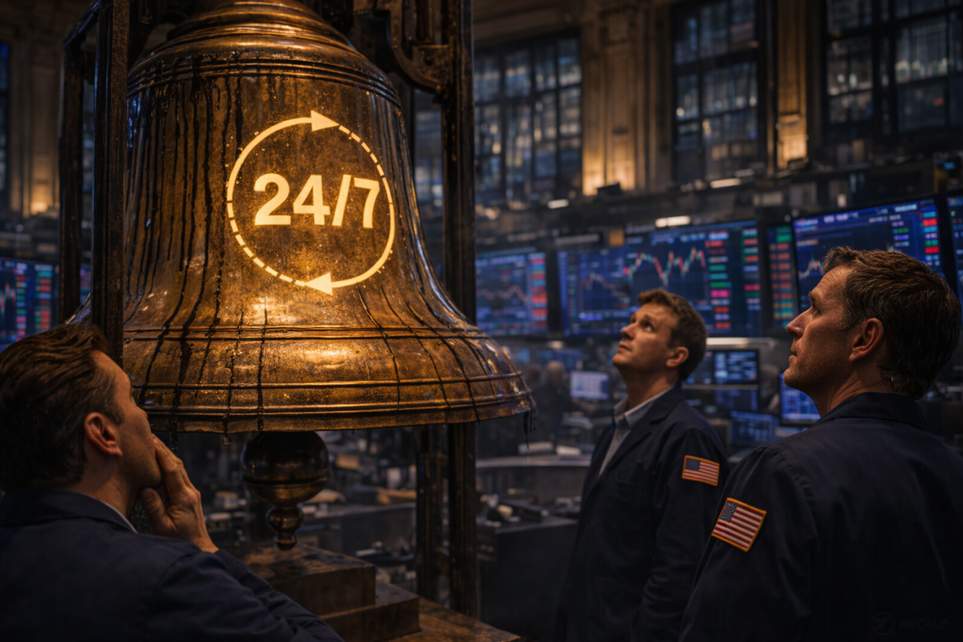
Big Wall Street exchanges are all-of-a-sudden playing catch-up with a crypto-native idea: markets that never sleep. One legacy player is rolling out around-the-clock crypto futures and options, and another is working on a tokenized securities platform designed to settle instantly and operate non-stop. Meanwhile, an offshore, on-chain venue that pioneered always-on perpetual contracts already handles huge volumes and has shown how hungry traders are for constant access.
So you have incumbents pouring money into continuous-trading tech and a crypto-first exchange that already built the thing. That clash is less a polite handshake and more a tug-of-war over who gets to be the default place people use when assets like oil move in the middle of the night.
What’s at stake — rules, reputation, and the next decade of trading
The fight is as much about politics as it is about tech. Established exchanges argue that completely anonymous, permissionless on-chain markets could make price moves harder to police, let bad actors slip past sanctions, or let someone bend huge positions into market-moving bets. Regulators in the U.S. already require regulated venues to have surveillance systems, complete audit trails, and real-time monitoring — tools meant to detect abuse before it spirals.
That isn’t theoretical: regulators recently dug into suspicious oil trades that lined up with big geopolitical announcements, and past enforcement has included massive penalties for spoofing and manipulation in commodity futures. Those examples are the incumbents’ talking points when they bring their case to policymakers: regulated markets must protect market integrity, they say, and the new on-chain players operate outside those guardrails.
But the crypto-native side has a counter-argument that cuts to the chase: customers already like these always-on markets because they’re fast, composable, and open. The on-chain perpetual model settles trades quickly on a blockchain, allows permissionless creation of new contracts, and carries lots of open interest and trading volume. If regulators close the door around commodity-linked perpetuals, those volumes could shrink and institutional flows might head to regulated 24/7 futures instead. If regulators instead limit their concerns to a narrow slice — say, just oil-linked contracts — the on-chain model can keep thriving for everything else.
Put simply: if lawmakers treat this as a market-integrity issue, the regulatory leash tightens and incumbents stand to grab market share. If they treat it as mere competition, or if scrutiny of regulated exchanges shows offshore venues aren’t uniquely dangerous, the crypto-first platforms stay in the driver’s seat.
Either outcome reshuffles the deck. Regulators have to decide whether this is a legitimate risk to price stability and sanctions enforcement or a turf war cooked up by firms that showed up late to an innovation party. Traders, developers, and institutions will watch closely — the verdict will influence which venues become the go-to hubs for lightning-fast exposure to everything from Bitcoin to crude oil.
Short version: expect more lobbying, more regulatory grilling, and a few dramatic headlines. The next few rulings could decide whether the future of always-open trading is governed by old-regime rulebooks or by permissionless systems that perfected 24/7 markets first. Either way, market hours are never going back to bedtime.
