
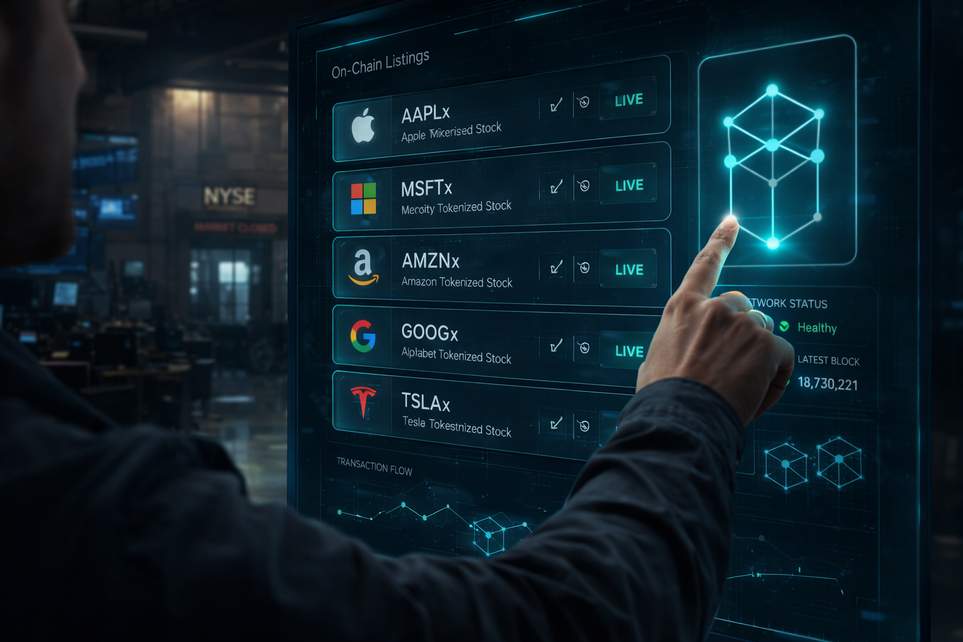
SEC’s Tokenized Stock Plan: Who Actually Owns That Crypto “Share”?
Brace yourself: the next big soap opera in finance won’t be about Bitcoin’s mood swings or another memecoin’s laundry list of promises. It’s about whether crypto platforms can sell digital versions of Tesla, Apple or Nvidia shares that the companies never signed off on — and whether folks buying them realize they might not be actual shareholders.
What is a tokenized stock, really?
Short answer: it depends. “Tokenized stock” is a catch-all that covers two very different beasts.
One kind is fully backed: a regulated custodian actually holds the real shares and issues blockchain tokens that represent those holdings one-for-one. Hold one token, and there’s supposed to be one real share in a vault somewhere backing it.
The other kind is synthetic: it’s more like a price tracker or a derivative. You get exposure to the share price without owning the underlying company or getting voting rights or dividends. It behaves like a stock on a chart but, legally, it’s not the same.
Regulators have taken to drawing that distinction pretty clearly in recent guidance: issuer-sponsored tokens that mirror real equity are different from third-party “wrappers” that only mirror price.
Why people are excited — and why others are losing sleep
There’s real appeal: tokenized stocks can settle almost instantly, trade whenever the mood strikes (yes, even at 2 a.m. on a Saturday), let you buy tiny fractions of expensive shares, and plug into DeFi tools like lending or collateral in ways traditional shares don’t.
But there are spicy downsides. The current regulatory push — an “innovation exemption” being discussed by the SEC — would let crypto-native platforms run experiments with tokenized equities under lighter registration rules for a limited time. That could open the door to tokens that trade on open blockchains while not carrying the usual shareholder protections.
Imagine multiple third parties issuing their own token versions of the same company. Without issuer consent or consistent rules, markets could fragment: price discovery gets messy, transparency suffers, and investors might be unsure what, exactly, they own.
Big names have already started jockeying. Some crypto companies and broker-like startups have sought permission to list or issue blockchain shares. Traditional market players and market infrastructure operators are also building tokenized offerings that sit on familiar rails. Even the big trade processor plans to test tokenized asset trading on systems that already hold traditional securities.
Unsurprisingly, opinions inside and outside the SEC are mixed. Some agency leaders argue that if the U.S. doesn’t build domestic pathways for tokenized securities, activity will just move offshore. Others worry about weakening investor protections, anti-money-laundering checks, and the potential chaos of multiple competing “wrappers” for the same stock.
So the big, boring-but-important question for anyone tempted to click “buy” is: what does this token actually give you? If it confers a legal ownership claim—cool, it’s an infrastructure upgrade. If it’s merely a price-exposure instrument with none of the shareholder rights, it’s something else wearing a familiar name.
Bottom line: tokenized stocks could be awesome infrastructure on one path or confusing, risky knockoffs on another. Read the fine print, ask whether the token carries voting or dividend rights, and don’t assume a blockchain receipt automatically makes you a shareholder. The experiment could be transformative — or the thing you regret buying at 2 a.m. when you didn’t read the label.
