
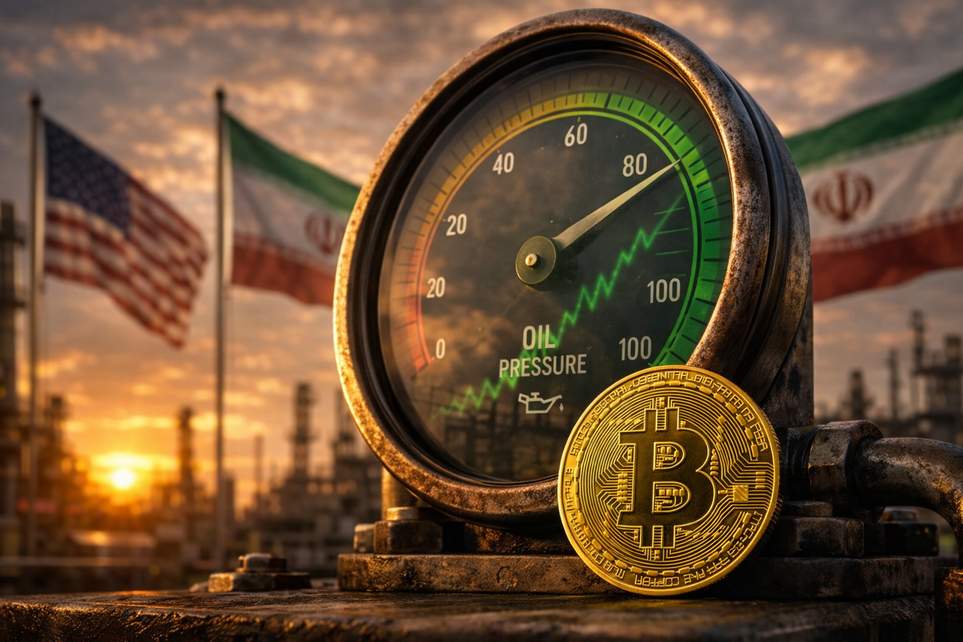
Bitcoin’s Iran-deal Rally: A Relief Bounce Waiting for Proof in the Pumps
Bitcoin popped on fresh optimism about a U.S.–Iran framework that traders hope could calm one of the biggest shock channels to global markets: oil. That initial cheer is a legit macro signal, but it’s conditional — think of it as a hopeful grab at the remote rather than full-on control of the TV. The market needs real-world evidence in tankers, shipping lanes, gasoline prices and inflation expectations before it treats this as a reopened road to easier Fed policy.
Why traders cheered (but don’t break out the victory snacks yet)
The immediate logic is simple: if a deal extends a ceasefire, reopens the Strait of Hormuz and allows Iranian oil to flow on the market again, the oil risk premium should fall. Futures reacted quickly — West Texas Intermediate slid about $4.77 to roughly $91.83 and Brent dropped about $4.86 to roughly $98.68 after the initial news — and that sent risk assets, including Bitcoin, higher. Bitcoin was trading around $77,400–$77,500 on May 25, still well below its October 2025 peak above $126,000, so there’s room for a relief rally.
Why does oil move Bitcoin? Because higher energy prices can push inflation and force the Fed to stay more restrictive for longer. That kills liquidity and makes Bitcoin behave like a risk asset under real-rate pressure. A credible easing of that energy shock loosens the squeeze: gasoline cools, headline inflation softens, breakeven inflation drops, Treasury yields can ease and policies that look hawkish on paper become easier to stomach. But traders are mostly pricing a potential scenario right now — they’ve bought the headline, not delivered barrels.
What needs to happen for the rally to stick
The rally becomes durable only if the deal shows up in the physical data. International agencies and chokepoint monitors put the scale of the problem in stark numbers: global Gulf output was reported to be many millions of barrels per day below pre-war levels, observed inventories drew down by roughly a couple hundred million barrels across March and April, and measured flows through Hormuz and LNG corridors dropped materially. For example, observed transits fell from about 20.7 million barrels per day in late 2025 to roughly 14.6 million in early 2026, while LNG flows also weakened.
Translation: reopen Hormuz and get tankers moving again, plus fill inventories, and futures declines will be backed by real-world supply. If that happens, gasoline prices would likely follow, headline inflation prints would calm, and the Fed would have less reason to keep policy tighter for longer. That sequence is the only thing that turns a geopolitical headline trade into a genuine macro shift.
On the flip side, if flows recover slowly, Gulf production stays constrained, or gasoline stays elevated, the Fed won’t be able to look through the shock. April’s inflation snapshot shows why the sensitivity is so intense: CPI rose about 0.6% month-over-month and roughly 3.8% year-over-year, while energy prices and gasoline were the big offenders. The Fed’s policy stance already reflects that vulnerability — officials held rates in a 3.50%–3.75% range and meeting minutes nudged expected cuts later than markets had hoped.
There’s also a political and verification piece. Markets want durable, enforceable steps on the nuclear front and credible verification so the reduction in risk isn’t just temporary window-dressing. If the final deal is mostly a ceasefire and deferred talks, oil relief could be fleeting. If it includes truly verifiable concessions that reduce the long-term geostrategic premium, the chances of a lasting reduction in energy-driven inflation rise substantially.
Bottom line: Bitcoin’s pop is a sensible relief trade — a funny little celebration for the headline. But don’t confuse the party balloons with a permanent policy shift. For the rally to graduate from headline hype to macro reality, traders will want to see barrels, cargoes, falling gasoline at the pump, cooler inflation prints and a clearer, friendlier path in Fed pricing. Until those boxes get ticked, this remains a conditional bounce with a very active to-do list.
