
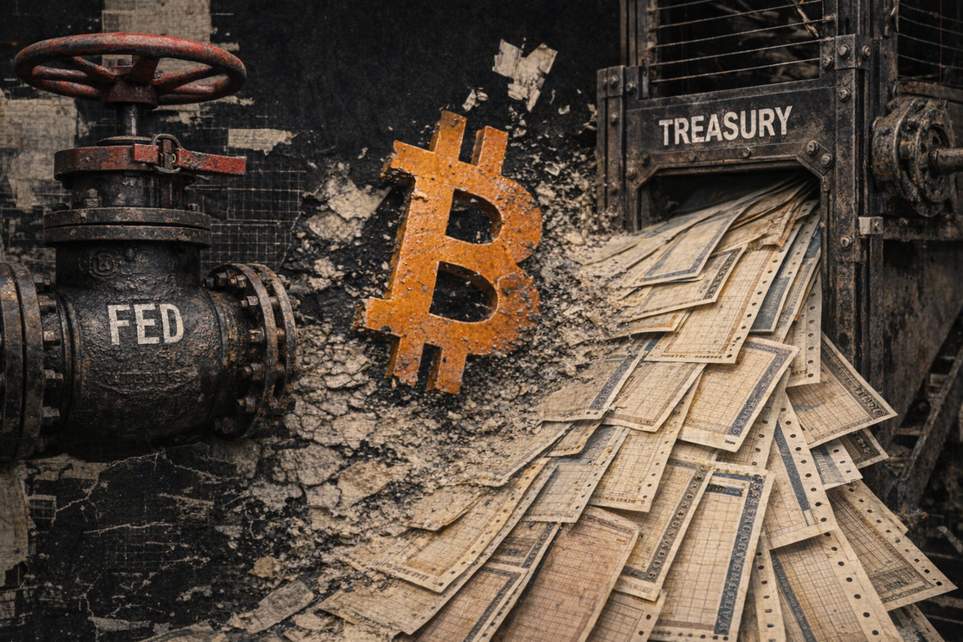
When Washington Plays Tug-of-War: Bitcoin Caught Between the Fed and Treasury
The Strange Dance: Fed Tightening vs Treasury Buybacks
Something weird is happening: one part of Washington is turning off the money faucet while another is rearranging the furniture. In late August the Treasury said it would make certain buybacks of older long-term bonds bigger, and at almost the same time the Fed’s meeting notes reminded markets that some policymakers still wanted higher rates. Those two moves arrived like conflicting stage directions — one trying to make borrowing pricier, the other trying to smooth trading in ancient Treasury bonds — and markets had to improvise.
If you like charts, the 30‑year Treasury yield ticked down briefly around the buyback announcement and then climbed back, which tells us the news didn’t permanently change the price of lending to Uncle Sam for three decades. Short rates are mostly guided by the Fed — they set the overnight tone by paying interest on reserves and steering the policy rate. But long-term yields are a different beast: investors bake in expected short-term rates years out, a guess about future inflation, and an extra premium for the pain of locking money away for a long time. That extra bit, the term premium, is where the long end really lives.
Why should anyone care? Because rising real yields — the return on government debt after stripping out inflation — make safe, income-producing assets more attractive versus speculative, returnless bets. Bitcoin doesn’t pay coupons, so when long-term real yields spike, it becomes pricier to hold bitcoin compared with a bond that hands you real returns. The same logic also slaps valuations for growthy tech companies whose profits are expected far in the future.
Why Bitcoin Feels the Pinch (and When It Doesn’t)
Treasury buybacks and Fed policy affect markets in different ways. Buybacks aren’t magic debt-erasing wands: they’re more like swapping one version of government paper for another. Treasury issues fresh benchmark bonds, uses cash to take older, harder-to-trade issues off dealers’ shelves, and hopes the market breathes easier. The government still owes the money — the operation just reshuffles liabilities to improve liquidity, not reduce the overall mountain of debt.
That’s important because there’s a lot of issuance hitting the market. When the government needs to borrow big sums, auctions can attract the cash that might otherwise wander into riskier assets. If dealers are busy digesting new issuance and the Treasury’s account balance is changing, there can be less spare balance‑sheet room in the system — and that tends to make risk assets like bitcoin wobblier.
Also, don’t confuse Treasury buybacks with quantitative easing. The Fed’s large-scale asset purchases create reserve balances at the central bank and are active monetary policy. Treasury buybacks use government cash and swap maturities without changing the supply of central-bank money. Same sound, different instrument.
So how does bitcoin behave? On days when real yields jump and the Fed’s expected path looks steeper, bitcoin often trades like a long-duration risk asset: volatile and sensitive to the opportunity cost of holding a non-yielding asset. Over longer stretches, though, persistent fiscal deficits and rising interest bills can shift the argument the other way, nudging some investors toward scarce, non-sovereign assets — but that’s a slow, multi-year story rather than a daily market trigger.
Bottom line: think of the yield curve as an orchestra. The Fed is conducting the short-term section, the Treasury is deciding which instruments get played and for how long, and investors set the tune in the middle. Bitcoin today sits in the audience, sometimes dancing to the short-rate beat, sometimes fretting about long-term fiscal sheet music — and occasionally stealing the show when conditions get weird. Either way, it’s a lot more entertaining than your average committee memo.
