
Bitcoin sell pressure hits one-month low as long-term holders tap the brakes
Quick TL;DR: On-chain metrics are showing fewer coins being realized for profit compared with August, meaning selling pressure has cooled. That doesn’t mean the market’s out of drama, but it does mean the crowd taking gains has thinned out for now.
On-chain snapshot: selling is quieter
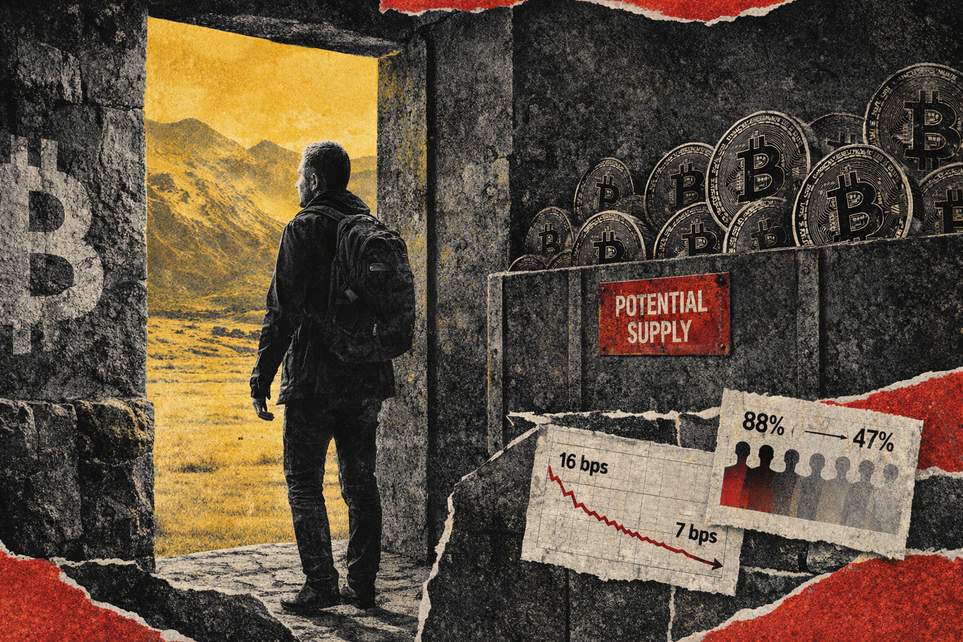
Recent on-chain data put a short-term sell-side risk measure down to about 7 basis points per day on a seven-day average, versus roughly 16 basis points at August’s peak. In plain English: the portion of Bitcoin’s capital base being cashed out has shrunk by more than half from the high-water mark a few weeks ago.
Long-term holders used to account for a much larger share of realized profit — around 88% at the August peak — but that share has dipped to roughly 47% more recently. In other words, the older coins aren’t doing as much profit-taking as they were.
There’s also a chunky block of roughly 1.07 million BTC that was bought in the $83k–$86k range and has barely moved over the past month. Those coins sit overhead as potential supply, but sitting there ≠ selling immediately.
Another on-exchange flow metric, the cumulative volume delta (CVD), stayed negative even as it improved — meaning aggressive exchange selling still slightly outpaced aggressive buying on that particular day. The two metrics measure different things: one tracks profit realization relative to the capital base, the other tracks executed buy vs. sell pressure on exchanges.
Why it matters (and why you shouldn’t freak out… yet)
Lower sell-side risk is good news for bulls because it suggests fewer holders are rushing to cash out. But don’t confuse a lower ratio with vanishing supply — those overhead coins are still there, waiting in the wings.
For price to sustainably climb, buyers need to show up and absorb whatever supply does hit the market. A block of coins sitting at break-even or loss isn’t the same as coins hitting exchanges and being sold; treating them as immediate selling pressure would exaggerate the case against a rally.
Bottom line: market realization has quieted and the makeup of sellers has shifted, which reduces one kind of short-term pressure. That’s worth a nod — and maybe a small celebration — but any sustained run higher still needs real demand to match the potential supply.
