
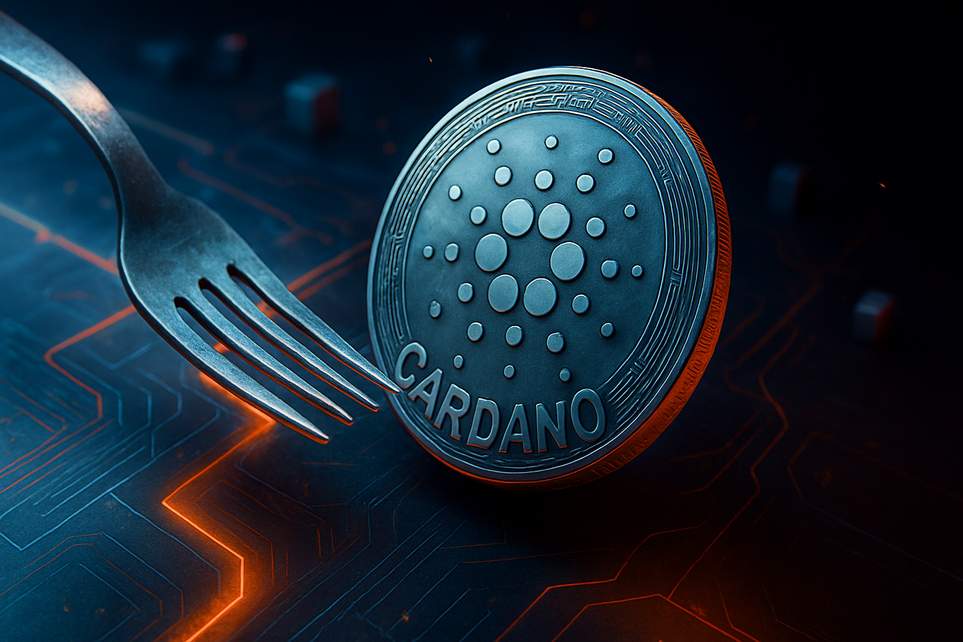
Cardano’s Quiet Reset: A Silent Hard Fork and the Pentad Playbook
Cardano is doing something rare in crypto: fixing serious stuff without a drumroll. The network is rolling out a so-called “no new era” hard fork — Protocol Version 11 — designed to be invisible to markets and exchanges while tightening the ledger after a hair-raising incident last November. No flashy branding, no fireworks, just a surgical tune-up aimed at making the chain behave predictably.
Under-the-hood fixes: tiny changes, tangible gains
The upgrade focuses on reliability and developer ergonomics rather than new marketing slogans. Engineers are enforcing stricter rules around cryptographic key hashes and transaction inputs, and tightening behavior in smart contract runtimes. They’re also adding new built-in primitives — think arrays, modular exponentiation, and richer multi-asset handling — which sound nerdy but can dramatically simplify complex on-chain logic.
One headline feature is support for BLS12-381 multi-scalar multiplication, a cryptographic building block that unlocks faster zero-knowledge primitives and better cross-chain attestations. Benchmarks from the Plutus team say deserialization speeds could improve by double-digit percentages — small per call, but huge when multiplied across thousands of transactions. The upshot: cheaper, faster complex contracts and lower bills for DEXs and lending platforms if they adopt the new tools.
Put bluntly: this fork is a maintenance patch on steroids. It’s meant to prevent another incident like the malformed delegation transaction that briefly split the network last year, and to give engineers and operators clearer, more deterministic behavior to rely on.
The Pentad plan: fewer cooks, clearer recipes
Alongside the technical reset, Cardano’s leadership is leaning into organizational surgery. The founder has proposed consolidating the main ecosystem players — the Cardano Foundation, Emurgo, Input Output Global (IOG), the Midnight Foundation, and Intersect — into a coordinated executive group nicknamed the “Pentad.” The goal is to move from awkwardly parallel efforts to a single, coherent push for commercial traction.
The Pentad idea starts small and practical. Phase one is essentially a “try before you buy” collaboration to deliver missing infrastructure: stablecoins, bridges, oracles and other plumbing that DeFi projects need. Success is measured strictly — pass or fail — and if the pilot works, the group would move to a unified growth phase aimed at expanding Cardano’s DeFi footprint.
Why the hurry? Cardano’s on-chain activity and total value locked lag peers, with TVL well under previous highs and daily active addresses in the low tens of thousands. The native token has mostly tracked macro market moves rather than protocol wins. To close that gap the Pentad plans a targeted stimulus: fund and support 10–15 key dapps as showcase projects, tie budgets to hard KPIs like monthly active users and TVL, and use on-chain info actions to make governance performance-based.
It’s intentionally unsexy compared with announcement-driven upgrade cycles you see elsewhere. But the theory is simple: reliability plus coordination beats hype. With privacy-focused sidechains and RealFi experiments on the roadmap, Cardano is betting that steady, practical improvements — not constant spectacle — will attract real usage. The rest is down to execution, patience, and whether five organizations can actually sing from the same sheet music.
