
Bitcoin thieves stole $1.1B using fake bird noises: Now Malaysia hunts heat signatures from the sky
Think of it like a very modern heist: instead of masks and getaway cars, illegal Bitcoin farms in Malaysia have been using bird calls, heat shields and jury-rigged power taps to run thousands of humming mining rigs on other people’s electricity bills. Authorities say the score is big — roughly 13,800 locations were flagged between 2020 and August 2025, and losses are estimated at about 4.6 billion ringgit (around $1.1 billion).
How the miners pulled off the heist — and how Malaysia fights back
The setups aren’t cute garage projects. Operators move in and out of vacant shops, abandoned houses, and empty mall units. They hook into overhead lines or splice before the meter so the property looks like it’s using normal power while the transformer feeding the area is silently doing the heavy lifting. Rigs get heat shields to hide thermal glow, CCTV to scare off snoopers, and even broken glass strips over doors to slow down any uninvited guests.
Wilder still: some operations play recorded bird noises to mask the whir of machines. Yup — fake chirping to hide ASICs.
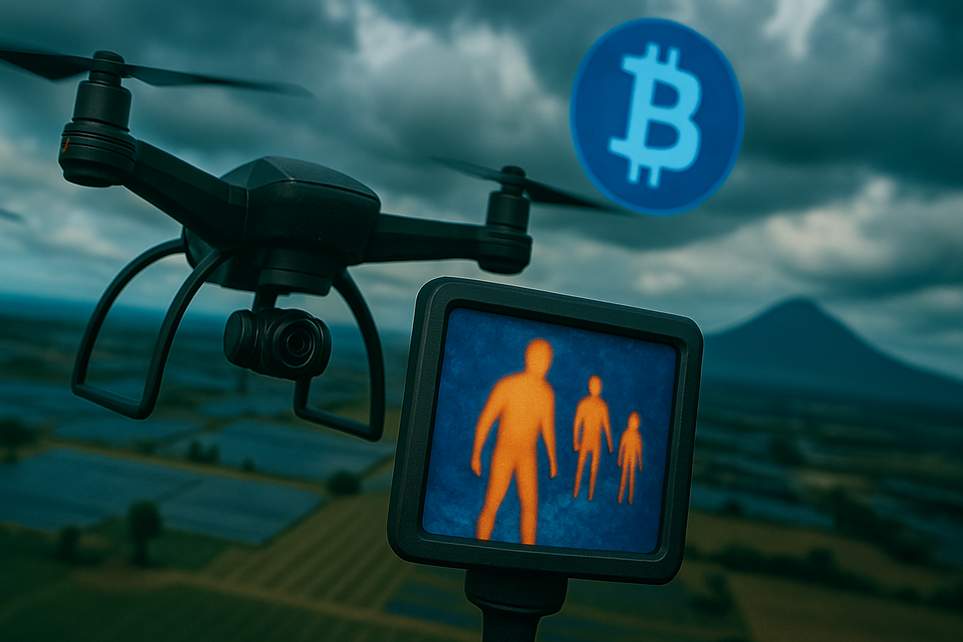
The response has gone high-tech. Distribution transformer meters now monitor neighborhood circuits in real time; if the total going into a transformer is far higher than the sum of the meters under it, that cluster gets flagged. Teams then fly thermal drones at night to map heat signatures and walk streets with handheld load detectors to confirm funny business. Put simply: we used to open every shutter and hope for the best; now data points the way.
Utilities have also built databases linking suspicious locations to owners and tenants to make enforcement stickier. But the industry faces a cat-and-mouse problem: equipment is often registered to shell companies, leases are sublet, and the people running the rigs aren’t necessarily the ones who can be easily prosecuted.
Why this matters — grid stress, policy headaches, and the global shuffle
This isn’t just about unpaid bills. Cheap domestic power rates in Malaysia (effective costs for some users can be extremely low) make theft wildly lucrative: for a bank of ASICs, the difference between subsidized power and free power turns a tiny edge into big, fast profits. Officials warn stolen kilowatt-hours can overload transformers, start fires, and cause outages — problems that can cascade into bigger hits to the whole grid.
Those stakes have pushed authorities to ramp up coordination. A cross-agency panel was formed to tighten the net and even discuss an outright ban on commercial Bitcoin mining — not just the meter-tappers but the whole question of whether the activity belongs on the national grid while the country pursues a cleaner energy mix and a data-center boom.
There’s a global angle too. Whenever enforcement gets strict in one place, miners pick up and move to cheaper or less-policed grids elsewhere — think of the post-2021 mining migrations. Other countries in the region are wrestling with similar headaches, and some are shifting power away from crypto operations toward industries like data centers, manufacturing, or AI workloads.
So what do you picture when you hear “drone sweep”? For Malaysia right now it’s thermal maps, palm-sized sensors, and officers tracing cables — all because a few organized groups decided that bird sounds were a good cover. The chase isn’t ending anytime soon; the rigs just get smarter, and the searchers work to stay one step ahead.
