
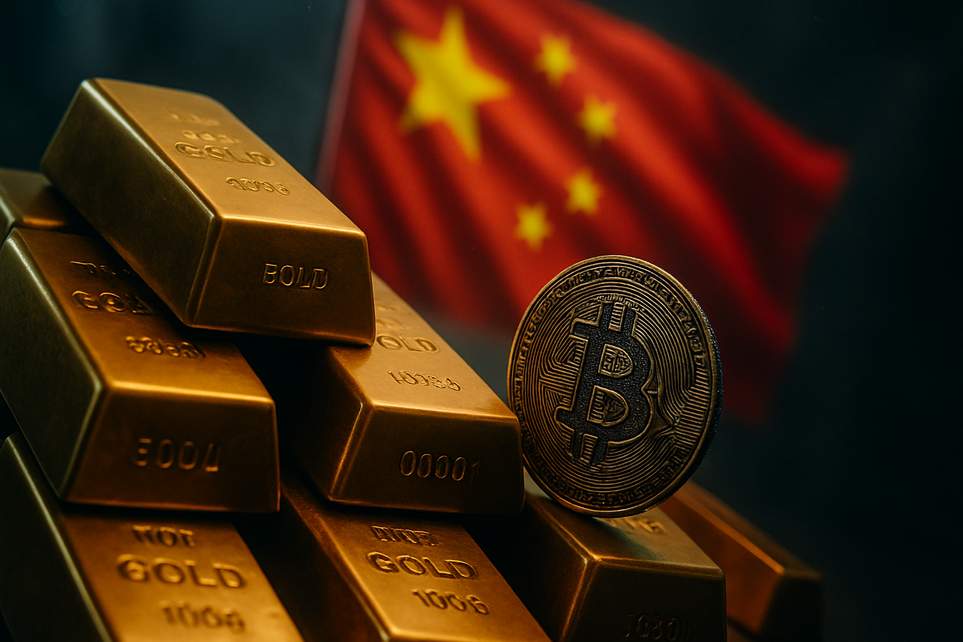
China’s Gold Spree: An Accidental Nod to Bitcoin
China’s central bank has been steadily adding gold to its reserves for over a year now — a slow, intentional accumulation that feels less like a treasure hunt and more like a very deliberate insurance purchase. It isn’t buying Bitcoin, but the move still sends a message: big-state actors are leaning into assets that can’t be easily frozen or swept away.
Why Beijing is hoarding gold
At face value, the People’s Bank of China is just buying bullion. Under the hood, though, this is about avoiding exposure to assets that are someone else’s IOU — things that can be blocked, sanctioned, or remotely seized. After global authorities froze portions of other countries’ reserves in 2022, the appeal of holding physical, domestically stored metal became a lot clearer.
Gold kept at home is awkward for outsiders to touch. That practical reality — plus the symbolic value of owning a scarce, bearer-style asset — explains a big chunk of the policy. It’s less a fashion statement and more like putting valuables in a safe instead of trusting a stranger with the key.
Why crypto folks are nodding (but don’t get excited)
Crypto supporters like to point out that Bitcoin resembles gold in one crucial way: neither is someone else’s liability. Bitcoin has no issuer, no treasury promising to pay, and no traditional counterparty risk. So when a major economy signals that scarcity and non-sovereign ownership matter, it indirectly fuels the logic behind Bitcoin — even if the buyer has zero intention of touching crypto.
Market behavior seems to be reflecting that logic. Analytics teams have reported a much tighter positive relationship between Bitcoin and gold over recent months; the two have moved in rhythm more often than in the past. Traders are increasingly treating Bitcoin not just as a speculative tech play but as something that reacts to global liquidity stress and sovereign balance-sheet worries — similar to how bullion behaves.
That said, the comparison has obvious limits. Gold sits inside long-established legal, custody, and market plumbing that central banks trust. Bitcoin is still volatile, politically fraught, and treated wildly differently across jurisdictions. Swapping a chunk of a central bank’s balance sheet from gold to Bitcoin would require a parliamentary TED talk and a lot of hand‑holding.
There’s also some simple arithmetic nudging investors toward scarce assets. U.S. interest spending has climbed into the hundreds of billions, and projections show debt service continuing to rise. That reality pressures confidence in long-duration government debt and nudges some allocators toward non-yielding stores of value. Gold’s supply ramps slowly; Bitcoin’s issuance is hard-coded and capped — that scarcity math is appealing when faith in nominal debt wobbles.
Bottom line: China’s bullion-buying doesn’t mean Beijing is pivoting to cryptocurrencies. But it does highlight a broader shift in how big pools of capital think about safety when geopolitics and fiscal stress collide. For Bitcoin fans, the central-bank behavior is a sympathetic backdrop — a reminder that scarcity and sovereignty can be surprisingly persuasive arguments.
So no, China didn’t buy Bitcoin. But by making scarcity and seizure-resistance a visible priority, it accidentally strengthened the core story that many crypto advocates keep telling: scarcity plus sovereignty can become a macro thesis the market pays attention to. Whether that becomes policy for actual central banks is another sitcom episode entirely.
