
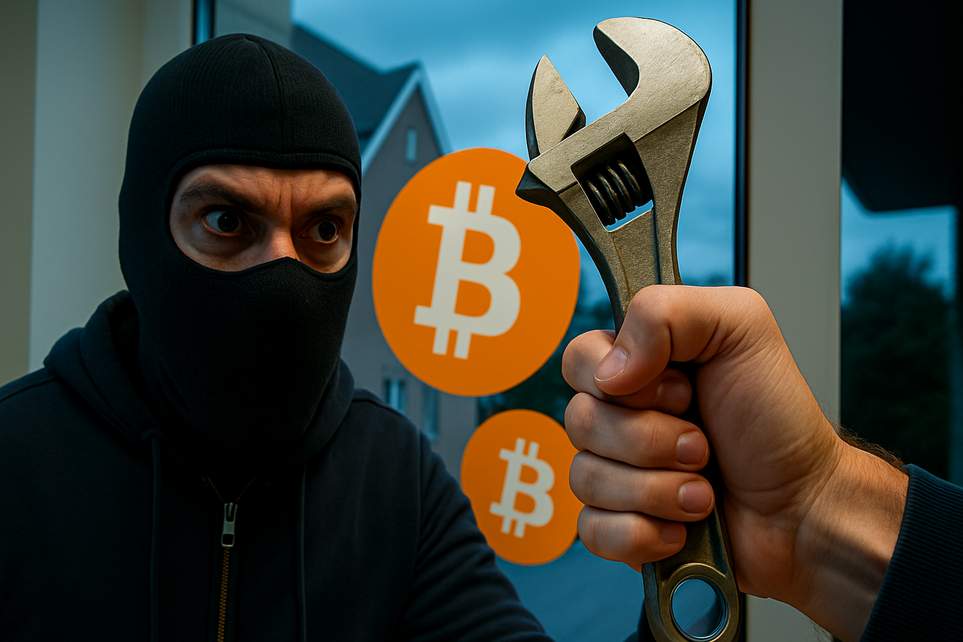
Are You Doxxed? How Crypto Wallets Turned Holders into Targets
If you thought the worst crypto crime was a messy private key or a phishing email, welcome to 2025, where the threat model has a pulse and a map to your front door. Over the past year, violent groups have moved from online scams to full-on real-world extortion: they find who owns what, figure out where those people live, and apply very unpleasant pressure until wallets are emptied.
The new reality: on-chain breadcrumbs meet off-chain leaks
This isn’t an urban legend or a dramatic tweet — it’s a pattern. High-profile attacks have popped up across Europe, North America, Latin America and Asia. In one horrific case, a young man was lured to a hotel garage, tortured for wallet credentials, and later killed; in other incidents families were kidnapped, limbs were threatened or harmed, and million-dollar transfers were forced under duress. Security trackers counted dozens of wrench-style attacks in early 2025 — roughly double last year’s pace — and many investigators say these incidents are happening more frequently and with more professional organization.
How do criminals know where to go? It’s boring and brilliant: public blockchain data shows balances and flows, while data breaches, social media oversharing, property and corporate records, and even conference photos fill in names, family ties, and addresses. Put those two datasets together and you’ve got a shopping list. The old joke about a $5 wrench overpowering cryptography has stopped being a joke and started being a business plan.
Another driver is custody choice. When someone keeps private keys in a hardware wallet or their head, there’s nobody to call to freeze transactions or reverse a transfer. That makes self-custody a juicy target: torture, threats, or kidnapping can be enough to make a transfer happen immediately. Criminal groups have adapted, building cross-border laundering channels and tactics that reduce the chance of being locked up quickly.
Practical (and weird) ways to make yourself a harder target
If you’re a holder, this isn’t doom-saying so much as a wake-up call: convenience is a security trade-off, and the street-level risk model has changed. Here are steps people are actually taking to shrink the bullseye — some sensible, some awkward, but all rooted in the new reality.
First, assume that online bragging and on-chain transparency can be stitched together. Turn down the oversharing: treat public social accounts, conference name badges, and property ownership records like leakable secrets. Use different names and contact info for crypto things where possible, and avoid posting photos that tie your face to a specific house or car.
Second, separate identity layers. Hold property in anonymized entities where legally possible, use mail-forwarding and registered agents, and avoid having family members’ real names appear in public on the same platforms where your crypto activity shows up. Attackers often go after relatives because they’re easier to find and frighten.
Third, reduce single points of failure. Multisig wallets, timelocked contracts, and shared custody schemes make it harder for a single coerced person to hand over everything. Yes, these add friction and complexity — but they also remove the perverse incentive that makes torture pay for criminals.
Fourth, practice good operational security: think like a privacy nerd, not an influencer. Use dedicated devices for sensitive keys, keep software patched, and limit who knows what. If you have high exposure, consider professional risk assessments and physical security measures — from safe rooms to vetted security teams.
Finally, remember that geography and law aren’t guarantees. Criminal networks move fast across borders, and extradition or asset-freezing is often slow or impractical. That means prevention matters more than hoping police can undo a forced transfer after the fact.
None of this is comfortable. The trade-offs between living a public life and keeping your savings safe are sharper than ever. But the upshot is simple: treat your keys like the nuclear launch codes of your personal finances, and don’t be the person who makes a criminal’s job easy.
