
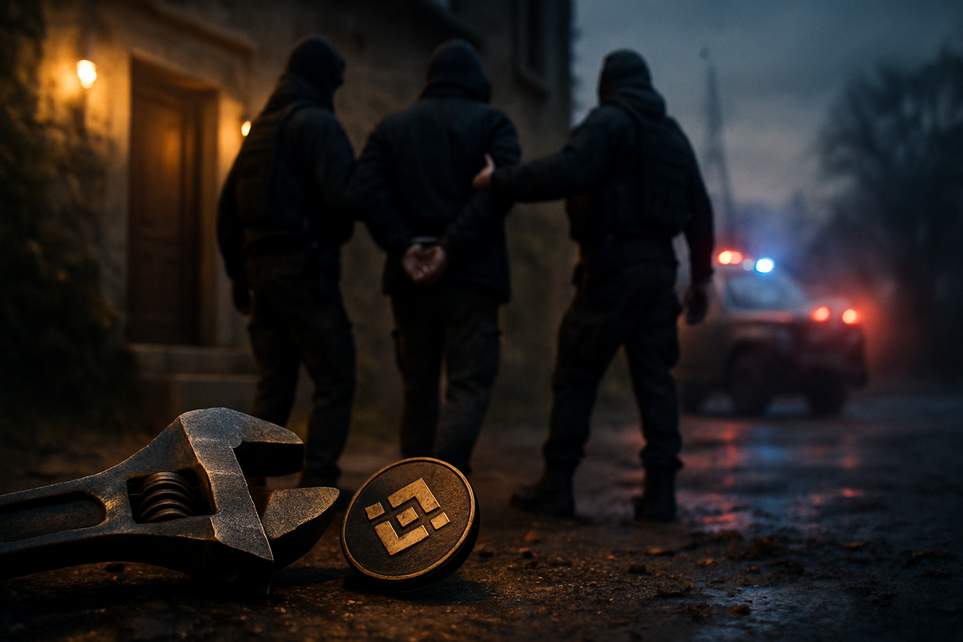
When the Wrench Attack Levels Up: The Binance France Break-In
A bungled Paris‑area break‑in — and why it’s creepier than it sounds
In mid‑February a home invasion in the Paris suburbs went spectacularly wrong for the attackers — but perfectly right for anyone paying attention to the new rules of crypto‑crime. The target was an employee tied to Binance France; the company confirmed the person and their family are safe. The assailants reportedly stole two phones, first entered the wrong house (awkward!), then moved on to the intended address and were later arrested at a train station. That little misstep doesn’t make this amateur — it actually highlights planning and intent.
Why the fuss? Because this wasn’t a random grab for a wallet left on a counter. The suspects were hunting a named figure associated with a recognizable exchange. That marks a shift: attackers have stopped treating crypto as anonymous treasure buried in cold storage and started treating people — executives, relatives, visible employees — as a higher‑value, faster‑payoff target.
In plain terms: the wrench attack has graduated from smash‑and‑grab to a more organized, OSINT‑driven business model. Instead of cold wallets and private keys, the new playbook is about people, their homes, and anyone close to them who’s easier to reach than a security‑trained executive.
Why France keeps getting name‑checked — and what comes next
There are multiple reasons France keeps cropping up in these cases. First, it has a relatively dense, public crypto community: well‑known companies and founders with traceable footprints make great targets for anyone willing to do a little online legwork. Second, data leaks and public records have made it easier than ever to turn a username into a doorstep. High‑profile breaches and reports of sensitive lookup data allegedly finding its way into the wrong hands have amplified that problem.
Third, this is no longer single‑actor hooliganism. Reporting shows groups operating with division of labor, logistics, and cross‑border links — in short, scalable criminal infrastructure. When gangs organize, they iterate, refine what works, and pass along playbooks. That’s why copycat incidents spread.
Fourth, regulatory compliance can be a double‑edged sword. Rules meant to prevent money laundering often require identity collection and data sharing. More databases holding more identifying information means more potential leak points. If those systems aren’t treated as serious security liabilities, they become a goldmine for anyone trying to map people to places.
So what does all this mean for the crypto world? Short answer: hardening, higher costs, and awkward choices. Executives and high‑net‑worth individuals will likely invest more in personal security, go off the radar, or move assets into institutional custody. That may reduce the reward for a wrench attack, but it also recentralizes risk around bigger targets — and shifts the crime back toward cyber and institutional attacks.
There’s a silver lining if regulators and platforms act: stricter limits on who can access sensitive records, better breach penalties, and treating data access like an actual security problem (not just a compliance box) would reduce the ease of target discovery. But that needs policy plus enforcement — otherwise, the attackers keep professionalizing and the defense just keeps getting pricier.
Bottom line: criminal tactics have matured, and so must defenses. The good news is the playbook is visible; the bad news is that visibility makes copycats cheerful. Expect more caution, more bodyguards, and more people wondering whether being famous in crypto is suddenly worth the trouble. Also expect criminals to keep evolving — because they always do.