
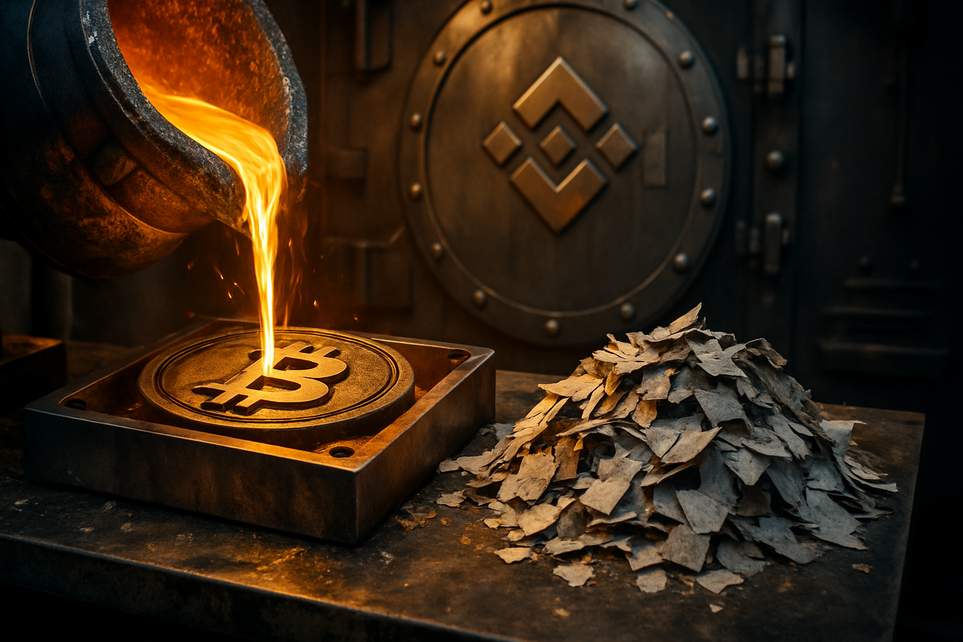
Binance’s Big Bitcoin Move: A Billion-Dollar Trust Play (or a Very Volatile Safety Net)
The move, spelled out without the corporate poem
Binance announced it will convert roughly $1 billion of its emergency insurance stash — the so-called SAFU fund — from stablecoins into Bitcoin over the next 30 days. If the BTC conversion ever drops the fund below $800 million, the exchange pledges to top it back up to $1 billion. The buying is planned to be gradual (think tens of millions a day) and the wallet will be visible on-chain for anyone who wants to watch the math in real time.
In plain English: Binance is swapping calm, boring stablecoins for volatile Bitcoin and promising to refill the pot if the value tanks. That promise functions like a giant, public put option — and it’s deliberately loud and verifiable.
Why this is either genius PR or a nervous-feeling gamble (or both)
On the pro side, the move screams “skin in the game.” Holding emergency reserves in Bitcoin is a bold signal that the company is aligning itself with the market instead of hiding behind cash-like assets. Making the promise public and auditable is smart for optics: anyone can watch the wallet and see whether Binance actually does the buying and top-ups it promised. That can help rebuild trust after past moments when the exchange’s reliability was questioned.
On the cautionary side, insurance money is usually supposed to be boring, stable, and ready to pay out when things go sideways — which sadly tends to be when Bitcoin is plunging. If the market crashes and SAFU is sitting in BTC, the backstop could be worth much less exactly when it’s needed the most, forcing Binance to inject fresh funds into a stressed market. Executing that top-up quickly and cleanly during chaos is the test; if they fumble, the promise could become a bigger credibility hit than having never made it.
There are a few obvious scenarios to watch: a smooth execution where the conversion completes and markets shrug it off; a messy middle where bitcoin falls during conversion and Binance must top up amid volatility; and a worst-case where a payout-worthy event happens while the fund is depressed, forcing a real-time stress test of both treasury operations and communication.
Ultimately, this is a bet on signaling. Binance is gambling that the reputational upside of a public, auditable commitment (plus the PR brownie points of “we’ve got your back”) will outweigh the operational risk of holding a volatility-exposed emergency fund. Whether it’s smart or reckless will only be clear the next time the market breaks — and whether Binance can move faster than the panic.
Either way, it’s a theatrical solution: loud, observable, and impossible to ignore. Pull up the on-chain explorer and keep your popcorn ready; the real verdict will arrive in the next market wobble.
