
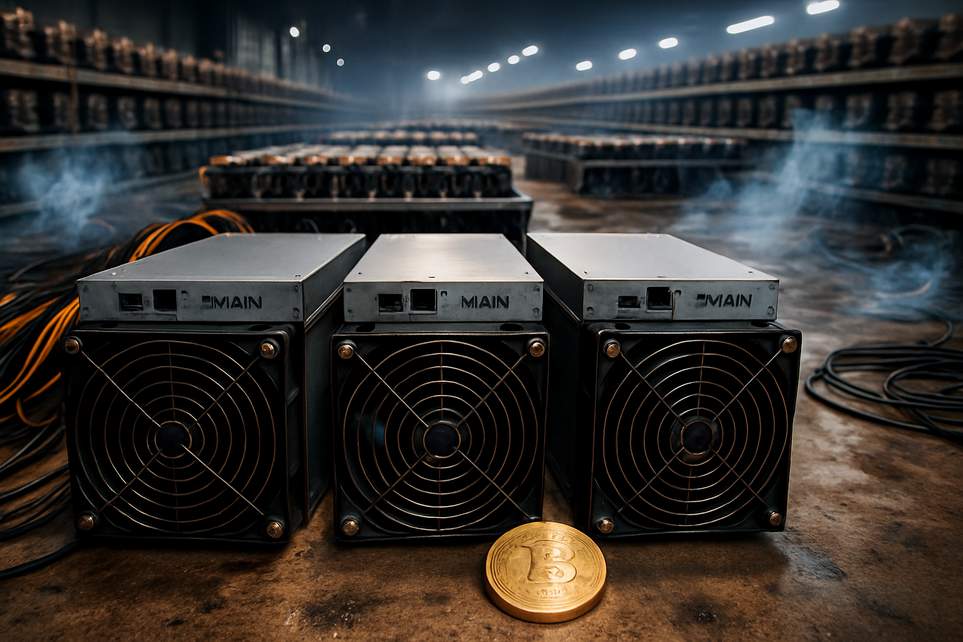
Bitmain Slashes Miner Prices — The “BTC Up = ASICs Up” Rule Gets a Rewrite
Bitmain cut prices — so what did they actually do?
Bitmain quietly trimmed the sticker prices on a bunch of its Bitcoin miners late in the year. The discounts touch current-generation hydro and immersion units — think S19 variants and the newer S21 family — and some containerized bundles are being marketed at per‑TH prices that would’ve made 2021 buyers spit out their coffee.
Reported figures on the table include container bundles for S19 XP+ Hydro coming in around $4 per TH, with some S19 Hydro quotes slipping as low as $3/TH. Newer immersion or hydro S21 models are being shown in the $7–$8/TH ballpark before any coupons. Bitmain is also pairing machines with hosting deals, with power rates quoted roughly in the 5.5–7.0¢/kWh range plus a small management fee.
Translation: hardware isn’t flying off the shelves the way it used to when Bitcoin strength automatically meant massive margins for miners. The market has become far less about panic-buying scarce boxes and more about careful math and predictable power access.
Why buyers are thinking like spreadsheet wizards (and what the numbers say)
Here’s the boring-but-important bit: miners buy gear based on expected cash flow, and the clearest single metric for that is hashprice — basically how much USD you can earn per unit of hashing power per day. In a recent snapshot, USD hashprice averaged right around $39–40 per PH per day, with one low point near $35 on a single date.
That sounds nerdy, so let’s run a concrete example. One petahash is 1,000 terahash, so $40/PH/day translates to roughly $0.040/TH/day. A 200 TH machine at that rate would gross about $8 per day.
Power math time (you love this): if the rig runs at roughly 19 J/TH, the whole box pulls about 3.8 kW, which is about 91.2 kWh each day. At a midrange hosting energy price of $0.06/kWh, that’s roughly $5.47 of electricity daily. So after power you’re left with about $2.50–$2.60 per day — and that’s before you pay for facility fees, pool cuts, downtime, repairs, and other delightful surprises.
Now the money question: if the hardware costs $4/TH, a 200 TH machine is about $800 up front. Divide $800 by the ~ $2.53 daily margin and you get a simple payback of around 316 days. That’s nearly a year before you’ve recouped capital on paper, and reality usually stretches payback even further.
Point being: buyers are pricing rigs based on internal return thresholds, not on nostalgic scarcity stories. When payback is measured in months instead of weeks, discounts on new models make sense — and OEMs can’t just slap higher prices on stock because demand isn’t overwhelming.
This cycle behaves more like industrial procurement than collector frenzy. Lead times are shorter, secondary markets are more active, and manufacturers are competing across multiple product tiers. Bundling machines with hosting or containerized services is one tactic: if power and site capacity are the real bottlenecks, selling “machine + rooftop” is an easier pitch than just selling another box.
Another important tailwind nudging miner behavior: diversification. A chunk of capital that used to go straight into maxing out hashrate is now being eyed for flexible infrastructure — stuff that can be used for AI or other high‑performance workloads. That means some miners are happy to chase revenue streams beyond raw Bitcoin mining, which reduces marginal demand for ASICs when margins are thin.
Finally, watch the forward curve: USD‑denominated forward hashprice snapshots showed declines in the short run (mid‑Dec estimates were meaningfully lower than early‑Nov levels), while BTC‑denominated forwards looked different. If you pay most costs in dollars, the USD view is what keeps the lights on. Until transaction fees or steady higher hashprice become a thing for months at a time, buyers will keep treating $/TH as a payback instrument, not a speculative trophy.
Bitmain’s January shipping window for these discounted bundles will be a real test: will miners bite at sub‑$10/TH pricing under a $35–$50/PH/day environment? If you’re betting with spreadsheets rather than FOMO, the answer is going to come down to assumed uptime, power contracts, and how many other people are trying to sell you the same dream.
Either way, the old rule — that a rising Bitcoin price automatically sparks hardware scarcity and instant markups — looks like it got a very bureaucratic rewrite. Bring your calculators and a sense of humor.
