
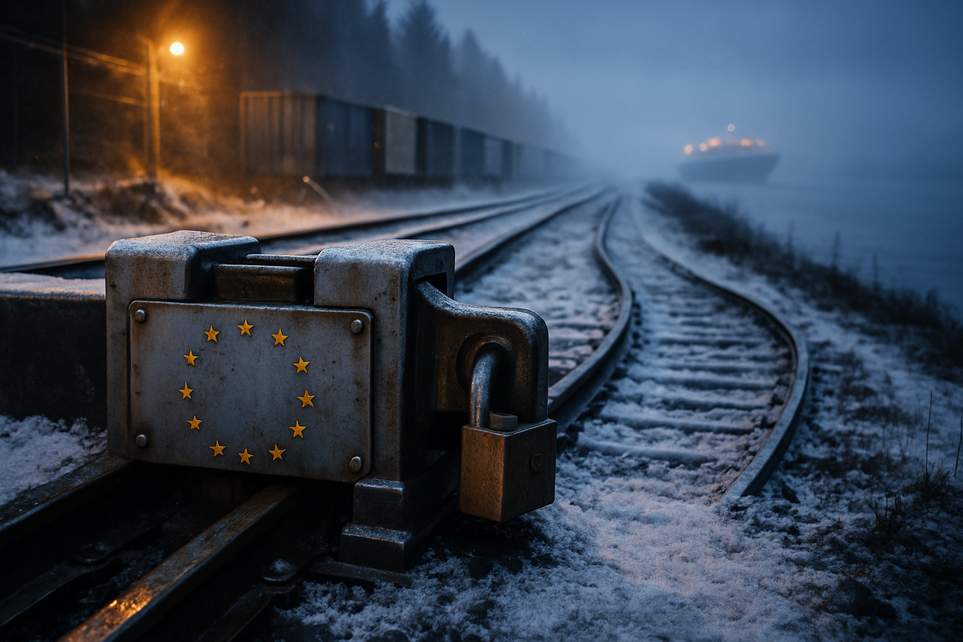
EU’s Crypto Blanket Ban on Russia: Can It Choke the Rails?
Brussels is cooking up a blanket ban on virtually all crypto dealings tied to Russia — not just punching individual bad actors, but trying to make the whole railway inconvenient to ride. The idea is simple: if you can’t touch the main plumbing, you make life miserable for anyone trying to move money around. Whether that actually works is a different story (spoiler: Russia is already pretty nimble).
What the ban is actually trying to hit — and where the workarounds live
The proposed approach expands the target from a few sanctioned companies to entire pieces of infrastructure: regulated exchanges, stablecoin issuers that act like on/off ramps, and financial middlemen in third countries. In other words, it’s less “hit the players” and more “poll the pipes.”
Evading crypto sanctions tends to happen across three layers: faking or hiding identities (fake KYC, shell entities), routing through friendlier jurisdictions (offshore exchanges, OTC desks, Telegram brokers), and switching instruments (stablecoins and tailor-made tokens that mimic banks without looking like banks). The identity tricks are the cheapest and clumsiest; jurisdictional routing and bespoke payment rails are where the real cat-and-mouse begins.
We’ve already seen the effect: activity through centralized, regulated exchanges slipped noticeably while activity on no-KYC or decentralized venues surged. Stablecoins, in particular, dominate the shadow economy of cross-border token moves — they’re convenient bearer-like instruments and they’re how a lot of on- and off-ramping happens. That’s why stablecoin issuers are such an attractive chokepoint: if those companies refuse redemptions or freeze wallets tied to sanctioned actors, friction spikes fast.
There are precedent moments where freezing a few critical wallets shut a door temporarily — but the traffic often reroutes to Telegram-based brokers, offshore platforms, or bespoke tokens designed to sidestep Western plumbing. Disruption happens; elimination is much harder.
How this could play out — three blunt scenarios
Scenario one: compliance-only. EU exchanges and custodians do the paperwork and block obvious Russia-linked flows. That cuts touchpoints with EU platforms substantially, but the money doesn’t disappear — it moves offshore. Result: EU visibility and leverage fall, but the overall crypto activity tied to Russia mostly continues elsewhere.
Scenario two: chokepoint squeeze. This is the heavy coordination play — stablecoin issuers cooperate, the EU leans on non-EU gateways through secondary measures, and supervision of domestic crypto firms becomes strict and consistent. Redemptions and wallet freezes make cashing out way more expensive and risky. Activity continues, but at higher spreads and with more intermediaries; it’s still possible, but painful and riskier for the users.
Scenario three: symbolic enforcement. Political friction or patchy supervision leave the ban as mostly a headline. If third-country exchanges and banks keep serving Russia-linked customers, and stablecoin issuers don’t fully block redemptions, the ban’s practical effect is tiny. It’s mostly diplomatic theatre with little operational bite.
Bottom line: can the EU actually choke the rails?
If the goal is to make Russia pay a meaningful premium to move funds, the EU needs three things: clear, broad legal language that covers facilitation as well as direct transfers; cooperation from stablecoin issuers and other private chokepoints; and credible pressure on third-country gateways. Without all three, the policy becomes a sophisticated reroute order rather than a shutdown.
In plain terms: cut the stablecoin on- and off-ramps and you raise the cost quickly. Push third-country intermediaries to choose between easy access to EU markets and doing business with sanctioned actors, and the pain multiplies. Fail at either, and the flows just duck out of sight — which Russia has already shown it’s willing to do, at a price.
So yes, the EU can make the rails bumpier. But unless Brussels can line up private issuers and bend non-EU hubs to its will, expect the traffic to move offshore rather than vanish. Think of it as trying to dam a river with soda bottles: you’ll slow things down, and you’ll get splashy headlines, but the water finds a way around unless you bring heavier stuff.