
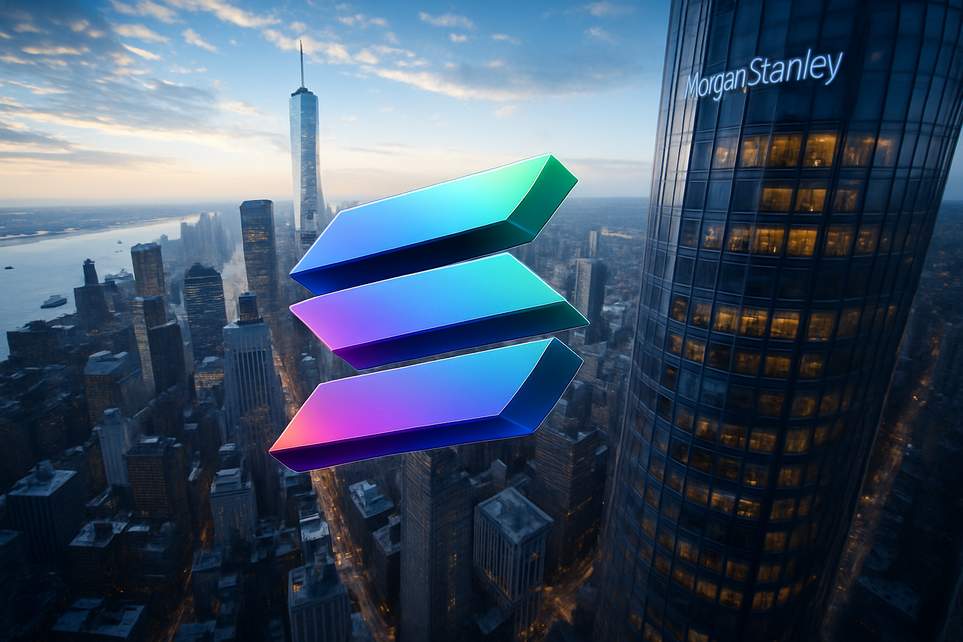
Institutions Are Trying Solana — But One Thing Still Makes Them Nervous
For a while, the headline about Solana was one of wobbly volatility and occasional network hiccups. Lately, the conversation has moved from “will they?” to “how much?” Big names are no longer just whispering about Solana — they’re piloting real projects on it. That’s a big deal, even if some people still clutch their risk-tolerance charts like a security blanket.
Why big players are actually touching Solana
Let’s cut to the chase: this isn’t rumor mill theater. A U.S. state launched a government-backed digital dollar with distribution on Solana, a heavyweight asset manager is helping back the reserves, and major financial firms are filing paperwork or running pilots that use Solana for settlement and tokenization. That combination — public-sector credibility plus institutional plumbing — changes the tone from “maybe someday” to “let’s test this now.”
There are two very different bets people used to confuse. One is the speculation angle — buying SOL or investing in funds that wrap SOL exposure. The other is the boring-but-important one: using Solana as a settlement highway for stablecoins, tokenized cash, or short-term paper. The first is about appetite and regulation; the second is about speed, fees, uptime, and whether IT and compliance teams can sleep at night.
Practical signs of adoption turned up on multiple fronts: payment networks expanding stablecoin settlement capabilities onto Solana, a major bank tokenizing short-term debt with on-chain settlement, and large custodial filings that signal Wall Street is building distribution channels. On-chain figures help tell the story, too — the chain hosts many billions in stablecoins (with USDC making up a large slice), millions of active addresses and a busy transaction ledger, plus nearly a billion in tokenized real-world assets. Those are not vapor metrics; they’re the kind of numbers institutional teams point to when forming a risk memo.
Still, there’s a wrinkle. Institutions fret about centralization: concentrated stake, validator economics that favor big players, and the potential for client monoculture to turn a single bug into a network-wide headache. A new validator implementation went live to break that monoculture and lower systemic risk, which is helpful, but it doesn’t magically fix stake concentration or governance optics. So the question institutions ask is not “Is Solana perfect?” but “Is the risk bounded and manageable?”
Three things to watch — the short checklist
1) Wrapper wave: Will the filings and looser listing rules actually produce a steady stream of Solana exchange-traded products, and will those products attract real assets? If Solana wrappers gather billions (even low single-digit billions), distribution is happening. If approvals show up but nobody puts money in, it’s a shrug.
2) Rails-first adoption: Are payment networks, banks, and regulated issuers choosing Solana for stablecoin issuance and settlement because it’s fast and cheap enough for routine cash flows? Track the stablecoin supply on Solana and whether large, regulated issuers and banks commit to it for operational use rather than just experiments.
3) Backlash / re-risking: It only takes a major outage, exploit, or governance fiasco to make pilots pause and institutions pull back. If issuers reduce Solana exposure or wrapped products underperform after an incident, the narrative could swing back toward “too risky.”
Bottom line: the debate is shifting from whether Solana is legit to how big a piece of the institutional pie it gets. Real adoption will be measured in products launched, assets deployed, and whether outages stay hypothetical. If those metrics improve and no calamities happen, the “institutions won’t embrace Solana” line starts to look like vintage hot takes.
So: keep an eye on the ETP pipeline, stablecoin issuer quality, and any headline-making incidents. If you like drama, this next stretch will be interesting; if you like spreadsheets, the numbers should tell you everything you need to know.
