
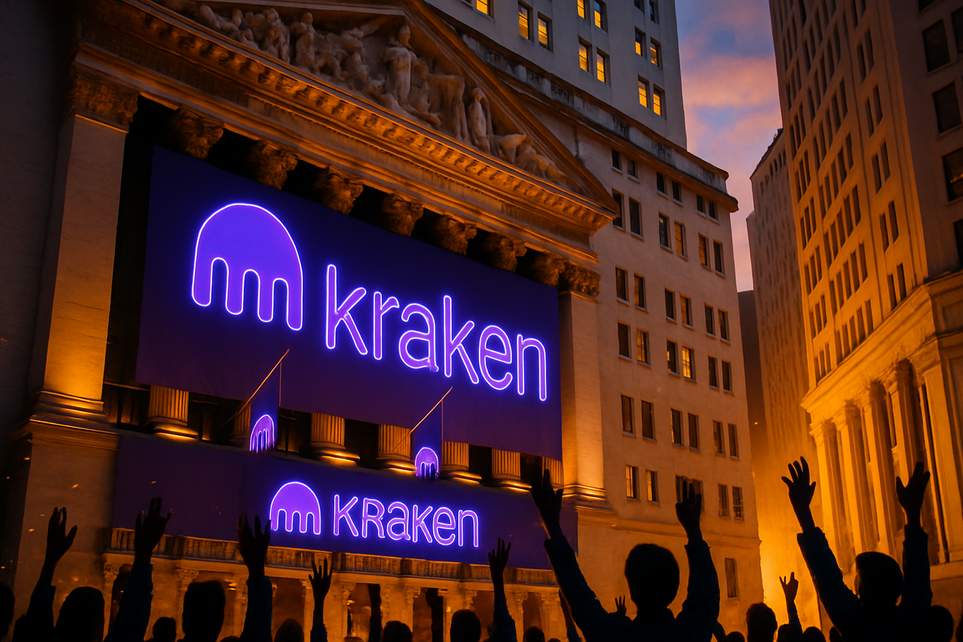
Kraken’s Stealth IPO Sparks a $100B Crypto Listing Frenzy
Kraken quietly filed confidential paperwork for an IPO and, like a prank that keeps getting worse, the whole crypto sector suddenly remembered how to line up for public markets. That hush-hush filing came after an $800 million funding round valuing Kraken at about $20 billion — with big-name institutional investors showing up like they heard there would be snacks: Jane Street, DRW Venture Capital, Oppenheimer, and Citadel Securities among them.
Why Kraken’s quiet IPO matters
This isn’t just another company wanting to slap a ticker on their logo. Kraken’s move is the clearest signal yet that a bunch of crypto firms are trying to flip the script — from wild startup energy to buttoned-up financial infrastructure. Circle already went public earlier this year, and firms such as BitGo, Gemini, Bullish, and Grayscale are also pursuing public listings. Industry leaders now estimate that combined valuations for these listings could approach the neighborhood of $100 billion.
What makes Kraken stand out is the way it grew: public reports say the exchange pulled in around $1.5 billion in revenue in 2024 and exceeded that number within the first three quarters of 2025. Even wilder — until very recently Kraken had only taken about $27 million in primary capital, meaning it funded a lot of its expansion from the business itself rather than a steady diet of VC cash. The new $800 million raise is the biggest in the company’s history and brought in strategic partners who know how modern markets actually tick. Citadel Securities reportedly committed $200 million and will help with liquidity and risk management — basically matchmaking for order books.
Kraken hasn’t been sitting still on the product front either. It’s been buying companies, building out derivatives and equities capabilities, and launching tokenization and payments plays. Acquisitions and tools like a planned xStocks platform and recent purchases aimed at derivatives trading mean Kraken wants to be more than a crypto exchange: picture a regulated, multi-asset trading house that happens to love tokens.
What this means for the crypto world
The big takeaway: crypto is moving from a speculative culture to one that wants to be treated like traditional finance — audited books, licensing, institutional custody, and steady cash flows. If these companies make it through public-market due diligence, investors will begin valuing them as financial infrastructure rather than roller-coaster retail destinations.
That shift should change incentives. Public listings force quarterly reporting, independent audits, and visible compliance processes. Firms that followed the “growth at all costs” playbook might find themselves outpaced by outfits that run disciplined operations, diversify product lines, and actually make money outside of bull-market frenzy.
Also, the nature of competition changes. These newest applicants aren’t just competing for traders’ attention; they’re competing to be the plumbing for tokenized assets, cross-border payments, stablecoin rails, and custody for major institutions. The presence of heavyweight market-structure firms investing in and partnering with crypto platforms underlines how traditional finance is increasingly willing to plug into this world — as long as the wiring is clean.
So yes: Kraken’s stealth IPO filing feels like the opening bell on a coordinated listing season. Whether this turns into a smooth parade or a chaotic conga line is still TBD, but for the first time in a long time the crypto ecosystem is pushing to be judged by the same yardsticks as other financial firms — profitability, regulation, and boring-sounding but very important operational rigor. In short: crypto’s trying to grow up, and it brought its own briefcase.
