
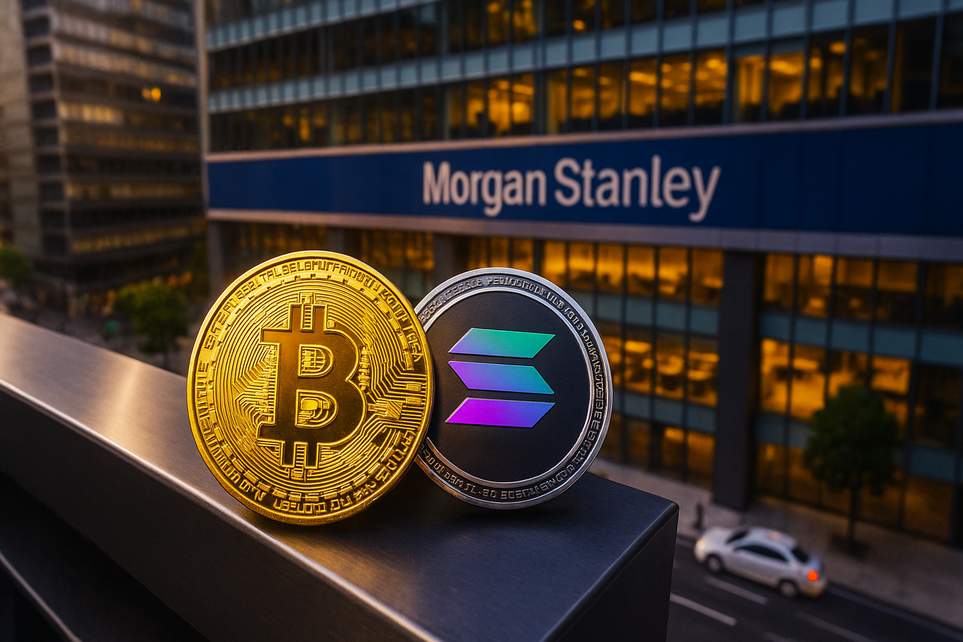
Morgan Stanley Files Bitcoin and Solana ETFs — But Skips Ethereum and XRP
What Morgan Stanley actually filed
Morgan Stanley quietly slipped into the SEC’s inbox with applications to launch two spot ETFs: one that tracks Bitcoin and another that follows Solana. These funds are plain‑vanilla in intent — passive vehicles designed to mirror token prices without leverage or active trading shenanigans.
The Bitcoin vehicle is structured as a trust sponsored by Morgan Stanley Investment Management and will value shares using market trade flows across major spot exchanges. Operationally, the trust will buy and sell coins mainly to create or redeem share baskets, and it may sell some crypto to cover fees and expenses.
The Solana trust looks a lot like the Bitcoin one, but with a twist: it plans to stake a portion of its SOL holdings and pass staking rewards to investors. To do that, the sponsor will hire outside staking providers, collect rewards, and distribute them to shareholders on a quarterly cadence. The paperwork flags the usual headaches — warm‑up and withdrawal windows, potential tech failures, and the ever‑lovely risk that a third‑party staking operator could underperform or get compromised. Also, the sponsor will keep a slice of staking rewards as a fee (percentage not specified yet), so the bank’s upside is tied to how well that staking operation runs.
Why this matters — and what’s oddly missing
Timing is not an accident. Recent regulatory tweaks have smoothed the rails for crypto investment products and bank activities, making it easier for big institutions to roll out these vehicles. At the same time, Morgan Stanley has been loosening internal rules around client access to digital assets, increasing institutional allocations and even planning a crypto trading service on its E*Trade platform. Put those pieces together and launching branded ETFs feels like the next logical step.
But here’s the eyebrow‑raiser: Morgan Stanley picked Bitcoin and Solana and skipped Ethereum and XRP for now. That choice stands out because funds tied to those other large tokens have shown notable inflows and investor interest. Whether this is a regulatory caution, a product timing play, or simply a strategic bet on two tokens they think they can package cleanly, it sends a signal: the bank is being selective, not shotgun‑happy, about which crypto bets it wants under its own name.
Bottom line: this move quietly marks a deeper push by a major Wall Street brand into crypto — conservative in structure, a little creative with staking, and strategic in scope. Expect more product filings and brand moves as banks test the market, but don’t be surprised if the next round looks different depending on how regulators, staking tech, and investor demand shake out.