
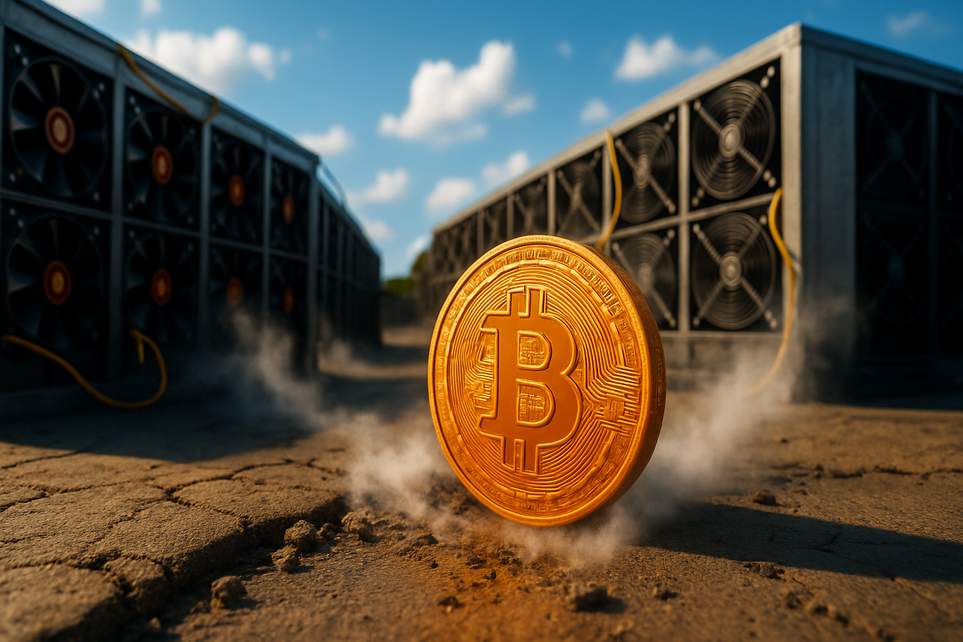
Where the Watts Go: How Bitcoin Is Redrawing the Map
For centuries factories chased cheap labor, ports and railheads. Now a new tenant—Bitcoin mining—shows up with a different checklist: cheap, unused electricity, a fiber line, and a couple of techs who can fix a stubborn rack of machines. The product is digital, the workforce is tiny, and the power can be truly stranded. That changes where “industry” can live.
Why miners love ‘wasted’ power
Modern mining rigs are basically portable compute organs: container-sized, short-lived, and hungry for cheap watts. Unlike steel mills or car plants, a miner doesn’t need a dock or a huge labor pool — it needs electrons. That makes midday solar dumps, wind-heavy plateaus, and hydro spillways irresistible. Grids sometimes produce more renewable energy than they can move, and operators curtail generation or pay negative prices to avoid costly shutdowns. That’s free or even paid power for anyone who can switch on fast.
In a place like California’s grid, curtailment has climbed into the terawatt-hours. Sometimes generators literally pay to offload electricity because stopping turbines costs money or because tax credits depend on production. Enter miners: they can be the plug-and-play customer that soaks up those stray megawatts. Some firms pair modular data centers with renewables, or locate next to stranded generators, turning otherwise wasted output into hash and, often, into additional revenue streams like demand-response credits.
Bitcoin farms used to migrate seasonally: hydropower in wet seasons, coal-region relocations in dry spells. After crackdowns in one country, that mobility globalized—whole farms were lifted and reassembled in new grids. ASICs depreciate fast and produce the same digital product anywhere, so hashrate flows across borders in ways factories never did. Jurisdictions respond by trying to lure the activity: tax breaks on electricity, long-term power deals, fast interconnection and other sweeteners. The result is a bidding war for the cheapest stranded electrons.
What this means for cities, grids and the future
The upshot is weird and wonderful. Miners act like a flexible, interruptible load that grid operators can call on when things get tense; utilities get a buffer, miners get rock-bottom power rates, and more renewables can hook up without immediately overloading transmission lines. Some companies even promise to throttle down within seconds to stabilize frequency and to ramp back up when the grid is calm—basically turning mining fleets into giant, profitable shock absorbers.
That portability and flexibility also reshuffles local economies. Mines can pop up in remote places with lots of cheap power but few people, creating tax receipts and a handful of skilled jobs while leaving the civic life mostly unchanged. In cold climates, waste heat can be recycled into district heating, drying logs, or replacing gas boilers — squeezing extra value from every megawatt. So a single power contract can produce two income streams: mining revenue and heat sales.
There are big policy knobs in play: exemptions on electricity taxes, hardware tax breaks, preferential interconnection, and deals that give miners first dibs on curtailed power. Some countries have even wrapped state-backed energy into crypto initiatives to monetize surplus hydro or geothermal. But those same policies mean governments are effectively subsidizing an industry that creates relatively few jobs per megawatt—so the politics can get spicy.
Look ahead and you see both opportunities and limits. If AI training or other batch computing learns the same mobility lesson, we could see more data centers where stranded electrons, cool water and quiet permitting coexist instead of where big workforces live. But low-latency, always-on workloads will stay put near fiber hubs and metros. Transmission upgrades could erase the curtailment advantage, and sudden policy shifts can strand expensive equipment overnight. Commodity cycles and shifting electricity economics could also flip the math on a dime.
In short: the industrial map is tilting. The age of industry organized around hands by the harbor is getting a sibling era organized around watts at the edge. Bitcoin didn’t invent that geography, but it’s the early mover making visible where the wasted power lives—and which places are willing to rewrite the rulebook to attract it.
