
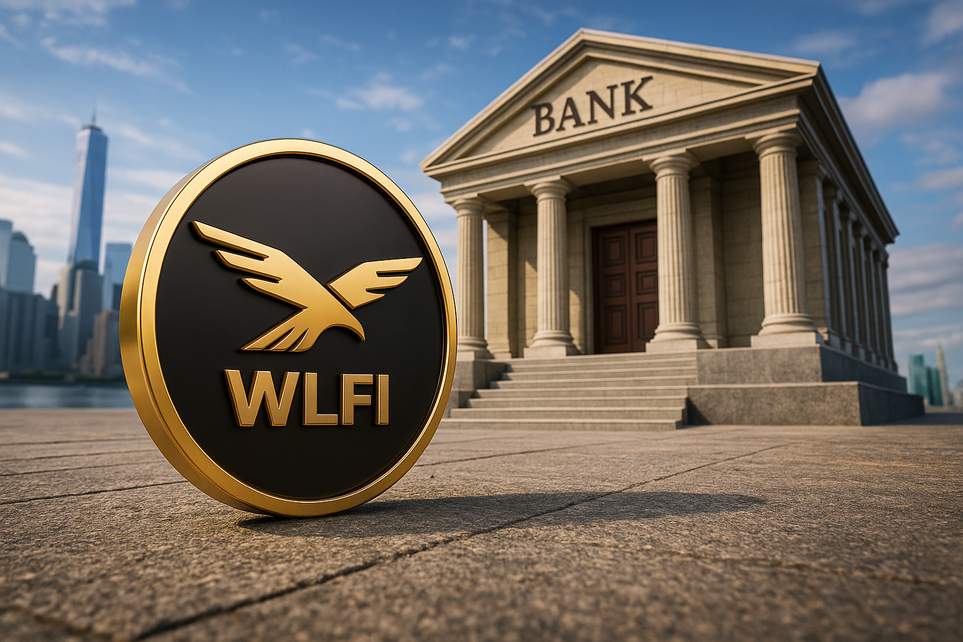
Why is Donald Trump’s World Liberty Financial (WLFI) applying for a banking license right now?
Short version: World Liberty Financial filed for a national trust bank charter to create the World Liberty Trust Company, a narrowly focused bank intended to issue, hold, and redeem its USD1 stablecoin. Think less high-street bank with a drive-thru and more a super-regulated vault that also prints digital dollar-like tokens. USD1 already floats around — roughly $3.3 billion in supply across about ten blockchain networks — and the company wants to make that thing look and feel like proper financial plumbing.
What WLFI is trying to do (in plain speak)
The crypto world built stablecoins as fast, round‑the‑clock dollar stand‑ins for trading and DeFi. That was awesome for traders with insomnia, but not so great for boring corporate treasuries and payment desks that want legal certainty, audits, and predictable controls. WLFI’s play is to take USD1 out of the “wild west” corner of crypto and wrap it in a banking suit: federal supervision, routine exams, and a fiduciary structure focused on custody and reserve management instead of making car loans.
A national trust bank charter doesn’t turn WLFI into a traditional deposit-and-loan consumer bank. It’s “narrow banking” — custody, safekeeping, and managing reserves — which maps neatly to how many people imagine a responsible stablecoin should behave: fully backed, redeemable on demand, and implemented primarily for payments rather than speculation.
Why chasing a trust charter makes strategic sense
There are three big reasons this move matters.
First: trust. Institutional players — big exchanges, payment processors, market makers, and corporate treasuries — treat stablecoins as plumbing. When something is plumbing, you want it certified, not experimental. Federal oversight signals that there’s an examiner who can make changes and audits that can be trusted. In short: it’s boring, and that’s a feature for the risk committees.
Second: money. Issuers generate revenue from the difference between what they earn on reserves (usually short-term government securities) and the costs they pay out. If WLFI can internalize custody and settlement instead of renting them from vendors, it keeps more of that spread. Owning more of the stack can turn a marginal business into a profitable one — especially when yield curves wobble and incentive wars heat up.
Third: doors that were previously closed. A trust charter doesn’t automatically give you a seat at the Federal Reserve’s table, but it moves you into a class of institutions that are taken seriously in conversations about payment system access. In other words, it makes it easier to argue that USD1 should be accepted by conservative financial partners.
What this could mean for the wider stablecoin scene
We’re in a transition. Stablecoins started as clever market tools for traders and DeFi users. The next phase looks like one where regulated entities — banks, custodians, and payments firms — want these tokens to act like settlement rails. That raises the bar for everyone: issuers that can show clear regulatory standing, tight controls, and audit trails will have an easier time winning corporate and institutional business.
That doesn’t instantly topple incumbents, but it reshuffles the priorities. When interest rates are high, even rough-around-the-edges issuers can pay users to adopt them. When rates compress, distribution wins will go to those with scale, low compliance costs, and solid access to banking rails. If rates ease in the future, a trust charter is a defensive bet — a structural way to compete when handouts and incentives lose their punch.
So, WLFI’s filing is a forward-looking, slightly theatrical bid to transform USD1 from a crypto curiosity into something that legacy finance can plug into. Whether that will work depends on execution, regulators, and whether institutions actually choose the new kid on the block over the established giants. Either way, it’s a reminder that the stablecoin story is shifting from innovation theater toward the slow, boring work of building financial plumbing — and some players are trying to get there first.
