
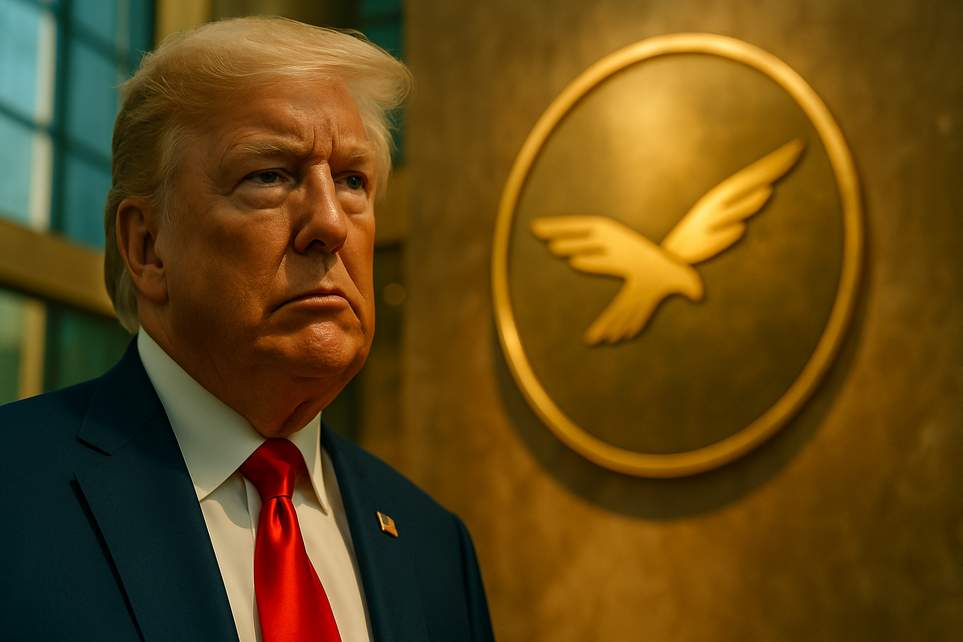
Democrats attack Trump’s World Liberty Financial for taking North Korean money — want DOJ probe
The messy claim: who bought what and why people are sweating
Two Democratic senators asked the Justice Department and Treasury to take a long, hard look at World Liberty Financial after a watchdog said that some WLFI token buyers might have been tangled up with shady crypto players — think wallets linked to North Korea’s notorious Lazarus crew, an Iranian exchange, a ruble-backed token, and some users who once touched a crypto mixer. The allegation is basically: weird wallets showed up in presales and early sales, and that’s a giant red flag when sanctions are involved.
WLFI’s own disclosures say the project’s business arm and some family members control a huge chunk of tokens and also take a hefty cut of token-sale proceeds — about three quarters, according to the project’s papers. That concentration of tokens and token-sale revenue is why the senators are uneasy: if sanctionable money flowed into the sale, it could directly affect entities tied to the project’s controllers.
The team behind WLFI says they screen buyers with know-your-customer and anti-money-laundering tools. If true, regulators will be less interested in whether the policies exist and more interested in whether those controls actually worked during the critical sale windows. Timing matters: some tools that were once sanctioned got delisted in March 2025, but interactions that happened while sanctions were live are still fair game for enforcement.
What could happen next: legal, financial, and political fallout
Sanctions law is weirdly unforgiving: civil penalties from Treasury’s sanctions office can be imposed without proving anyone meant to do wrong. That means blocked-property freezes, fines, and forced fixes can be on the table if government investigators trace tainted flows into WLFI sales. Criminal charges are less common in token-sale cases, but they’re possible if prosecutors can show deliberate evasion or fraud.
Other watchdog moves are possible too — banks and crypto venues could face pressure to treat certain flows as suspect, and anti-money-laundering agencies can impose extra reporting or special measures on transaction types they view as risky. Securities regulators might also poke around if token distributions look like investment contracts. New federal stablecoin and market-structure rules don’t magically erase sanctions or banking duties, so policy changes aren’t a get-out-of-jail-free card.
There’s real-world context behind the heat: big North Korea-linked hacks earlier this year have focused enforcement teams on DPRK crypto theft, so anyone spotting overlaps between token sales and known malicious wallets will draw attention. WLFI also publicly froze and reassigned wallets after some messy early trading — which shows the project has admin keys and centralized controls that can help victims, but also prove regulators that the team has the ability to intervene when needed.
To put possible exposure in plain numbers (yes, the napkin math version): if WLFI has raised around $650–$800 million so far and if between 0.5% and 5% of that came from questionable buyers, the tainted slice would be roughly $3.25 million to $40 million. Since WLFI reportedly funnels about 75% of net sale proceeds to its core business entity, the cash at risk under a freeze or penalty could be on the order of a few million to a few dozen million dollars. These are back-of-envelope scenarios, not hard facts — the government still has to validate wallet links and trace flows.
Governance risk is another angle. If suspect wallets control a meaningful chunk of voting power, they could influence decisions about treasury spending or protocol changes. That would make exchanges, banks, and listing venues nervous and might prompt them to restrict governance functions until questions are settled.
And then there’s the political theater: the senators framed their request as a national-security and conflict-of-interest concern because of the project’s ties to high-profile figures. That doesn’t automatically mean impeachment or criminal charges. Impeachment only becomes plausible if investigators find evidence that someone in office tried to interfere in enforcement or to shield the project — otherwise, civil sanctions against a private business are usually just that: civil and private. A major court ruling on presidential immunity doesn’t give blanket protection for private financial activity, so willful crimes tied to the project would still be prosecutable if they can be proven.
Bottom line: WLFI’s token-sale mechanics, the concentration of token ownership and proceeds, the claim of buyer links to sanctioned or high-risk actors, and the project’s ability to freeze and reassign tokens together make this a tidy case study for regulators. Expect careful wallet tracing, a spotlight on whether KYC/AML actually worked when it mattered, and, depending on what officials find, a menu of remedies ranging from civil penalties to stricter reporting requirements. Meanwhile, grab your popcorn — the investigation could be equal parts compliance puzzle and political drama.
