
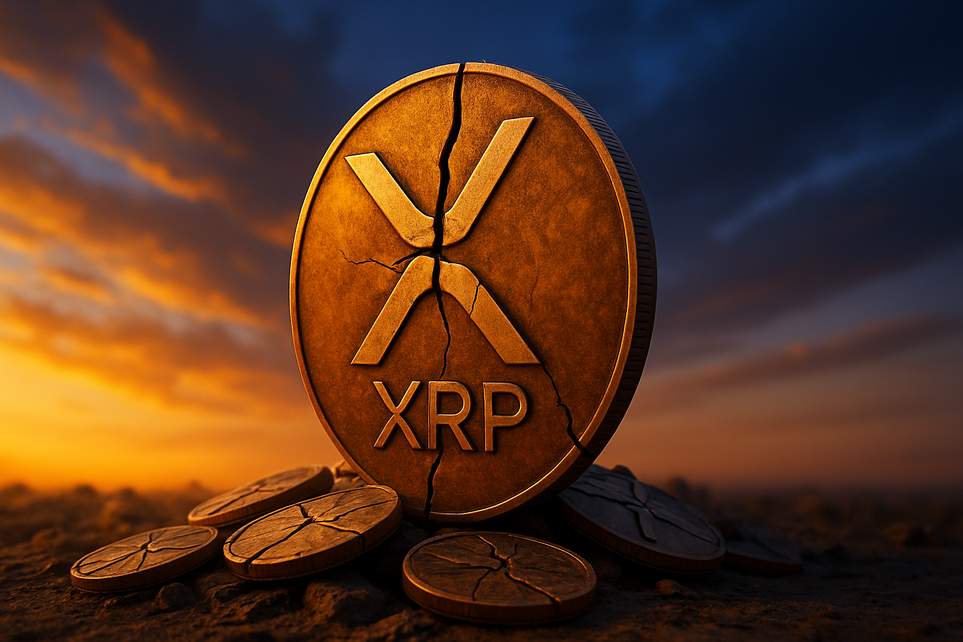
Why XRP holders are suddenly feeling the full force of Bitcoin’s liquidity crunch
What’s going on?
The crypto market has been getting tossed around like a rubber duck in a bathtub storm — more than $1 trillion of value evaporated in the last month and Bitcoin’s wild moves are the obvious culprit. The headline volatility may center on BTC, but the shockwaves are slamming into big altcoins too — think XRP and Ethereum — as liquidity dries up and sellers pile in.
This didn’t happen overnight as a single newsflash. It started as a normal pullback and then morphed into a full-on liquidity event. Short-term buyers — the folks who bought within the last three months — have been among the quickest to panic and sell, locking in big losses. On one particularly brutal day, traders realized roughly $1 billion in losses, which is the kind of number that makes traders chew on their keyboards.
Meanwhile, institutional flows flipped from a friendly trickle to a stampede out the door. Spot Bitcoin ETFs recorded massive redemptions — hundreds of millions in a single day — wiping out earlier inflows and leaving these funds with less capital. When ETFs see outflows, issuers often have to sell spot Bitcoin to cover redemptions, which adds fuel to the price drop instead of dampening it.
Why XRP is getting rocked — and what to watch
XRP has lately been acting like the market’s canary: it’s not picking the fight with Bitcoin, it’s just catching the sparks. Historically, XRP can diverge from Bitcoin during certain windows, but this time it’s been tagging along, falling nearly 9% in 24 hours and slipping below $2 for the first time in months as altcoin liquidity evaporated.
There are structural reasons for that. XRP’s order books are generally thinner than Bitcoin’s, and it hasn’t enjoyed the same steady institutional bid that BTC gets from ETFs and big players. Put simply: big sells move XRP price more than they move Bitcoin. Add to that a larger share of retail holders (who are quicker to freak out), and you have an asset that’s more likely to amplify a market wobble.
On-chain numbers back this up. Measured losses for XRP have surged — tens of millions per day on a recent moving average — and only about 58.5% of circulating supply is currently in profit. That means roughly 41.5% of XRP holders are underwater, representing around 26.5 billion tokens. When those holders try to sell to get back to even, they create a wall of supply that makes rallies hard to sustain.
Technical indicators aren’t helping morale either. Price action has dipped below key moving averages, a configuration that traders often nickname a “death cross,” which tends to invite more selling from algorithms and momentum players. But remember: that’s a momentum signal, not a prophecy. The real issue remains the lack of fresh buyers.
What makes this situation especially ugly is the feedback loop. Bitcoin drops → ETF outflows → funds sell spot Bitcoin → prices slide → short-term holders panic and sell → less liquidity for altcoins like XRP → deeper losses → more redemptions. That circular flow can keep prices under pressure until something breaks the chain: either outflows slow, new spot demand arrives, or short-term sellers get exhausted.
So what should you watch? If XRP’s profitability metrics stabilize and the proportion of tokens in profit starts climbing, that could indicate the weak hands have been shaken out and a floor is forming. If losses keep building, it probably means the liquidity crunch still has room to run.
Short version: Bitcoin’s liquidity hiccup isn’t just a BTC story — it’s a system-wide squeeze. XRP’s thinner markets and retail-heavy holder base make it a sensitive gauge. Buckle up, keep an eye on redemptions and realized-loss metrics, and maybe don’t check your portfolio at 3 a.m.
