
Why the XRP Ledger Just Overtook Solana in RWA Value (and Why That’s a Little Odd)
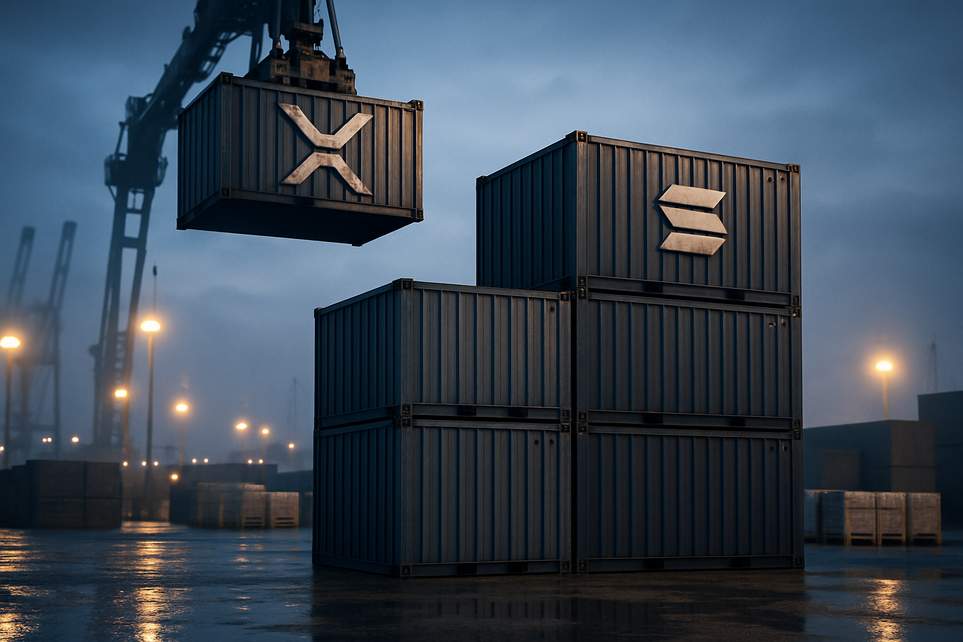
Short version: the XRP Ledger suddenly shows more real-world-asset (RWA) value on-chain than Solana — but that doesn’t mean it’s suddenly the busiest chain for retail trading. Think of it like a warehouse that just got a huge shipment of museum-grade paintings: a lot of value, very little foot traffic.
What’s actually going on — the numbers and the categories
Data from RWA.xyz puts the XRP Ledger at about $1.756 billion in on-chain RWA value (excluding stablecoins), just ahead of Solana’s roughly $1.682 billion. The surprise isn’t only that XRPL nudged ahead; it’s how fast its represented-asset total jumped — roughly $1.45 billion, up about 276% in the past 30 days.
That spike is driven almost entirely by represented assets, which are basically ledger entries that don’t freely trade outside the issuer’s controlled environment. RWA.xyz divides tokenized assets into two camps: “distributed” assets — tokens meant to move around, peer-to-peer and wallet-to-wallet — and “represented” assets — tokens recorded on-chain but kept within a gated, issuer-controlled setup. XRPL’s growth is overwhelmingly the latter.
Compare that with Solana, where the story is more traffic and participation. Solana shows around $1.64 billion in distributed RWA value, about 285,000 RWA holders, and roughly $2.18 billion in 30-day transfer volume. Those figures point to broad ownership and lots of on-chain movement, unlike XRPL’s concentrated, big-ticket entries.
Why institutions might prefer XRPL’s approach — and what could happen next
Institutions often want blockchain to mimic the familiar: controlled access, clear compliance rails, and predictable operations. When you’re dealing with high-value financial products, having an on-chain record that behaves like a regulated ledger — even if transfers are restricted — can be way more appealing than an open, retail-oriented token everyone can trade.
XRPL has been adding features that nudge it in that direction: permissioned domain controls, token primitives aimed at issuer needs, and plans for permissioned trading venues that limit participation to approved parties. Those are the sorts of tools that let a bank or asset manager put big assets on a chain without giving up the control they rely on off-chain.
Real-world moves reflect that pattern. Recent issuer activity includes institutional players announcing plans to tokenize funds and massive single-asset initiatives — the kind of issuances that can inflate on-chain value without creating a flurry of retail transfers. That explains why XRPL can lead in total RWA value while staying quiet in terms of transfer volume and wallet counts.
So what’s next? There are a few plausible roads: one, XRPL keeps onboarding a handful of large, tightly controlled issuances and stays high on value rankings but low on retail activity. Two, permissioned trading and lending features mature, institutions start using these on-chain assets as collateral, and transfer volume and participation rise — turning ledger entries into real markets. Or three, the spike is a one-off concentration and the chain ends up looking more like an accounting win than a market win while more open networks keep growing participation and liquidity.
Bottom line: XRPL’s flip over Solana on raw RWA value is interesting and meaningful for institutional tokenization narratives, but it’s not the same thing as widespread crypto activity. It’s a classic case of big-value, low-movement tokenization winning in the short term because it maps neatly to how regulated markets operate. Whether that becomes a springboard to broader on-chain markets or just a high-value ledger entry remains to be seen — and that uncertainty is where the fun (and the risk) is.