
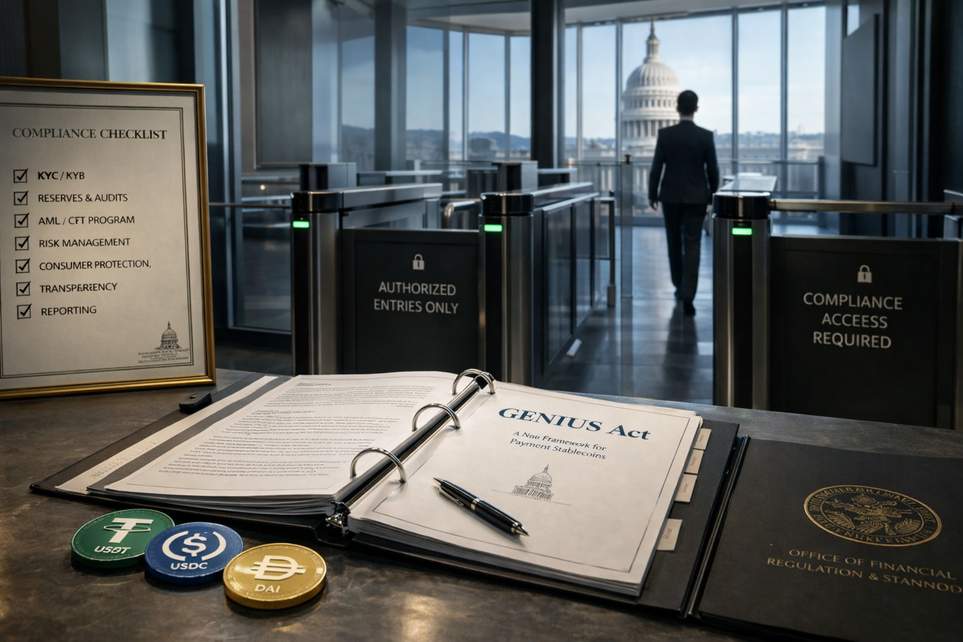
The GENIUS Act opened the door for stablecoins, but regulators want to narrow it
GENIUS opened the door — now the agencies are redecorating
Remember when stablecoins were the wild west of the dollar-on-blockchain scene? The GENIUS Act basically took down the saloon sign and said, “Welcome—if you follow the rules.” It gave dollar-backed tokens a U.S. legal address, set baseline expectations for reserves and redemptions, and moved the sector out of pure gray-area chaos.
But a law is only the start of the party. The Treasury, the OCC, and the FDIC each get to write the how-to manual, and they’re all bringing a slightly different interior design taste. Treasury’s draft focuses on anti-money-laundering, sanctions screening, suspicious-activity reporting and other BSA-style duties. The OCC is drawing the lane for entities that want federal trust or custody authority, and the FDIC is worrying aloud about reserves, redemption mechanics, capital and liquidity rules — even setting an implementation timeline to watch.
Put simply: tokens can still live on blockchains, but the humans (and their compliance teams) running the tokens are being asked to behave a lot more like banks and payments companies. That’s a big shift from “deploy and pray” to “document, audit, and report.”
Compliance: the new moat (hint: it costs money)
If you thought security audits and smart contracts were the main obstacles, meet the new boss: fixed-cost compliance. Sanctions screening, suspicious-activity monitoring, vendor controls, reserve administration, redemption operations, board-level signoffs — these all cost real money whether your circulating supply is $200 million or $20 billion. The result is a classic economy-of-scale problem: lots of expensive setup with limited ability to shrink the price tag.
That puts big banks, payments giants, and heavily regulated crypto firms at a big advantage. They already have exam histories, treasury ops, custody desks, compliance departments, and direct regulator relationships. Smaller issuers? Not so much. For them, the math quickly becomes “partner, sell, or retreat.”
This is less about smart-contract prowess and more about who can staff a compliance war room and keep it running. The new defensibility looks like good governance, rock-solid redemption processes, audited reserves, and a board that can actually explain risk policies without fainting.
Where this could leave the market — two roads
Expect a split. One lane keeps catering to crypto-native needs: deep liquidity, exchange access, and the raw speed and reach that traders and DeFi users love. The other lane becomes the boring-but-crucial world of merchant settlement, corporate treasury, and regulated payments — think conservative reserves, clear redemption rights, audited controls, and distribution through familiar financial channels.
That split matters to everyday users. A merchant or a corporate treasurer cares less about on-chain market depth and more about whether the dollar token in their account can be redeemed when needed and won’t blow up in a stress event. Clear rules make tokens more trustworthy for these use cases, but they also shrink the field to players who can afford the compliance setup.
There’s also a nuance from one of the agencies: treating reserves as bank deposits versus tokenized deposits is different for deposit insurance and legal framing. That gives banks an incentive to push tokenized deposits inside their own systems and gives nonbank issuers reasons to compete on openness and reach instead of deposit guarantees.
The bottom line? GENIUS unlocked a U.S. home for stablecoins, but the real experiment is in implementation. Will the rulebook be written so small startups can stay in the game, or will it hand the keys to institutions that already look and act like banks? Keep an eye on final rules, bank product launches, custody partnerships, and whether reserve and redemption rules become the trust signals for enterprises. The market behind the door could either stay a scrappy frontier or turn into a polished, highly supervised payments layer — and either outcome has very different winners, losers, and memes.
