
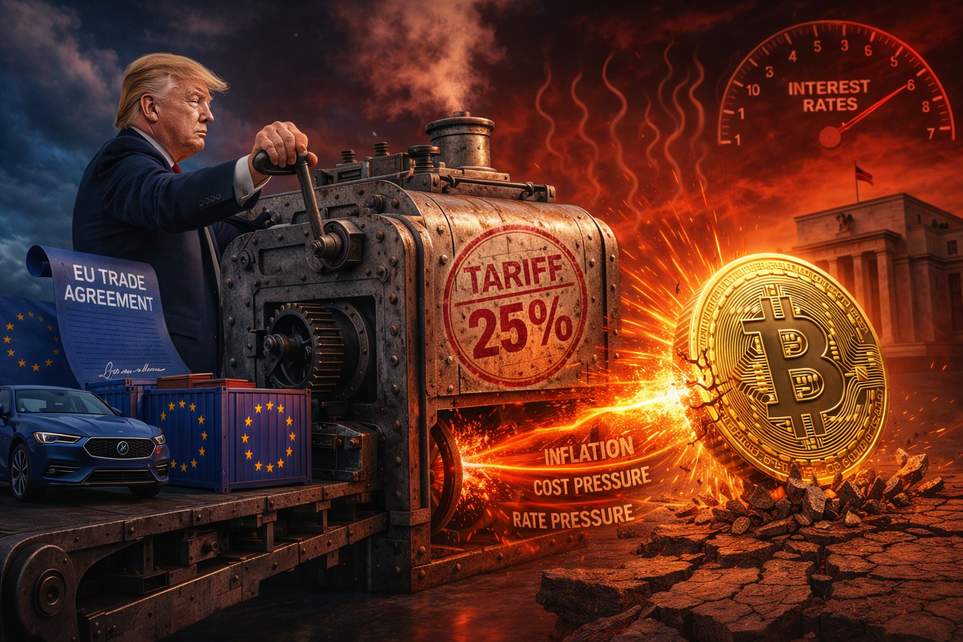
Tariff Roulette: EU-US Trade Talks and Why Bitcoin Might Care
What’s happening and why it matters
Europe is scrambling to get its side of a US-EU trade compact across the finish line before a self-imposed deadline. Negotiators have been wrestling with rules that would cut duties on certain US industrial goods while carving out caps and safeguards on other items — and some governments want the shortcut, others want the safety net. Meanwhile, a new political twist: the US has threatened to jack auto tariffs from 15% up to 25%, a move that would sting big manufacturing hubs and could shave billions off near-term output in places like Germany.
Why is this a big deal? Because tariffs aren’t just trade drama — they feed into consumer prices. Recent central bank and regional research suggest the tariff wave has already nudged core goods inflation upward, contributing to higher core PCE readings. Some studies even show tariffs can act like a short-term deflationary squish on demand, followed by a delayed bump in goods and services inflation over the next couple of years. In plain English: tariffs make inflation behave weirdly, and weird inflation makes central bankers nervous.
That nervousness matters because the Federal Reserve watches inflation closely when setting rates. If tariffs keep inflation stickier for longer, the Fed has a reason to stay pat on rates instead of easing — and that changes the whole backdrop for risk assets.
Why Bitcoin cares (yes, really)
Bitcoin doesn’t live in a vacuum. Over the last few years it has become much more correlated with big US stocks, partly because institutional money treats it like another risk asset. So when macro forces nudge equities, Bitcoin tends to follow the mood swings.
Here’s the chain reaction to watch: a credible rise in auto tariffs pushes goods inflation up, inflation expectations stay stubborn, the Fed delays rate cuts, dollar liquidity stays tighter, and investors trim speculative exposure. That sequence is generally bad news for Bitcoin’s rallies, which have historically thrived in looser liquidity and frothier risk appetite.
Flip the script and the opposite happens: if EU negotiators and US officials dial down the tariff threat and markets believe it, inflation anxiety eases slightly, rate-cut expectations can normalize, and risk-on flows — including things like ETF inflows and trading-driven momentum — have more room to breathe. In that scenario, Bitcoin is free to ride a broader risk rally rather than lug a macro anchor.
There are also hard calendar moments that could confirm which way the wind is blowing. Two dates stand out: the negotiation round in mid-May and the US personal consumption expenditures (PCE) inflation print at the end of May. If talks look constructive and the PCE shows disinflation, the tariff overhang fades. If talks stall and the PCE surprises higher, markets will likely price in stickier inflation and a tougher Fed, tightening the leash on risk assets.
Bottom line: tariff headlines are an awkward, indirect way to move crypto prices, but they do it by changing inflation expectations and central bank behavior. Crypto-native catalysts — ETF flows, market structure, and regulatory news — still matter most for medium-term price moves, but in a month packed with inflation data and key trade talks, macro noise can steal the spotlight.
