
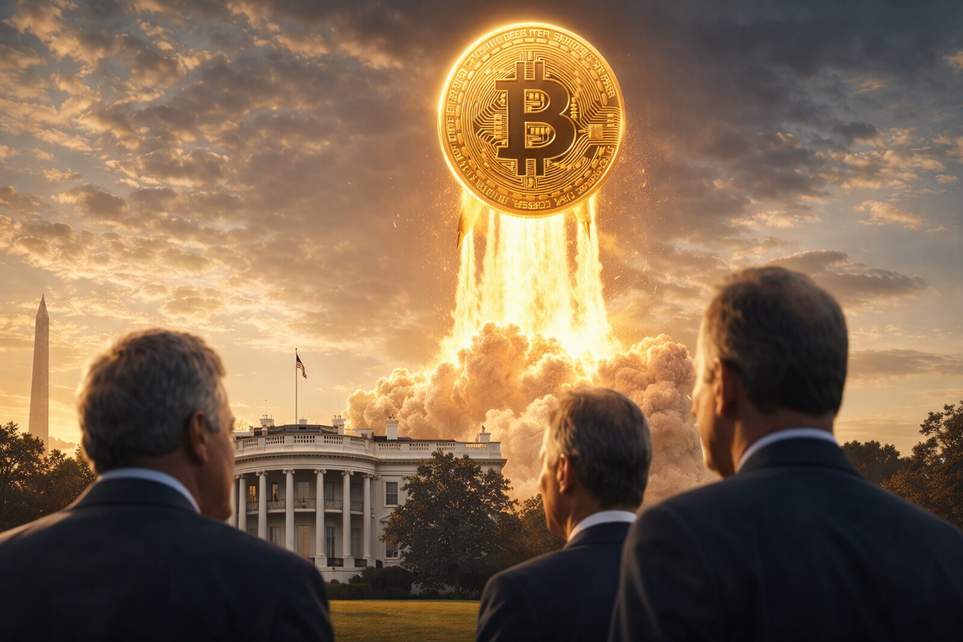
Bitcoin to $1M by the Next Presidential Term? Don’t Pack Your Moon-Suit Yet
The million-dollar pitch (and why timelines keep shrinking)
Okay, big headlines: a well-known asset manager recently suggested Bitcoin could hit one million dollars sometime during the next U.S. presidential term. Translation: they trimmed the long-range fantasy from “someday in the distant future” to “within the next handful of years.” That’s a staggering leap from where the market has been trading—around the low eighties in thousands—and it grabbed attention because it compresses a wildly optimistic outcome into a much shorter clock.
It’s not the only seven-figure blueprint out there. Another major shop published a model earlier this year that reaches the same seven-figure point by assuming Bitcoin wins a decent slice of the global store-of-value market. The math varies—market size, adoption rate, and how much of global savings BTC could plausibly gobble up—but the common thread is the same: these forecasts rely on adoption, not a single magical trading day.
Meanwhile, the same research teams have also run longer-horizon scenarios. One previous analysis even sketched out multi-million-dollar prices for mid-century if Bitcoin becomes a serious medium of exchange and reserve asset. Those long views use assumptions about trade settlement, reserve holdings, and scaling technology. The short version: different clocks, similar faith that adoption is the main engine.
What actually matters right now: ETF flows, holder behavior, and the $80k–$90k drama
Here’s the reality check—big-picture forecasts are fun to argue about at parties, but the market cares about whether it can handle actual buying and selling. Right now the micro-drama revolves around ETF demand versus longtime holders taking profits. If ETF money keeps swallowing coins sold by older holders, the low-$80k area could become a sturdy base instead of a high-pressure zone where sellers laugh manically and dump coins.
If that base holds and fresh spot demand pushes the price through $90,000 with conviction, then talk of $200,000 or even higher stops sounding like fantasy wishlists and starts to sound like a reasonable next chapter. On the flip side, if ETF flows sputter and long-term holders keep selling into rallies, those seven-figure timelines revert to an intellectual exercise about far-future adoption rather than a road map for the next market cycle.
There are also intermediate bulls with more cautious clocks: some strategists are penciling in $200k-ish ranges for 2026, while others see shorter-term targets closer to six figures. All of them hinge on the same proof points—ETF flow data, whether big holders are accumulating or distributing, and signals from options and on-chain metrics that show the market’s depth.
So enjoy the headlines, but keep your checklist handy: can price stay in the low-$80k area, can fresh capital keep arriving, and will the market push through $90k without immediately collapsing? Those answers matter more than the next bold forecast. In short: seven-figure takes make for headline fireworks, but the market needs to show it can handle the heat before anyone starts building a moon base.
