
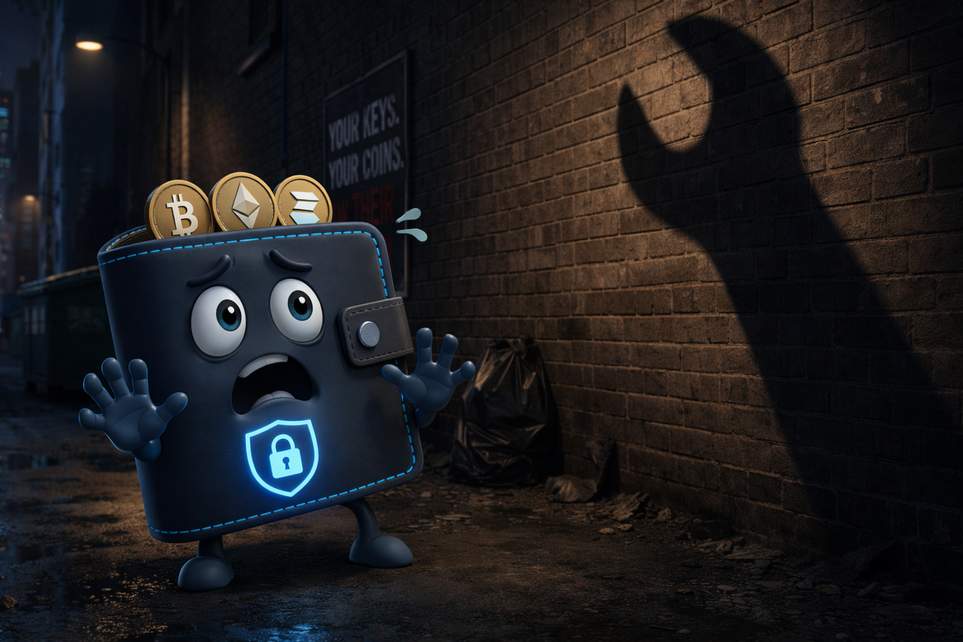
Real-world ‘wrench attacks’ have cost crypto holders over $100M in early 2026
The rise of real-world attacks: what’s happening
Welcome to the ugly new chapter of crypto: the bad guys aren’t just hacking code anymore — they’re going after the people who control the wallets. In the first four months of 2026, physical extortion schemes targeting crypto holders have reportedly siphoned off more than $100 million. Security researchers have noticed a sharp uptick in these “wrench attacks” — a blunt term for robberies, kidnappings, threats, or coercion that force victims to move funds or hand over access.
These incidents are tricky to count because many victims are too traumatized or scared to tell the police. A few blockchain security firms have tried to track verified cases and say incidents rose noticeably year-on-year. Europe has been hit hardest lately, with a large share of the confirmed events concentrated there. France in particular has been flagged as a hotspot, with dozens of reported coercion cases since January.
Why target people instead of wallets? It’s simple: criminals don’t need to crack encryption or exploit a smart contract if they can threaten someone into approving a transfer. Once funds are moved, they can be mixed, swapped across chains, or converted into privacy coins — making recovery a nightmare even when investigators can trace the flow on-chain.
The tactics are also evolving. Attackers sometimes go after relatives or associates rather than the main holder, turning kidnapping and proxy-targeting into an efficient sadly-effective strategy. High-profile cases in early 2026 include an abduction in Istanbul linked to a crypto dispute that ended tragically, a U.S. family-targeting ransom incident, and a forced transfer of tens of millions that was laundered across multiple chains and privacy assets.
There are a few reasons criminals can find victims so easily: visible industry figures and events, public social media posts, and — worse — leaked or stolen personal data such as addresses, tax records, and client lists. When that information leaks, a person’s private keys might be safe but their personal life is not.
How platforms and people are fighting back (and what you can do)
Exchanges and security companies are trying to add real-world protections. Some centralized platforms now offer withdrawal delays or temporary lockdowns so funds can’t be instantly pulled out, creating a window for victims or their contacts to alert authorities. Those time locks add friction that can deter quick grab-and-run attacks, but they’re not foolproof — determined criminals willing to hold someone for days can still get what they want.
If you self-custody, the challenge is different: you don’t have an exchange’s time lock to fall back on. The practical solutions include multisignature setups, vaults with built-in delays, geographic separation of signers, and clear policies about who can approve large transfers. Think of it like installing physical deadbolts and a motion sensor for your financial life.
Personal security now matters as much as cryptography. Experts advise being mindful of what you share online, limiting public visibility at conferences and meetups, and communicating safety plans with family or close colleagues. If you live or work in areas where these attacks are rising, take basic precautions: vary routines, secure home details, and have an emergency contact protocol.
Law enforcement faces an uphill battle because many incidents go unreported, and because funds can vanish quickly into mixers and privacy chains. Still, delaying withdrawals, keeping good records of suspicious contacts, and alerting authorities early can improve chances of a safe outcome and any possible recovery.
At the end of the day, the crypto security checklist has to expand: yes, keep keys cold, yes, avoid phishing — and yes, think about your real-world exposure. Treat your online balances like a valuable you’d protect in person, and build both digital and physical defenses accordingly.
It’s grim, but being paranoid a little bit helps. Lock up your digital coins, but also watch who knows about them — because sometimes the weakest link isn’t the code, it’s the human holding it.
