
Bitcoin vs. the AI IPO Tsunami: Who Gets the Cash?
AI mega‑IPOs vs. Bitcoin: a liquidity tug‑of‑war
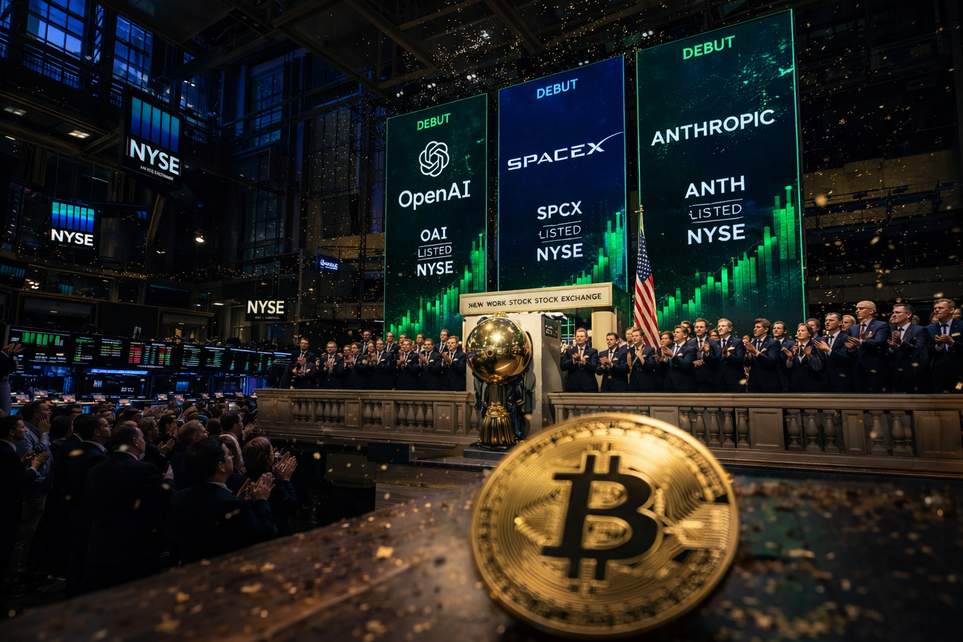
Big tech labs and rocket companies are teeing up to gobble up a chunk of investor cash that once flowed into crypto. Confidential filings and rumors have OpenAI eyeing a public debut as soon as September with a mind‑boggling valuation in the high hundreds of billions to about a trillion. SpaceX is talking about a monster raise in the tens of billions, and other AI outfits are lining up behind them. Wall Street forecasters even see 2026 as a potential record year for IPO proceeds.
That matters to Bitcoin because the same institutional dollars that fueled huge ETF inflows — and the speculative juice that pushed BTC to new highs — can be reallocated into these flashy IPOs. Over the past year AI and chip stocks ripped higher (think roughly triple‑digit gains), while Bitcoin slipped from its peak by a large chunk. On certain days this rotation shows up in a brutal, almost theatrical way: semiconductors spike while BTC slides, and big Bitcoin ETF products register sizable redemptions, including some single‑day withdrawals in the hundreds of millions.
In plain terms: institutions are being offered purer, tradeable ways to own the AI story. Instead of getting exposure indirectly through chipmakers or cloud giants, allocators could soon buy the AI labs themselves. That makes portfolios more straightforward — quarterly earnings, analyst coverage, the whole Wall Street circus — and that clarity can be tempting when you’re deciding where to park a marginal dollar.
What could flip the script?
There are a few moving parts that decide whether Bitcoin gets shoved to the curb or rides the risk‑on wave back up. If mega‑IPOs price well, roadshows show real demand, and markets stay hungry for risk, equities could enjoy another leg up and ETF flows into Bitcoin might recover as part of a broader risk appetite. Historically, flow indicators tend to hit local lows near price bottoms, so a cleanup in selling pressure plus a friendly IPO calendar could turn the tide.
On the other hand, if institutional allocators treat the shift away from BTC as permanent — reshuffling portfolio buckets toward newly public AI leaders — the impact compounds even without a fresh crash in crypto prices. That’s especially true because the AI story comes with earnings and cash flow narratives, while Bitcoin’s pitch is scarcity and narrative-driven demand; they’re different animals in investors’ minds.
Macro risk is the messy wildcard. A jump in rates or a repricing of high‑growth software valuations would likely whack both AI stocks and Bitcoin because their correlations have tightened since institutional products arrived. And while there’s a huge pile of cash in money‑market funds (trillions), big IPOs would only need a sliver of that to clear — so liquidity alone doesn’t guarantee where money ends up.
Bottom line: this is a classic Wall Street tug‑of‑war. Watch ETF flows, IPO roadshows, and whether investors keep treating BTC like a high‑beta play or move their marginal dollars into earnings‑bearing AI names. For now, Bitcoin’s fate isn’t sealed — it’s just sharing the stage with some very loud newcomers.
