
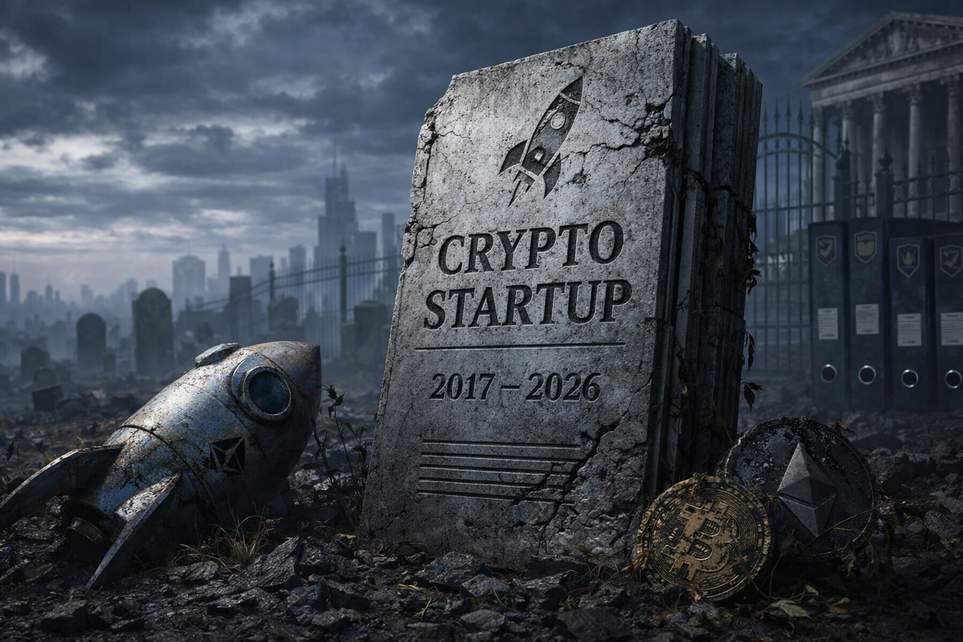
The death of the crypto startup: RIP 2017 – 2026
From bedroom hacks to boardroom playbooks
Remember when launching a crypto project meant a half-baked whitepaper, a token contract pasted into a GitHub repo, and a Telegram group full of hype? Those were the glory days of quick launches and reckless optimism. Back then a tiny team (sometimes a single coder in a hoodie) could spark an ICO, raise money from everyday internet strangers, and ghost away months later if things went sideways.
Fast-forward to the mid-2020s and the party’s different. What used to be scrappy, pseudonymous tinkering now looks a lot more like traditional finance: real offices, real lawyers, real bank accounts, and real operating budgets. If you want to serve regulated customers across major markets, you don’t just ship code — you build compliance programs, hire anti-money-laundering experts, and prove you won’t melt down the system.
Banks, licenses, and the new gates to entry
If you thought the biggest obstacle was writing clean smart contracts, think again. Today the choke points are banking relationships and regulatory approvals. Without a partner bank to hold fiat, an exchange or payments team can have the prettiest UI in the world and still be dead on arrival. Getting licensed in multiple regions? That can eat hundreds of thousands — often millions — in legal fees and recurring compliance costs.
Regulators have turned vague curiosity into detailed checklists: minimum capital, audits, regular reporting, governance structures, and teams full of compliance people who know how to talk to regulators without causing a panic. Some jurisdictions demand long waits and hefty budgets just to get permission to operate; others demand ongoing reporting that becomes another fixed cost every quarter.
Investors noticed. After a chaotic period where huge sums went into speculative projects, funding flows tightened and concentrated. Venture dollars shifted toward larger, later-stage rounds and companies that already had regulated infrastructure or bank relationships. Seed-stage, experimental bets got rarer, while acquisitions became a shortcut: buy a licensed operator to inherit their approvals and customer trust rather than build it yourself.
So who wins, who loses, and what should founders do?
There are obvious winners: firms with big balance sheets, banking partners, and licenses. They get institutional customers, easier fundraising, and the kind of trust that used to take years to earn. Acquisitions are booming because buying a regulated business fast-tracks market access — license in one hand, distribution in the other.
On the other side, this is bad news for scrappy outsiders. A solo dev with a brilliant protocol idea now faces a tougher path unless they find a licensed partner early, raise serious capital up front, or design a product that stays far away from regulated customer activity. The experimental playground that spawned weird, brilliant, and sometimes disastrous ideas has been fenced in.
That’s not all doom. The higher bar reduces the chance of vaporware and obvious fraud, which makes it easier for big institutions — think pensions and banks — to actually participate. The ecosystem loses some of its chaotic charm, but gains safety and scale. Whether you call that progress or consolidation depends on whether you like chaos with your coffee.
Practical advice for builders: if you’re aiming for a consumer-facing, regulated product, plan to budget for compliance and banking early and talk to licensed partners before you write your next major feature. If you’re an experimental protocol or toolmaker, consider focusing on composability and open-source traction, or look to join forces with regulated teams through partnerships and M&A rather than trying to cross the licensing finish line solo.
In short: the era of launching a crypto startup on a whim is mostly over. The ecosystem is maturing into something safer and more boring — less hoodie, more suit — and that has trade-offs. Founders who understand the new rules can either adapt or decide to build in niches that still allow creative, low-cost experiments. The rest will watch from the sidelines while the new gatekeepers collect their tolls.
