
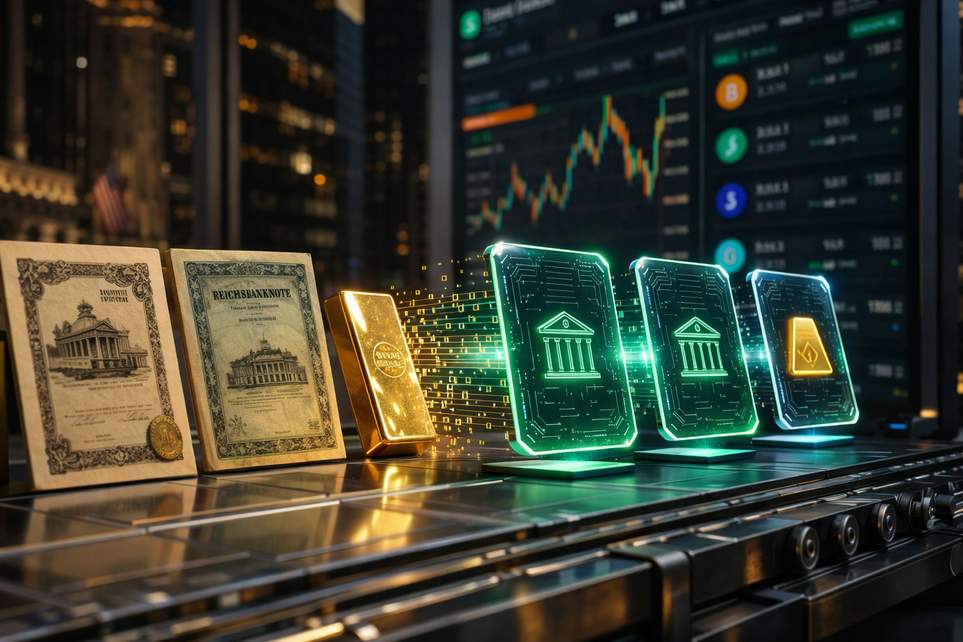
When Crypto Exchanges Became Mini Wall Streets
Welcome to the new mall where crypto and Wall Street awkwardly hold hands. What used to be a playground for memecoins and game tokens is getting furnished with tokenized stocks, real-world asset derivatives, and other Wall Street-ish toys — and people are showing up.
What’s happening: tokenized stocks and nonstop trading
In the last year exchanges started listing way more tokenized assets — think digital versions of stocks, commodities and other traditional securities — to the point they’re now a noticeably large slice of new listings. Meanwhile, the old party animals (memecoins and gaming tokens) aren’t getting nearly as many invites. Listings of meme- and game-focused tokens have dropped sharply, while tokenized assets and derivatives quietly climbed the ladder.
It’s not just a cosmetic change. Trading in derivatives tied to real-world stuff — especially perpetual futures that never expire — exploded, hitting record volumes in recent months. A handful of big exchanges accounted for the bulk of that activity, showing traders like the around-the-clock access and leverage those venues offer.
Why it matters (and the fine print you should read)
For traders this is convenient and a little magical: fractional exposure, continuous markets, leverage and the ability to hop between crypto and stock-like products without moving cash back to a traditional broker. That’s great if you like instant access and drama at three in the morning.
But here’s the catch: tokenized doesn’t always mean identical. Some tokens are backed by actual shares, some are synthetic trackers, and some are contractual promises that feel stock-like but don’t grant voting rights or custody. Perpetuals give price exposure, not ownership, and they bring leverage, funding fees, and liquidation risks that can sting.
Regulation complicates the picture too. A number of tokenized products aren’t available everywhere, and some countries put tight limits on what retail investors can access. So yes, it’s exciting — and yes, it can be legally and structurally different from buying the actual stock.
Bottom line: centralized exchanges are evolving from crypto-only bazaars into hybrid marketplaces that sling both native tokens and financial-market replicas. If you’re curious, treat this era like a buffet: sample the options, read the labels, and don’t assume every dish is the real thing.
