
CleanSpark Signs $6.6B AI Lease — Now Comes the Funding Gymnastics
Huge lease, bigger question marks
CleanSpark quietly inked a 20-year, triple-net deal on July 10 for 175 megawatts of IT load at its Sandersville, Georgia campus — a contract the company pegs at roughly $6.6 billion over the initial term. If both five-year extension options get pulled, that number balloons to about $11.6 billion. The tenant is anonymous in public filings but is described as a high-investment-grade global technology company. Phased delivery is expected to kick off in Q4 2027, though the timeline for the full 175 MW and when rent actually starts is still a mystery.
On paper it looks like a headline-grabbing win. In reality, the lease comes attached to a mountain of logistics: construction milestones, financing conditions, and rent-abatement or termination remedies if things slip. Triple-net sounds like the tenant pays for everything, but the fine print about who funds and guarantees what will decide who’s really on the hook.
The money math (yes, the awkward part)
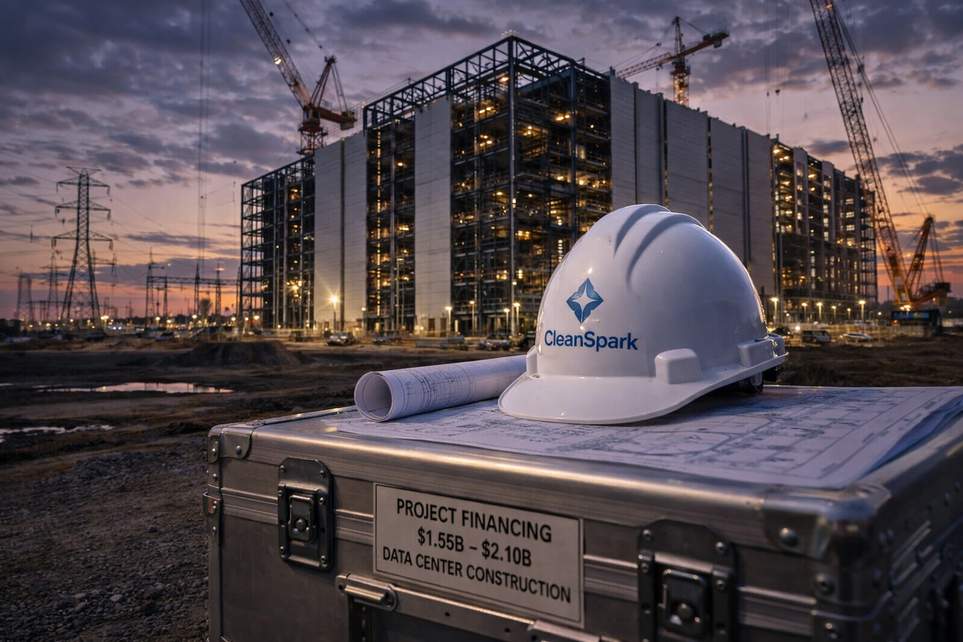
CleanSpark estimates the landlord-side build cost at roughly $10 million to $12 million per megawatt. Do the math for 175 MW and you get an estimated construction price tag between $1.75 billion and $2.10 billion. That’s the capital needed to get the campus built — not pocket change.
Now compare that to CleanSpark’s balance sheet as of March 31, 2026: $260.3 million in cash and a $925.2 million headline “HODL” Bitcoin number. Add them together and you still fall short of the lower end of the build estimate. The company also carried about $1.788 billion of long-term debt and roughly $1.927 billion in total liabilities. For the quarter, the company reported a $378.3 million net loss, which included a $224.1 million Bitcoin fair-value write and a $38.8 million loss tied to Bitcoin used as collateral — items that make earnings a shaky guide to actual cash flow.
Other notable finance facts on the March 31 snapshot: a roughly $1.769 billion net carrying balance for zero-coupon convertible notes, plus $400 million of unused Bitcoin-backed credit lines that would require pledging coins to draw. The lease announcement itself does not disclose any committed lenders, financing amounts, pricing, sponsor equity, or a draw schedule.
How this could get paid for (and who takes the risk)
There are a few sensible ways to fund a project like this — and each one shifts risk differently.
1) Project financing against the tenant-backed lease: This is the cleanest from CleanSpark’s point of view. Lenders underwrite a construction loan based on the 20-year contract with a high-grade tenant, minimizing recourse to the developer if the package is tight. But terms matter: explicit sponsor guarantees, corporate recourse, or a chunky sponsor equity injection could still tether risk back to CleanSpark.
2) Corporate route: If CleanSpark puts the project on its balance sheet, the company could take on more debt (raising leverage above the existing nearly $1.8 billion of long-term debt), sell equity (diluting shareholders), or sell Bitcoin reserves (reducing treasury holdings and liquidity cushions).
3) Bitcoin-backed borrowing or hybrid structures: Using coins as collateral preserves nominal ownership in some cases but adds margin-call and liquidation risk. It’s useful, but only if the coins aren’t already encumbered. Many of CleanSpark’s own coins are already tied up under various arrangements, so the usable pool may be smaller than headline figures suggest.
Bottom line: the tenant’s solid credit profile should help access financing, but the final package — pricing, recourse, collateral, and sponsor equity — will determine whether CleanSpark, its shareholders, or its Bitcoin stash ends up carrying most of the risk.
Short version: big contract, bigger financing puzzle. The lease turns a promise of long-term revenue into a near-term fundraising challenge. Phased construction and staggered rent starts could help smooth the cash needs, but until the financing structure is public and the delivery schedule is nailed down, it’s anyone’s guess who’s putting up the cash.
