
Strategy Sells $395M in Bitcoin and MSTR, Buys Back STRC, Builds $4B Cash Cushion
Big moves: selling Bitcoin, issuing shares, and buying STRC at a discount
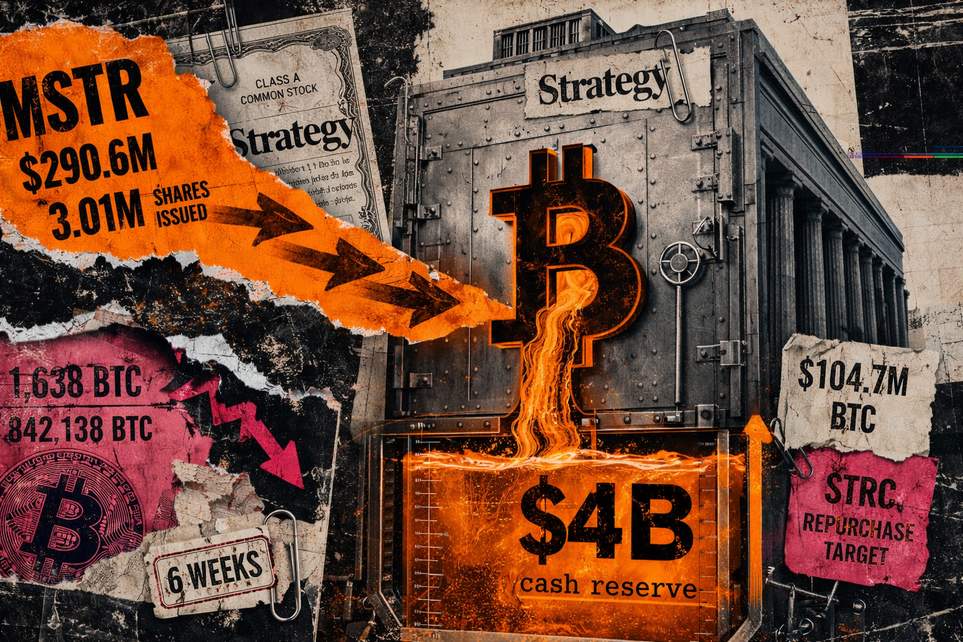
Alright, quick scorecard: Strategy sold 1,638 BTC (about $104.7 million) and issued roughly 3.01 million common shares (about $290.6 million), bringing the haul to just under $395 million. None of that cash went back into Bitcoin — instead, it was funneled into preferred dividends, repurchasing the company’s variable-rate preferred stock (STRC), and padding a US dollar reserve that now sits at a tidy $4 billion.
That string of transactions pushed Strategy’s Bitcoin disposals for 2026 to about 5,258 BTC — the most it has sold in a single year since it started buying crypto in 2020. The result: a six-week pause in fresh Bitcoin purchases, the longest such break since 2024.
Here’s the repurchase choreography: last week Strategy spent $52.3 million from the BTC sale and $28.9 million from the stock issuance to buy back 912,143 STRC shares for roughly $81.2 million. The week before it quietly scooped up 288,930 shares for about $25 million at an average of $86.53. Since the buyback program began in July, the company has spent about $106.2 million repurchasing STRC and still has roughly $893.8 million available under its preferred-stock repurchase authorization. There’s a separate, unused $1 billion authorization for common-share buybacks.
Why the $4 billion cash reserve matters (and what it can — and can’t — do)
The company stuffed $250 million of the recent common-share proceeds into its US dollar reserve (and kept another $11.7 million as plain old cash), completing a rapid expansion from $2.55 billion at the end of June to $3.75 billion by July 26, and now to the $4 billion target.
Why bother? Management says the reserve exists to cover preferred dividends and interest on debt. At the company’s estimate of roughly $1.76 billion per year in those outlays, the $4 billion stash would cover about 27 months of payments — a buffer that reduces the chance of having to sell Bitcoin or issue securities in a hurry when markets get ugly.
One catch: absent new board permission, that cash is ring-fenced for preferred dividends and debt interest only. In other words, it’s a safety blanket for the preferred holders and the debt book, not a free-for-all corporate slush fund.
What this shuffle means for shareholders, Bitcoin holders, and the financing playbook
Short version: the company is prioritizing the security and financing structure built around its treasury — even if that means diluting common shareholders and trimming the Bitcoin stash. The recent issuance of about 3.01 million common shares increased the dollar reserve but also reduced the amount of Bitcoin per diluted share because the treasury itself lost 1,638 BTC.
Some quick metrics the company watches: its year-to-date BTC Yield (the change in Bitcoin held per assumed diluted share) dropped to about 3.5% from 13.3% in late May. The quarter-to-date BTC Yield was negative, roughly -4.6%, and the company’s BTC Gain metric showed a decline of nearly 40,000 BTC — roughly a $2.4 billion swing at current prices. Those are internal gauges and the company warns they’re not the same as shareholder returns or cash flow, but they do show how dilution and sales change the math.
It’s also why restoring STRC to its $100 stated value matters to Strategy: when STRC trades near par, the company can issue new preferred stock around par value and use the proceeds to fund the balance sheet — potentially including future Bitcoin purchases — without having to sell BTC into a weak market or dilute common holders as much. While STRC has been trading below par, the company raised the annual dividend rate (to 12%) and kept buying shares at a discount to support the price. Management has said it’s targeting a return of STRC to par by September, with the pace of additional buybacks depending on market liquidity and the share price.
Behind the scenes there’s a formal framework — a BTC Monetization Program — that lets the company sell Bitcoin for specific purposes (building the dollar reserve, paying preferred dividends and interest, and funding repurchases), with a cap on how much it can monetize without further board approval. Management has pushed back on the idea that this signals a permanent “sell everything” stance; they’ve stated the program doesn’t mandate sales and that they still expect to be net buyers of Bitcoin over time. Reality check: further sales below the company’s average purchase price would lock in losses and shrink the Bitcoin base that supports the expanding web of common shares, preferred securities, and recurring dividend promises.
Finally, some context on scale: Strategy still holds a massive Bitcoin position — roughly 842,138 BTC — which it acquired for about $63.51 billion at an average cost near $75,419 per coin. With prices nearer to the low $60k range, that stash is worth about $52.7 billion on the market today, leaving a paper gap of roughly $10.8 billion versus acquisition cost. That mismatch is part of why management is juggling cash, preferreds, and repurchases instead of simply buying more Bitcoin back on the cheap.
The net takeaway: this is corporate triage — prioritizing preferred investors and interest coverage while trying to keep the option to buy Bitcoin later. It’s clever, pragmatic, and a little messy — finance by Swiss Army knife. Holders of common shares and Bitcoin fans should watch STRC’s price and the company’s buyback appetite; those two levers will largely determine whether Strategy can become a net buyer again without grinding current shareholders into dust.
