
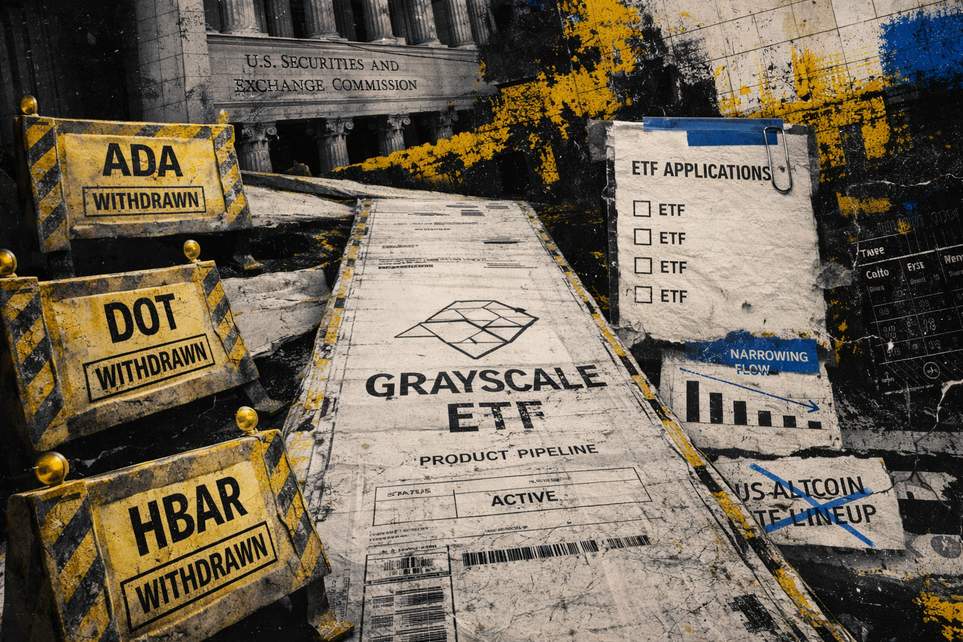
Grayscale pulls the plug on three altcoin ETF registrations in 190 seconds
The blink-and-you-missed-it withdrawal
In what looks like a very efficient game of paperwork musical chairs, Grayscale filed requests to withdraw three S-1 registration statements for proposed Cardano, Hedera, and Polkadot ETFs on Aug. 7 — all within 190 seconds. The filings show the Cardano withdrawal at 4:33:37 p.m. ET, Hedera at 4:34:55 p.m., and Polkadot at 4:36:47 p.m.
Each Form RW says the same thing in plain language: Grayscale does not intend to move forward with the planned public distribution of shares. The documents note the registration statements had not been declared effective, no securities were issued or sold under them, and no preliminary prospectus was distributed. Technically these are Rule 477 withdrawal requests, not the SEC rejecting the offerings — and the filings don’t provide a separate business or regulatory rationale for stopping the plans.
Context and what’s still in motion
This withdrawal step didn’t happen in a vacuum. The exchange-specific rule proposals that would have authorized those products to list were already inactive: NYSE Arca had earlier withdrawn the Cardano listing proposal, and Nasdaq had previously withdrawn the Polkadot and Hedera listing proposals. Those exchange actions dealt with whether an exchange could list and trade a product; the S-1 withdrawals remove Grayscale’s current registration statements for offering the shares publicly. They’re related but not the same thing.
Back in September 2025 the SEC approved generic exchange listing standards for qualifying commodity-based trust shares, which allows some spot digital-asset products to rely on generic standards instead of a product-by-product exchange filing. That change, however, doesn’t automatically make any registration statement effective or eliminate the need to satisfy Securities Act requirements.
Other Grayscale filings remain at earlier stages. Registration statements for proposed Bittensor, Aave, and BNB products were still listed as preliminary, and filings tied to NEAR and Zcash also remained preliminary. Separately, registration statements for two staking products — an Avalanche Staking ETF and a Hyperliquid Staking ETF — were declared effective (one on March 11 and another on June 2), though an effectiveness notice alone doesn’t tell you when, or if, trading actually began.
Bottom line: the Aug. 7 paperwork reduced the list of pending Grayscale ETF registrations, but the company gave no explicit reason. The filings don’t spell out whether demand, regulatory caution, strategic shifts, or something else drove the decision — just a tidy trio of withdrawals and a lot of lingering questions.
