
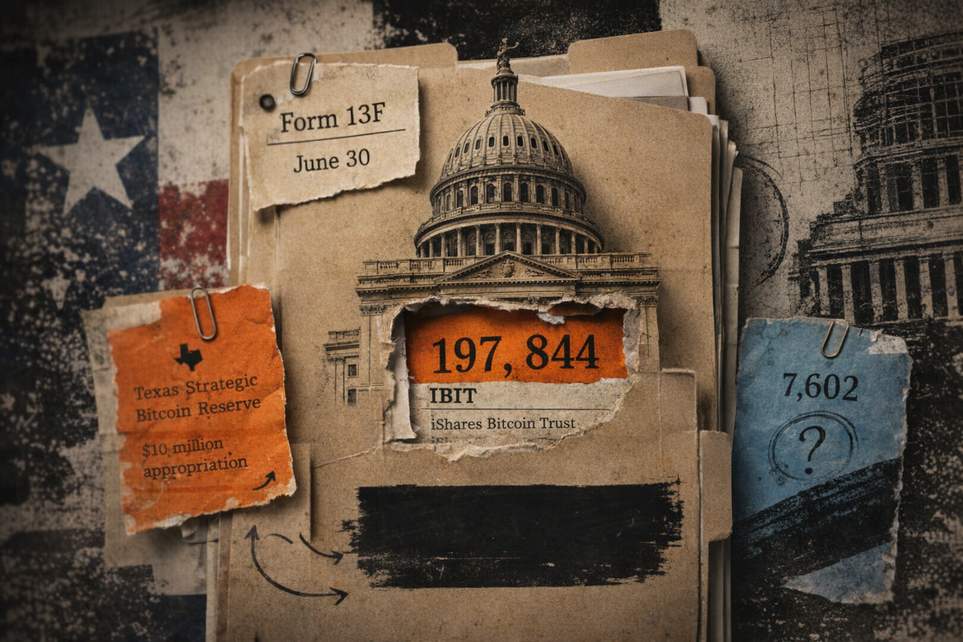
Texas Sticks With Its Bitcoin Bet as $10M Allocation Slides to About $6.6M
Texas holds steady: the short version
Texas kept all 197,844 shares of BlackRock’s IBIT ETF through the second quarter — no selling, no sneaky trades, just a firm shoulder shrug as the market did its thing. By June 30 the ETF’s reported net asset value put that stake at roughly $6.62 million, down from earlier valuations and well under the original $10 million the state set aside for its Bitcoin reserve.
The state’s investment manager, the Texas Treasury Safekeeping Trust Company (TTSTC), shows the same share count in its filings for the end of March and the end of June, which means they entered the quarter with the position and exited it unchanged despite Bitcoin’s dip.
Why this matters — and the paperwork oddity
Quick math: BlackRock reported IBIT’s NAV dropping from about $38.62 per share at the end of March to about $33.48 at the end of June. That roughly 13% slide mirrors Bitcoin’s own fall during the quarter, so the market value of those nearly 198K shares fell by close to $1 million versus the earlier quarter-end valuation.
But here’s the head-scratcher: the state’s filings repeat the same share count and the same stated dollar figure across filings, even though the market NAV had clearly moved. In short, the paperwork didn’t reflect the quarter’s market dip in the way an outside observer might expect — yet the economics (weird filing numbers aside) show the stake is worth less now than when the $10 million allocation was made.
The practical upshot is simple and a little stubborn: Texas treated BlackRock’s ETF as a temporary parking spot while it gets set up for direct Bitcoin custody, and when prices fell the state didn’t trim the position. The disclosed IBIT holding sits several million dollars below the original $10 million allocation at June 30, meaning the reserve’s interim vehicle lost value but wasn’t sold off to lock in losses.
So if you like dramatic simplicity: Texas bought the chips, the table got bumpier, and they kept playing without folding. Whether that’s bold or blissfully patient depends on your risk tolerance — and how you feel about paperwork that doesn’t quite match market reality.
