
Solana Treasury Firm May Need to Sell SOL After Much of Its Hoard Was Pledged
What’s going on with the treasury?
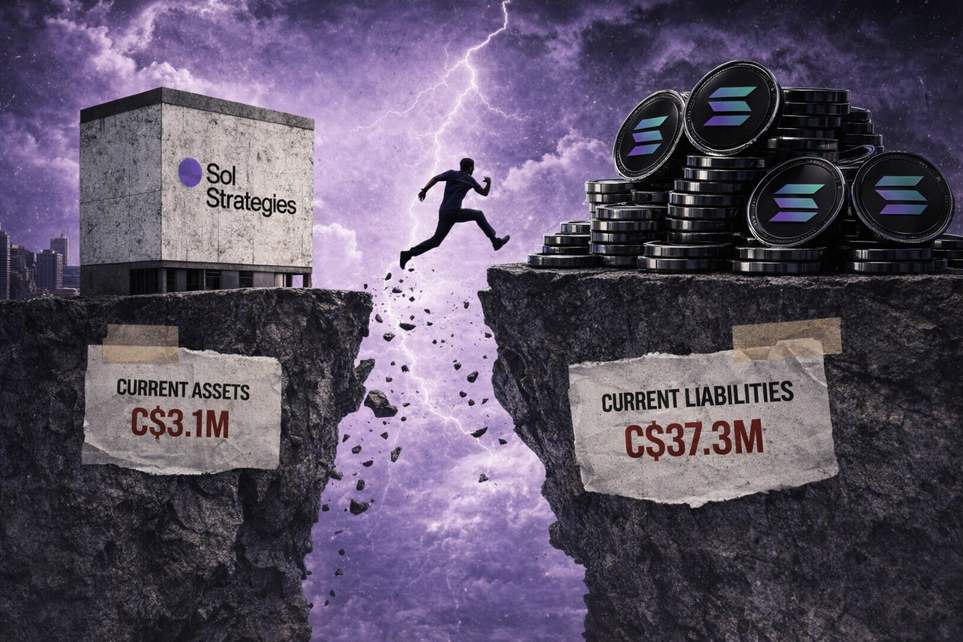
In plain English: this Solana-focused treasury company is a little light on cash and has a chunk of its SOL stashed—or rather, pledged—as collateral. At quarter-end it reported about C$1.87 million in cash and roughly C$22 million of digital assets that were free to be converted into fiat. On the other side of the ledger it had C$37.33 million in current liabilities, so yes, there’s a gap to mind.
Those liabilities aren’t a single bomb waiting to explode; they’re a mix of stuff with different due dates. Highlights include about C$3.31 million in accounts payable, a C$7.75 million acquisition note for HoudiniSwap, roughly C$784,000 owed to a vendor, a C$865,000 acquisition holdback, C$13.90 million borrowed through a DeFi protocol, and C$10.73 million in current convertible debentures. Some payments are due quickly, others stretch into 2028 and 2030, and one of the DeFi loans technically has no set maturity.
The company’s treasury at the quarter showed roughly 460,000 SOL, valued around C$48 million. But here’s the snag: more than half of that stash—252,851 SOL (about C$26.4 million)—was pledged to cover a roughly C$13.9 million borrowing. In short, a big slab of the SOL isn’t really “free” unless the debt gets resolved.
How they might avoid selling (and why it’s tricky)
Management laid out a mixed bag of options to keep the lights on: trim costs, squeeze more revenue from staking and validators, grow HoudiniSwap’s take, selectively sell SOL, issue securities, or borrow more (for example via an existing convertible note facility). They also calculate that, after accounting for that DeFi borrowing, the digital assets still translate to about C$34 million of net liquidity and that available cash plus resources should support operations for at least 12 months—at least according to their filing.
But realities bite. The company already sold 65,001 SOL on June 8 at an average of C$87.88, pulling in about C$5.75 million to shave down debt. For the nine months through June the business reported a paper net loss of C$119.36 million—largely driven by C$61.95 million in digital-asset revaluation losses, C$22.82 million in realized crypto losses, and C$16.11 million in impairments. That accounting loss is much bigger than the actual cash outflow, though: operating activities used about C$7.80 million in cash during the period.
There are also mechanics to worry about. The DeFi loan that holds those pledged SOL doesn’t have a hard maturity date, which helps a bit — but it has a liquidation trigger: if the loan-to-value ratio hits 75%, the protocol can automatically sell the collateral. That means a sharp SOL price drop could force unwanted liquidations and magnify losses.
Other non-sale lifelines have trade-offs. Converting debt into equity and selling shares (or issuing stock via an at-the-market program) can raise cash but dilute existing holders—and convertible notes can add future obligations. Case in point: holders converted US$2.85 million of debt into roughly 1.78 million shares recently, and the company raised C$2.14 million through an equity program.
On the brighter side, HoudiniSwap and staking/validator operations are contributing revenue: HoudiniSwap generated about C$1.2 million in fees and roughly C$768,000 of EBITDA in June, while staking/validator activities brought in roughly C$622,299 for the quarter. Those businesses could reduce the need to flog SOL, but the big question is whether they can scale fast enough to cover the company’s staggered obligations without more asset sales or further dilution.
Bottom line: selling SOL is not an abstract option—it’s something they’ve already done and may do again. Management is juggling several levers (cost cuts, operating revenue, selective sales, and financing), and which ones they pull will shape whether the treasury shrinks from active management or forced liquidation if markets turn unfriendly.
