
Ripple’s Twin Wins: Bank Partnerships and a Big Brokerage Raise — But XRP Traders Are Sweating
Ripple just pulled off a one-two punch: it snagged a South Korean bank to use its cross-border payments setup and its institutional arm boosted capital with a sizable private note sale. On paper that’s a pretty tidy expansion into both the bank-payments world and the prime-brokerage playground. In reality, the company’s business moves are marching forward while traders in the token tied to Ripple are squinting at the $1 mark like it’s a final boss.
Banks, real-time payments, and Korea’s mini Ripple ecosystem
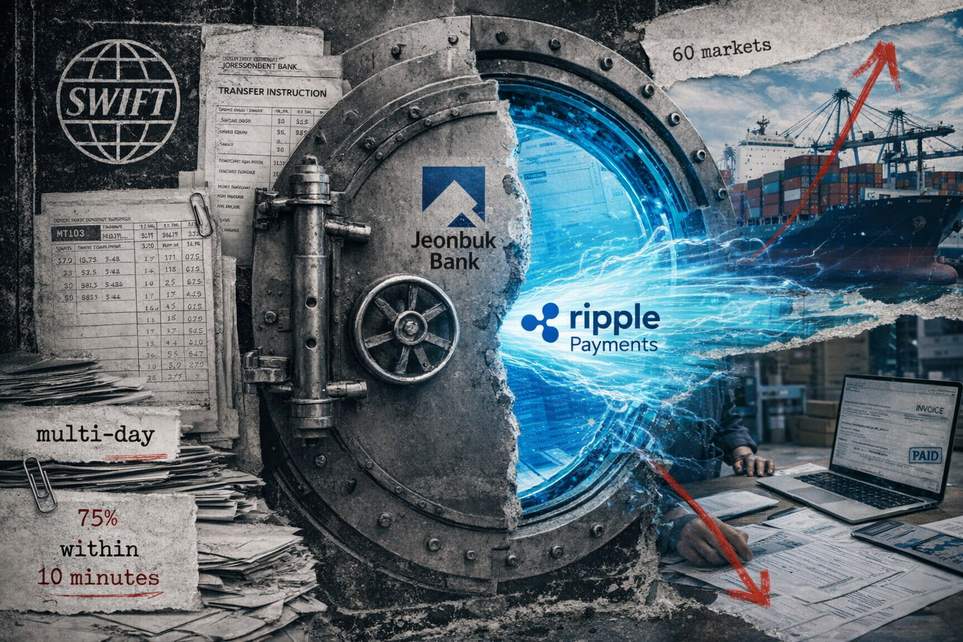
Jeonbuk Bank — a regional South Korean lender — started using Ripple’s cross-border payments product to speed up business transfers. In plain English: instead of the old-school corridor of correspondent banks and multi-day waits, some transfers can now settle in seconds to minutes. That’s a big quality-of-life upgrade for import-export firms, startups and anyone who hates waiting.
This deal is another piece of Ripple’s Korea puzzle. The company already has projects in custody and tokenized securities there, and other domestic partners are experimenting with on-chain settlements and wallet infrastructure. Ripple’s payments platform claims to have handled large volumes across many markets and can settle using fiat or various stablecoins — including RLUSD, USDC and USDT — depending on what a bank wants.
Bottom line: Ripple is selling banks a package — payments, custody, wallets and tokenized tools — instead of a single shiny blockchain toy. For a regional bank, that can mean simpler integrations and fewer middlemen on cross-border transfers.
Prime brokerage cash, growing infrastructure — and why XRP’s price isn’t throwing a party
On the same day, Ripple Prime (the prime-brokerage business Ripple bought) raised about $275 million through a private note sale to support its U.S. operations. The financing — which drew institutional interest and carried an investment-grade assessment — is earmarked for working capital and general corporate needs inside the regulated entity. This comes on top of an earlier $200 million lending facility meant to expand margin and lending capacity.
Ripple Prime isn’t small potatoes: it clears trillions annually across multiple asset types and serves hundreds of institutional clients. Having more capital on the balance sheet helps it clear trades, provide financing and grow the kinds of services big-money investors demand.
Despite the corporate momentum, XRP’s market action has been… temperamental. The token briefly dipped below $1 to around $0.98 before bouncing back to about $1.06. At the same time, leveraged exposure around XRP has increased — open interest on major venues climbed from roughly $360 million at the start of the month to around $461 million recently — which means more money is riding on derivatives positions whether bulls or bears intend it or not.
Key point: institutional expansions and token demand are related but not the same. The bank deployment didn’t specify which settlement assets will be used, and the brokerage cash raise was meant for corporate needs, not a token buy. So you can have Ripple building out bank rails and institutional plumbing while traders are piling into highly leveraged XRP bets around a psychologically important price level.
That combination creates an interesting setup: steady business development on one hand, and a crowded, potentially fragile trading landscape on the other. If prices recover with rising open interest, it could mean fresh money is genuinely bullish. If prices weaken while leverage stays high, brace for volatile whipsaws and forced liquidations. Either way, Ripple is busy in the boardroom while XRP traders are busy refreshing charts.
