
Zero‑Revenue Company Tries a Saylor Move — Gets Whacked (Stock Drops 25%)
What the deal actually is (no, it’s not magic)
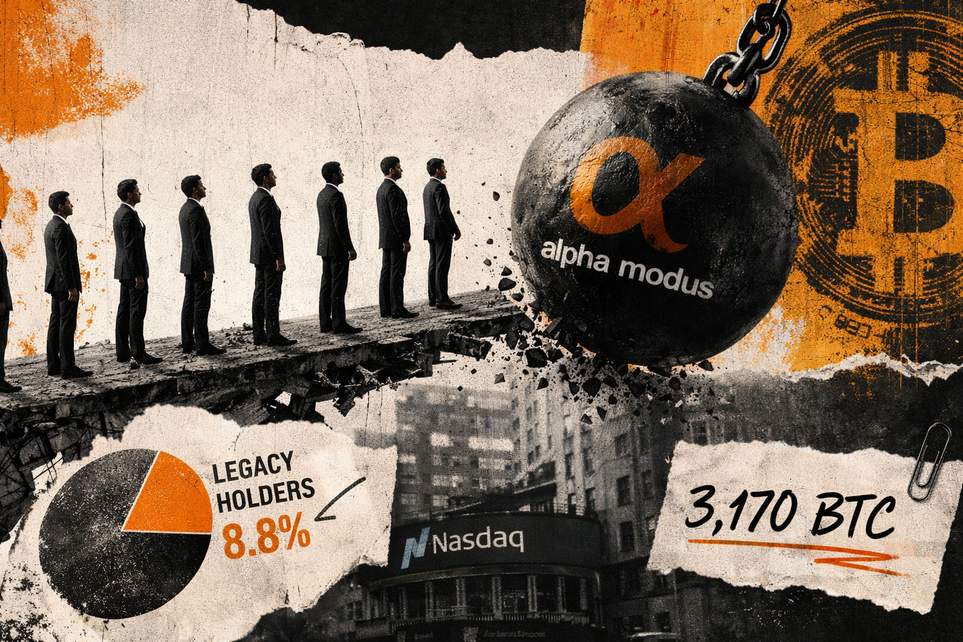
In short: a tiny, no‑revenue public company agreed to swap a mountain of shares for a mountain of Bitcoin, and investors responded the way you’d expect — with a loud, collective facepalm. The company agreed with 10 non‑U.S. buyers to take in 3,170 BTC in return for 51.62 million new Class A shares, plus warrants that cover another 51.62 million shares. The paperwork prices the Bitcoin at about $71,000 apiece, which implies roughly $225.1 million of consideration.
The deal has been signed but not closed yet — that means the Bitcoin hasn’t moved and the new stock hasn’t been issued. Before the deal the company had about 4.99 million Class A shares outstanding. If the initial 51.62 million shares are issued, the total would jump to roughly 56.61 million, leaving legacy holders with only about 8.8% of the enlarged share pool. Do the math and you get roughly 10.35 new shares issued for every existing share.
Oh, and the warrants: if exercised over their two‑year life at $4.36 each, they could add another 51.62 million shares — basically a second wave of potential dilution. Of course, usual caveats apply: ownership limits, exchange rules and any shareholder approvals still matter.
Why the market freaked (and what it means)
The stock reacted like someone told it the office coffee was gone — it dropped about 25% to $2.84 right after the announcement. That panic makes sense when you look at the company’s balance sheet: only $2 million in cash, a stockholders’ deficit of about $6.1 million, and a working capital shortfall near $6.3 million. The company reported no revenue for the quarter or for the first half of the year and recorded a roughly $6.2 million loss over six months. Management even warned the filing raised doubt about the company’s ability to continue as a going concern and estimated it needed at least another $2.5 million to stay on its growth path.
Management says the incoming Bitcoin would strengthen stockholders’ equity and help address the exchange deficiency, but note the key catch: Bitcoin, not cash. That’s great for balance‑sheet math, less great for paying payroll, rent, or anyone who wants actual dollars tomorrow.
Context matters: the corporate “buy Bitcoin, hoard it in treasury” playbook — popularized by high‑profile corporate buyers in recent years — isn’t getting the warm fuzzies from investors right now. Bitcoin’s price has been volatile (about a 30% drop over the last year despite some rebounds), and many public companies that piled into BTC have seen their stock prices fall even harder. Some firms have even started selling holdings or pivoting back to core businesses rather than doubling down on leveraged treasury strategies.
Alpha Modus’s CEO said they had thought about this Bitcoin route when prices were near all‑time highs but chose not to do it then. Now, management seems to be betting that the recent pullback offers a cheaper entry. For now, investors haven’t been persuaded — the steep share plunge signals skepticism — and since the deal isn’t closed, the promised Bitcoin and shares haven’t actually changed hands yet.
So the headline takeaway: the company tried a dramatic, fast‑forward rescue via crypto, but dilution math, shaky cash flow and a jittery market made investors hit the eject button. It’s bold, it’s theatrical, and it might work or it might leave legacy shareholders yelling into the void. Either way, it’s a messy but fascinating experiment in modern corporate survival strategies.
