
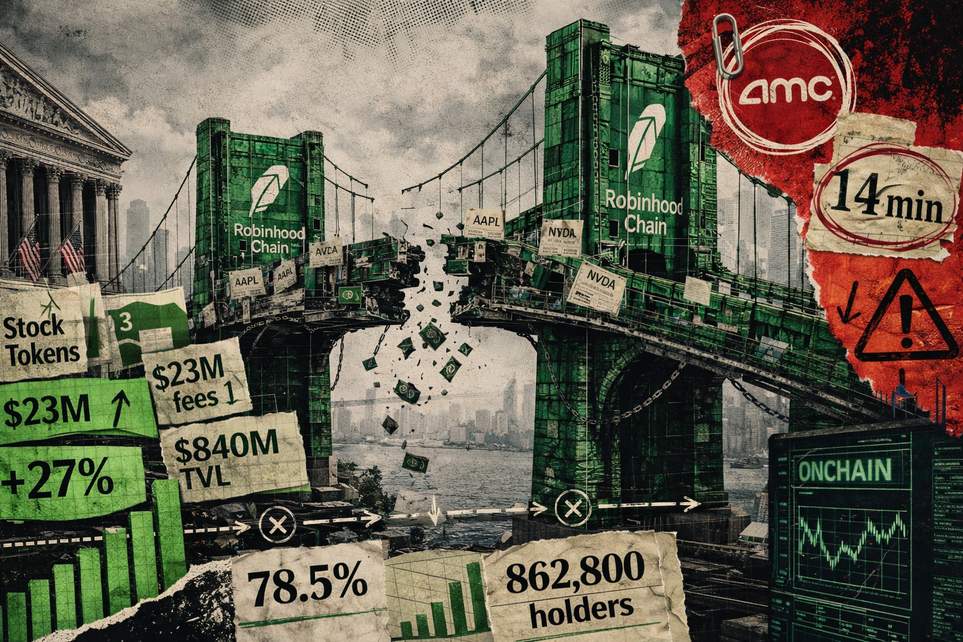
Robinhood Chain’s Wild Week: A 14‑Minute Outage and an AMC Dust‑Up
Robinhood Chain sprinted onto the scene and promptly tripped over its own shoelaces. What started as a flashy two‑month mainnet success story hit two speed bumps at once: a short but dramatic halt in block production and public blowback from a company unhappy about tokenized versions of its stock.
The outage: 14 minutes that felt much longer
On September 4 the network stopped creating blocks for at least 14 minutes, freezing transactions and giving traders that delightful feeling of watching a slow elevator in a very tall building. The interruption was brief but notable because this chain exploded in usage almost overnight. In a matter of weeks it hauled in millions in fees and saw booming activity that would, if you annualized the hottest few days, look like billions a year — which is a fancy way of saying it scaled fast and loudly.
Users moved a lot of assets onto the chain, decentralized exchanges saw surges in volume, and total value locked climbed significantly in a short window. That kind of growth makes even short outages expensive: more assets and more complex financial products living on a young chain mean more to lose and more anxious users when things go quiet.
Besides swap fees, the chain is starting to earn from other onchain mechanics (think protocol income and yield-like flows), and custodial platforms have been stacking more crypto on their books. All that momentum helps explain why a 14‑minute hiccup drew so much attention — it’s not just a tech glitch, it’s infrastructure wobbling under real money.
Stock Tokens and the AMC kerfuffle — corporate drama on the blockchain
If the outage was a technical bruise, the Stock Token saga is a public relations paper cut that keeps stinging. Robinhood rolled out ERC‑20 tokens that mimic the economic performance of certain US equities. These tokens give holders price exposure but do not convey ownership of the underlying shares — they’re basically IOUs issued by Robinhood’s separate entity and, by design, are not offered to US persons or registered like traditional securities.
That model rubbed some companies the wrong way. The CEO of a major theater chain publicly demanded that trading of a token tied to his company stop immediately, calling the practice outrageous and threatening legal action. Robinhood’s legal team pushed back bluntly, saying they know the securities rules and weren’t about to bow to a cease‑and‑desist demand without a fight. Cue the courtroom popcorn.
Despite the pushback, demand for tokenized stocks hasn’t exactly fizzled. Holder counts have climbed rapidly, and decentralized exchange trading in tokenized stocks has ballooned into the billions over recent weeks, with a couple of big DEXs handling the lion’s share. On the chain, tokenized stocks now represent hundreds of millions in active notional exposure, and stablecoins sitting on the network are up near the billion mark — so people are clearly using it as more than a curiosity.
The combination of juicy onchain revenue and friction with listed companies is a tricky balancing act. The outage highlighted the technical risks; the AMC dust‑up highlighted the legal and reputational risks. If Robinhood wants this chain to be a dependable railroad for onchain financial products, it’ll need to prove the rails are sturdy, the rules are clear, and it can handle both software meltdowns and angry CEOs without burning the place down.
Bottom line: fast growth is fun until it’s not. Robinhood Chain has momentum, plenty of users, and real money flowing through it — but the recent downtime and public objections show that rapid expansion comes with growing pains, regulatory question marks, and a need for rock‑solid reliability.
