
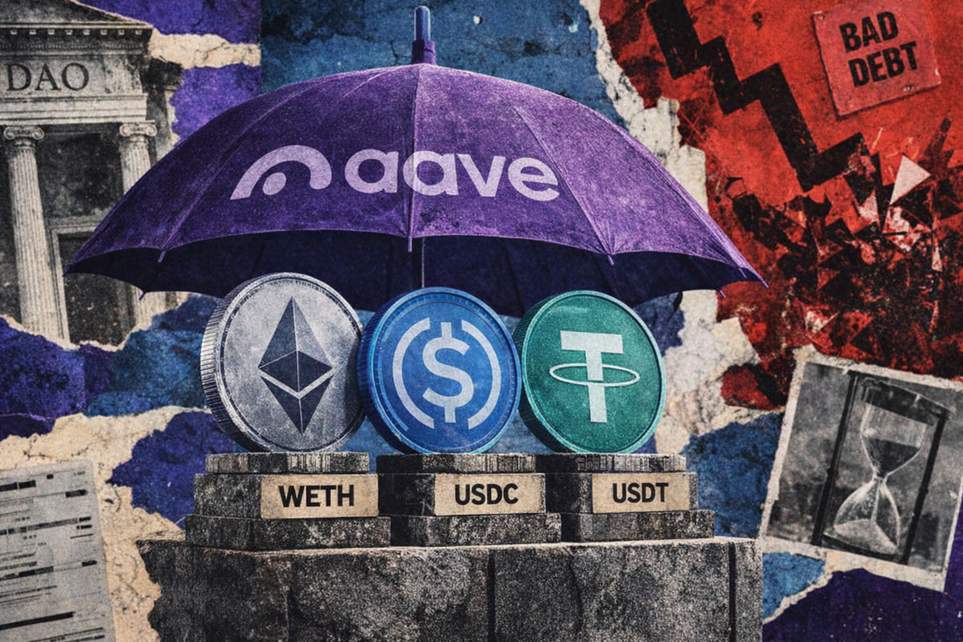
Aave V4 proposal would put DAO funds first in line to absorb lending losses
What the Umbrella plan proposes
Here’s the gist: a proposal called the Umbrella plan would add a bad-debt backstop to certain Aave V4 markets on Ethereum. The safety net would only apply to the Core liquidity Hub’s WETH, USDC and USDT pools for now. If things go pear-shaped, the DAO takes the first bite of any shortfall, and volunteer underwriters cover the rest.
The proposal sets target cushions (these are targets, not cash already parked): 800 ETH for Core WETH, and 400,000 each for Core USDC and Core USDT. On top of that, the DAO would absorb a small initial deficit layer before underwriters are tapped: 33 ETH for WETH and 15,000 for each USDC and USDT.
Coverage is reserve-specific. That means your USDC in the Core Hub is covered by this plan, but the same USDC sitting in another Hub wouldn’t magically get protection. Also, loans created through Spokes (the pieces that actually mint the debt) count toward exposure—the Core reserve that supplied the borrowed asset is the one at risk.
Why it matters — risks, cooldowns, and what’s left out
Underwriters would keep earning yield on their committed capital until their funds are used to cover a deficit. If a cover event happens, the mechanism would be to burn Hub shares, so participants actually lose principal when coverage is consumed—sweet extra yield, awkward capital risk.
Leaving isn’t instant. Each market would enforce a 20-day cooldown and then a two-day withdrawal window; miss that window and you need to start the cooldown again. During the cooldown, staked assets remain exposed to slashing while still collecting rewards—so that extra yield has a price tag.
The proposal consciously skips some markets for now. USDG and frxUSD are not recommended for initial coverage because of tricky incentive dynamics and a concentrated supplier base in the case of frxUSD. Other Hubs’ reserves are left out too, often because they’d get little incremental protection or have narrow supplier pools.
TokenLogic sized the protection levels for roughly six to eight weeks of expected loan growth and suggests monitoring the system after activation. The plan would be reassessed after three months and could expand to include more markets if lending and supplier diversity evolve. In short: a cautious, limited safety net that puts the DAO first, ropes in volunteers, and keeps an eye on whether the umbrella needs to get bigger.
