
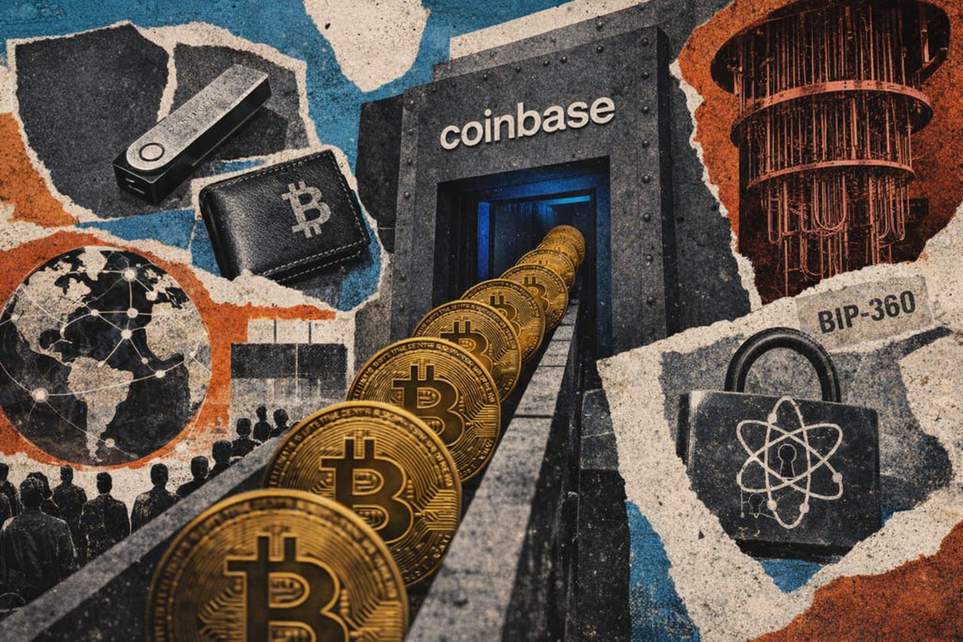
Exchanges Can Shrink Bitcoin’s Quantum Risk — Here’s How
Quantum computers aren’t knocking down Bitcoin’s door tomorrow, but some coins are waving their keys out the window like a “please, take me” sign. The good news: exchanges and other custodians hold a big slice of those exposed coins and, unlike lost-wallet owners, can actually do something about it. This isn’t sci‑fi panic — it’s an operational puzzle with a timeline you can work on.
Why exchanges are the obvious first line of defense
There are two flavors of quantum worry. One is the long game: coins whose public keys are already visible on the blockchain and could be grabbed by a future quantum computer. The other is a blink-and-you’ll-miss-it risk that pops up while a transaction is waiting for confirmation, when a public key is briefly exposed in the mempool.
Analytics folks put the number of exchange-related outputs with visible public keys at roughly 1.6 million BTC — enough to make exchanges an important test case. Exchanges and custodians aren’t helpless blobs of coins; they control keys, run approvals, manage backups and can move funds if they decide to. In short, they’re the actors most able to reduce exposure quickly, provided they coordinate and accept some short-term headaches.
By contrast, coins belonging to inactive or permanently lost keyholders can’t be moved. You can invent all the elegant crypto you like, but if the private key doesn’t exist anymore, protocol changes can’t magically make it sign. That’s why the “active vs. dead” distinction matters: exchanges are an execution problem; lost keys are a permanent limitation.
Practical steps custodians, wallets and devs can take right now
Protocol work and operational work need to run side by side. One proposal under review would add a Pay‑to‑Merkle‑Root style output that lets funds be committed without revealing a public key in the output. That kind of change can reduce long-term exposure but it doesn’t stop the short-exposure window that happens during spending. So even if a new output type lands, custodians still have work to do.
What can exchanges and wallet makers do while the protocol debate plays out? Plenty. Tighten address hygiene (use fresh addresses instead of reusing them), rotate change outputs, map out which balances are exposed, and move reserves into safer outputs when sensible. These are boring operations, but they actually shrink the attack surface.
Hardware wallet vendors and custodial platforms should also be hammering on candidate post‑quantum algorithms: benchmark signatures on real devices, design secure firmware update paths, and build recovery and backup schemes that work with the new math. Some recent lab experiments show devices can produce certain hash‑based post‑quantum signatures — promising, but not a production checklist. Institutional custody groups have simulated post‑quantum multi‑party transactions too, which helps test policy enforcement and separation of duties.
Finally, rollouts will require coordination: exchanges, wallet teams, and protocol developers need to agree on formats, test vectors, and migration steps so migrations don’t accidentally strand users or break withdrawals. It’s entirely possible to design an elegant cryptographic fix that fails in the wild because nobody could deploy it cleanly across all the moving parts.
Bottom line: shrinking Bitcoin’s quantum exposure is part engineering, part project management and part migration rehearsal. If exchanges can move the roughly 1.6 million BTC that are actively exposed into safer forms, that would be a meaningful win — even while dormant coins, final cryptographic choices, and full ecosystem consensus remain tougher problems to solve.
So yes, the quantum boogeyman is on the horizon, but the obvious next step is practical and boring: clean up address hygiene, test post‑quantum signatures on real devices, plan backups and recovery, and practice the migration. If that sounds unglamorous, remember: boring stuff saves coins.
