
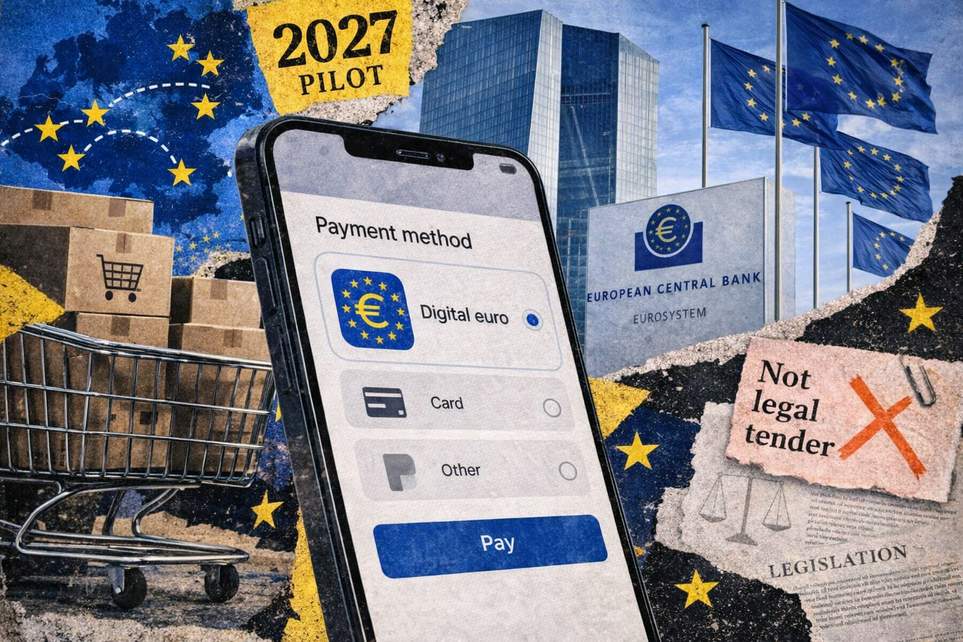
ECB Opens Merchant Applications for Controlled 2027 Digital Euro Pilot
Big news for online shops and payment nerds: the European Central Bank has started inviting merchants to take part in a tightly controlled trial of a digital euro. This isn’t money in your pocket yet — it’s a sandbox to see how a future retail central bank digital currency might behave at checkout.
Who can apply and how it works
The ECB is asking EU-based e-commerce and mobile-commerce platforms to apply by 17:00 CET on October 27. Applicants should serve customers in at least two euro-area countries that are part of the pilot and run a platform that can flexibly plug into a test payment flow. Participation is voluntary and unpaid — think of it as being an experiment co-pilot rather than a paid beta tester.
What the pilot will test — and what it won’t
The version being trialed won’t be legal tender and won’t be the final digital euro defined in any future law. That’s intentional: keeping the test currency outside the realm of public money lets the Eurosystem experiment with payment infrastructure, internal processes, and user experience without triggering legal or monetary consequences.
Merchants picked for the trial will need to sign up with an acquiring payment service provider to accept test transactions. Earlier this year, the ECB picked 36 providers to play acquiring, distributing, or both roles — creating the plumbing that connects test users and participating shops. Distributing providers will help eligible users access the beta, while acquiring providers will make sure merchants can receive the simulated payments. In short: it’s a two-sided test of access and acceptance, not just a shiny checkout widget.
Timing and the legal picture
The operational phase of the pilot is planned to run for about 12 months starting in the second half of 2027, with main operations slated from the third quarter of 2027 through the third quarter of 2028 after initial integration and testing. The ECB has said the operational window could be extended by up to six months if needed.
While this exercise will yield technical and user-experience insights, it won’t be the moment when a digital euro is officially issued. Lawmakers have begun negotiating a legal framework, but even with rules in place the ECB would still need to make a separate decision to issue a digital euro. For now, the merchant call simply nudges the project into a more realistic commerce setting without crossing any legal or monetary lines.
