
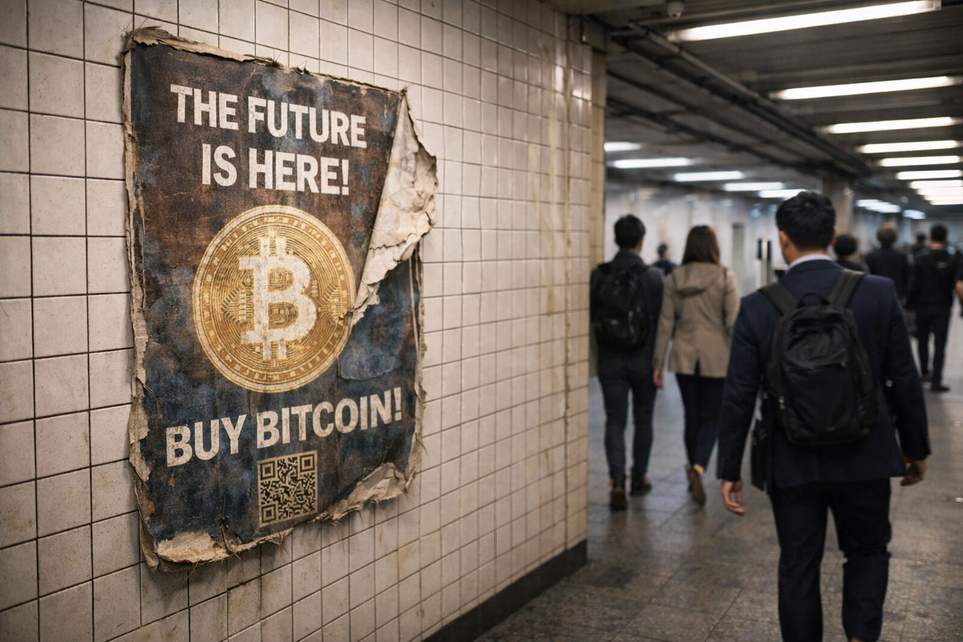
Bitcoin’s Glow-Up: Wall Street Showed Up, The Public Didn’t
Same price, different party
Bitcoin has matured into a financial darling: ETFs, custody firms, treasury buys, and professional market plumbing mean more institutions can touch it without breaking a sweat. That’s the upgrade — suits and spreadsheets, not sweaty chatrooms and frantic Google searches.
But here’s the odd bit: the price can climb while everyday curiosity stays fairly chill. Worldwide search interest for “bitcoin” hasn’t hit the 2017 peak again. In plain terms, the money shifted from millions of small, wide-eyed newcomers to fewer, organized channels — think fund managers and corporate treasuries instead of bargain-hunting first-timers trying to figure out wallets at 2 a.m.
Search trends are noisy and imperfect, but they’re still a handy thermometer for public attention. They measure relative interest, not exact headcounts, so a huge institutional flow can push the market without the same spike in “how do I buy Bitcoin?” queries. So yes: the market got more legit. No, the internet frenzy from 2017 hasn’t come back in the same way.
What would actually look like a retail comeback?
If you want signs that regular folk are really back in the game, look for several things lighting up at once. Global search interest needs a solid, sustained jump. Exchange app downloads and onboarding should surge. On-chain activity from small wallets should pick up. Social chatter — not just finance Twitter — should blow up beyond the usual crypto echo chambers.
It’s totally possible that the next phase combines both: institutional legitimacy plus a fresh wave of public curiosity. But until those public-facing indicators all move together, the safest read is that this cycle is being powered more by structure than by mass mania. That’s not a bad thing — it’s just a different kind of party. Fewer fireworks, more hors d’oeuvres.
