
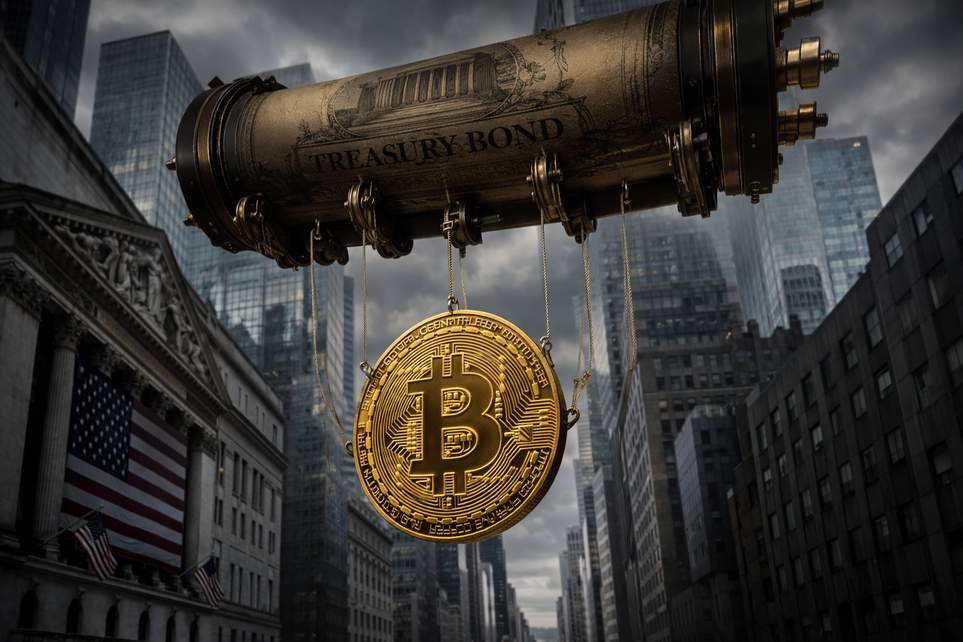
How 5% Treasuries Gatecrashed Bitcoin’s Party
The bond market just raised its hand — and everyone noticed
Imagine showing up to a rave where Bitcoin is DJing, lighting off moonshot confetti, and then the long-term Treasury yield strolls in wearing a suit and announces, “I’ll take the floor.” That’s basically 2026 in a nutshell: 30-year Treasuries flirting with 5% have turned up the music on a pretty awkward genre mix.
Why the suit? A cocktail of higher energy prices, a massive pile of government borrowing, and investors finally pricing in stickier inflation. Big Treasury auctions, heavier-than-usual deficits, and monthly interest bills that look like Apple and Education had a joint venture all mean long-term yields are being pushed higher — and that push sticks because the market now expects more inflation and less Fed wiggle room.
Those higher yields aren’t a one-day headline. They point to structural forces: huge supply of paper to refinance, weaker foreign demand, and investors demanding more compensation for inflation risk. Put another way: cash that used to be happy cruising in speculative assets now has a very boring but very reliable alternative offering a not-bad 5% return. Suddenly the party favors look a little less tempting.
What this means for Bitcoin — immediate sting, longer game drama
Short term: ouch. Bitcoin dropped below the previous high-water marks as institutional buyers hit pause. When you can get a guaranteed-ish 5% on the long bond, the opportunity cost of holding a volatile, non-yielding asset increases — and that’s a direct hit to demand from big money. Flows into spot funds slowed or reversed, and trading volumes thinned as yield-sensitive players rethought risk allotments.
There are transmission mechanisms that are annoyingly efficient: ETFs and tokenized Treasuries make it dead simple for yield-hungry capital to rotate out of crypto infrastructure and into government debt without leaving the crypto ecosystem. Meanwhile, programs and funds that used to buy Bitcoin by issuing equity or preferred stock feel the squeeze, because the whole funding flywheel becomes pricier when interest rates climb.
But don’t write the obituary. On a longer horizon, the very fiscal mess that pushed yields up — rising deficits, escalating interest payments, and a growing share of government spending eaten by debt service — is the kind of macro backdrop that fuels Bitcoin’s “hard-money” narrative. As sovereign balance sheets bulge and people worry about currency debasement, an asset with fixed supply starts to look less like a speculative balloon and more like an oddball hedge.
So yes, five percent is a short-term headwind: it tightens financial conditions, reduces marginal liquidity, and forces institutions to be pickier. But also yes, the fiscal reality producing those yields could, over years, nudge a class of institutional holders to see Bitcoin as an alternative — precisely the scenario Bitcoin’s original thesis was designed to survive.
The upshot: in 2026 Bitcoin is no longer an island. It’s part of mainstream portfolios now, which means it will dance to macro beats — bond auctions, inflation prints, and yield moves — far more than it once did to purely on-chain gossip. That makes rallies more vulnerable to traditional finance shocks, but it also means the same macro conditions that spook investors today might be the ones making Bitcoin compelling down the line. For now, buy the dip only if your stomach, thesis and sense of humor are ready for a wild ride.
