
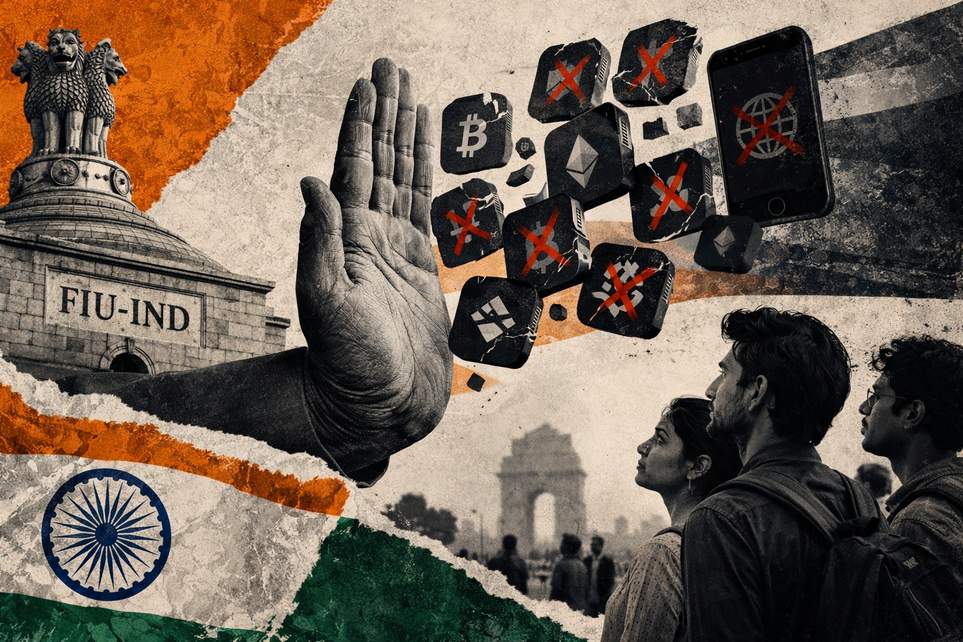
India Moves to Block 15 Crypto Apps — Users Could Face Sudden Lockouts
Quick rundown: apps hit with takedown notices
India’s Financial Intelligence Unit (FIU-IND) has issued non-compliance notices to 15 virtual-asset service providers and asked that their public apps and website URLs be taken down in India. The notices say these services didn’t meet requirements under India’s anti-money laundering rules, so regulators requested removal of public access to the apps and sites.
That request targets public availability — app stores and internet intermediaries were asked to act — but the notice itself doesn’t prove every service is already blocked, nor does it automatically mean customer accounts or funds are frozen. In short: public access may be interrupted, but backend account status can vary by provider.
The companies named include: Weex (Weex International Exchange LTD), Blofin (BLF Global Limited), Rezorex (RezorEx), Bitunix (Bitunix LLC), DigiFinex (DigiFinex Ltd), Toobit (Hopeful Technology Co. Ltd), XT.com (Fibtc Ltd / XT TECHNICAL PTE. LTD.), Latoken (LAtrade Ltd), WOO X (Wootech Limited), Pionex (Marketa Trading Inc.), ChangeNow (CHN Group LLC), SimpleSwap (SimpleSwap LTD), Fixedfloat (FFGX Group LLC), WhiteBIT (UAB Clear White Technologies), and Guardarian (FinSeven CZ).
FIU-IND issued the takedown notices under India’s information technology laws and intermediary rules. Those orders ask intermediaries to remove public-facing apps and URLs; they don’t automatically mean app stores or internet service providers have completed the removals yet.
What this means for you (and what to do next)
If you use one of these platforms, don’t leap into full-blown panic mode, but do move faster than usual. A takedown of a public app or website can suddenly make login screens unreachable or add friction to withdrawals. That’s annoying. It isn’t an automatic sign your funds are gone — but it can make getting to them harder.
Smart, practical steps: check official messages from your platform, try withdrawals now if possible, and keep records of any communications. If you’re comfortable with self-custody, consider moving assets to a private wallet you control. If you’re not, be cautious about transferring to unknown or unvetted services — scammers love this moment.
Bear in mind that India’s March 2023 rules brought virtual-asset providers into the country’s anti-money laundering framework, requiring registration and reporting. Offshore incorporation or a lack of a physical Indian office isn’t a shield: regulation looks at services offered to users in India. So the path back to normal access usually depends on whether each provider resolves its registration and compliance issues.
Finally, watch for official updates from the platforms and from Indian authorities. Expect a messy few days as intermediaries decide how to respond, and treat any unexpected messages or ‘helpful’ recovery links with extreme suspicion. Keep calm, back up important details, and don’t let the FOMO button make you click questionable links.
