
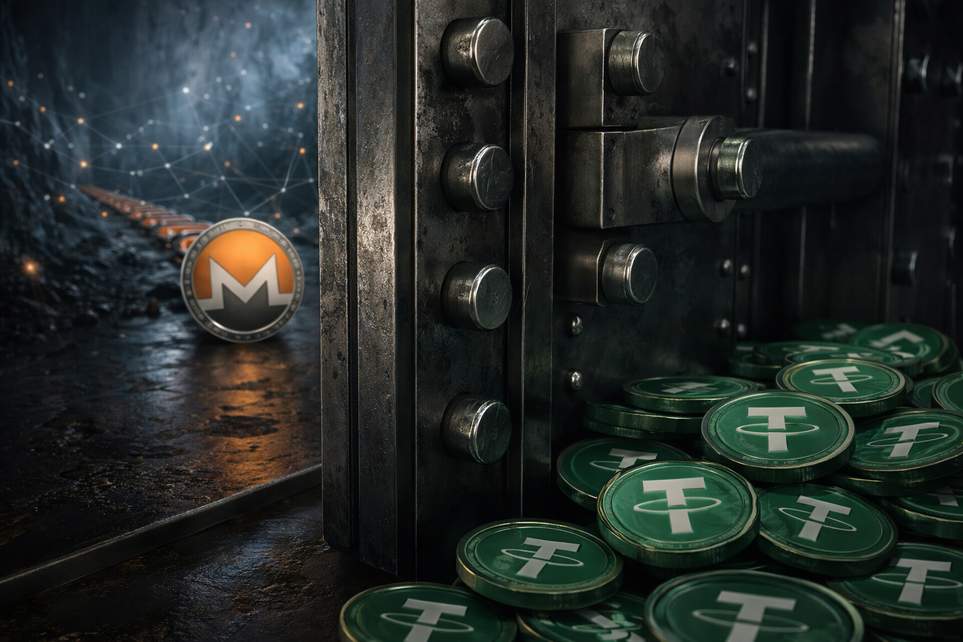
Did a $72M USDT Freeze Stop a Monero Laundering Dash?
The quick, messy recap
Here’s the short version: a Tron wallet allegedly received about 120.2 million USDT, started slicing that pile into different routes, and then the issuer reportedly froze roughly $72 million of the tokens after the activity was flagged as suspicious. No public smoking gun ties the wallet to a specific hack or known bad actor — this looks like a suspected laundering pattern, not a courtroom-ready attribution.
Before the freeze hit, some of the stash already wandered off to places that are harder to yank back: deposits to a centralized exchange, a handful of instant-swap services, bridge transfers to Bitcoin and Ethereum rails, and sizable Monero buy orders that shoved XMR’s price up noticeably. The freeze seems to have trapped only the USDT that was still sitting in addresses the issuer could blacklist.
Why this is interesting (and why Monero made it spicy)
What makes this case juicy is timing. Stablecoin issuers can stop tokens while they sit on a chain and are still under token-level control. Once the coins get sliced, swapped, bridged, or funneled into privacy rails, the issuer’s superpower fizzles and the job becomes an investigation that depends on exchanges, off-chain records, and detective work.
Monero complicates things because it’s built to hide transaction details. The conversion into XMR doesn’t leave ordinary on-chain breadcrumbs, so investigators may only get indirect clues. Ironically, the conversion here was loud — buy pressure was big enough to push XMR from roughly $330 to the $420–$438 band — so the market movement became the visible signal rather than a neat, traceable transaction trail.
Reports indicate about $48 million of the original amount moved before the freeze; that chunk getting spliced across different exits is the portion that will be trickier to trace and recover. Each exit path creates a different headache: exchange deposits need compliance cooperation, bridges require cross-chain sleuthing, instant swaps rely on provider logs, and Monero conversions leave investigators staring at market noise instead of clear ledger traces.
So what’s next? The issuer could clarify exactly what was frozen and why. Exchanges and swap platforms might reveal whether downstream deposits matched the reported routes. Independent chain sleuths could publish updates on the trail. And XMR liquidity data will show whether the market absorbed the buying pressure or if more illiquid moves are still unfolding.
Bottom line: a freeze can snatch back what’s still parked in a controllable stablecoin account, but it’s a race. Move value fast enough into mixed, bridged, or privacy destinations and tracing pivots from on-chain black-and-white to a messy off-chain detective story — and sometimes all you get is the scent of a big trade, not the criminal’s face.
