
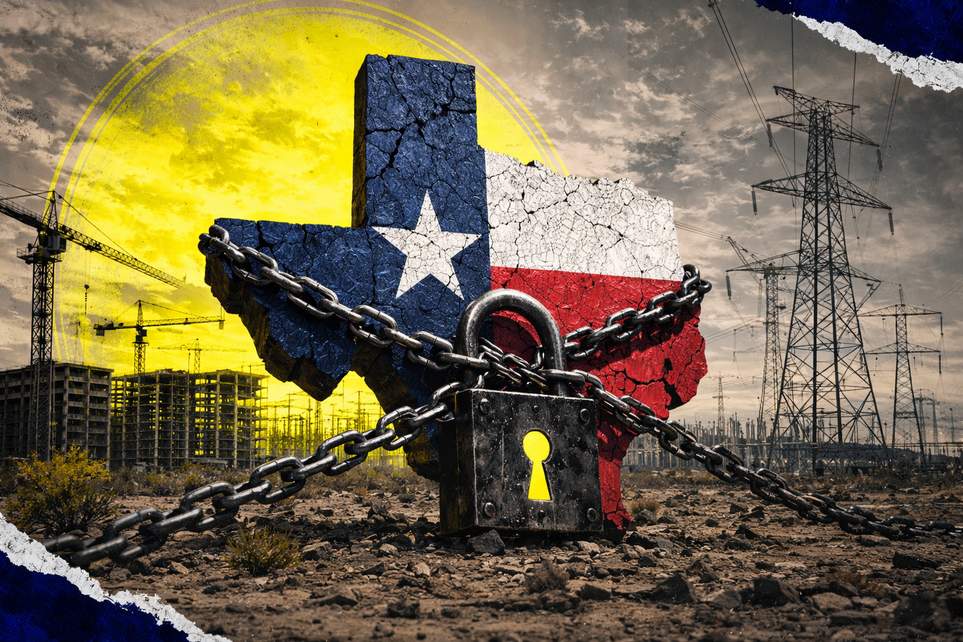
Texas Puts AI-for-Bitcoin Data Centers on Ice: Who Gets the Power?
What happened: the freeze and the audit
Texas just hit the pause button. Governor Greg Abbott ordered state regulators and the grid operator to audit every data-center project asking to hook up to the grid before approving any new connections. The checklist is the usual grown-up stuff: where the power comes from, water use, cooling plans, who actually owns the site—and whether these projects are real or just sexy slide-deck promises.
The scope is ridiculous in a headline way: roughly 474 gigawatts of pending connection requests, and officials say about 90% of that is from data centers. For context, that’s several times larger than the grid’s historical peak load. ERCOT paused its big Batch Zero transmission-planning study after the order landed, and a state survey found only a tiny fraction of companies actually answered questions about their plans.
Why the freak-out? Over the past year public Bitcoin miners and developer groups have been selling investors on multi‑gigawatt “AI” pipelines. Those headline gigawatts often bundle wildly different things under one label—raw land next to a substation, a queue spot waiting on interconnection studies, or a fully financed campus with tenants and shovels in the ground. Texas just forced a reality check. And on the national stage, FERC gave regional grid operators the same homework: justify or rewrite the rules for giant new loads, and explain how they’ll secure enough generation.
Why it matters: winners, losers, and the great repricing
Here’s the quick and slightly snarky economics lesson: a gigawatt that has signed tenants, secured financing, and a live substation is worth a lot more than a gigawatt that’s basically a map pin and a PowerPoint. Investors have been treating both like twins so far, and regulators just separated them into reality and maybe.
Some miners and developers actually have real stuff: financed campuses, leases, and energized substations. Others are still multiple checkboxes away from anything that draws amps. You’ll see companies with one foot in the “fully commercialized” club and another foot dangling in the queue‑dependent pipeline club. That split matters because the audit and the FERC nudges will make capital and customers flow toward projects that can prove the whole chain—power, tenants, financing, construction—exists.
There are immediate tactical outcomes too. If audits stall a bunch of queue‑based projects, deep-pocketed operators can swoop in and buy land or interconnection rights at a discount, then finish the build and lease the capacity to AI customers. OTOH, many developers who depend on speedy approvals could see timelines slip until they run out of runway, which would force painful write‑downs or sales.
Regulators are also explicitly asking grid operators about co‑location and behind‑the‑meter generation—areas where miners have gotten pretty clever over the years by shifting or curtailing load to dance with volatile grid conditions. That flexibility is suddenly more valuable than ever.
Bottom line: the market is about to reprice pipelines. If your company’s headline gigawatts are mostly a promise, expect a harder landing. The truth is boring but useful: a functioning, contracted, financed megawatt beats an advertised gigawatt that never finds power.
